Top Climate Nonprofits & Giving Strategies for 2026 and Beyond
Giving Green announces $40.5M USD in grants, this year’s Top Climate Nonprofits, and new research into high-impact climate philanthropy
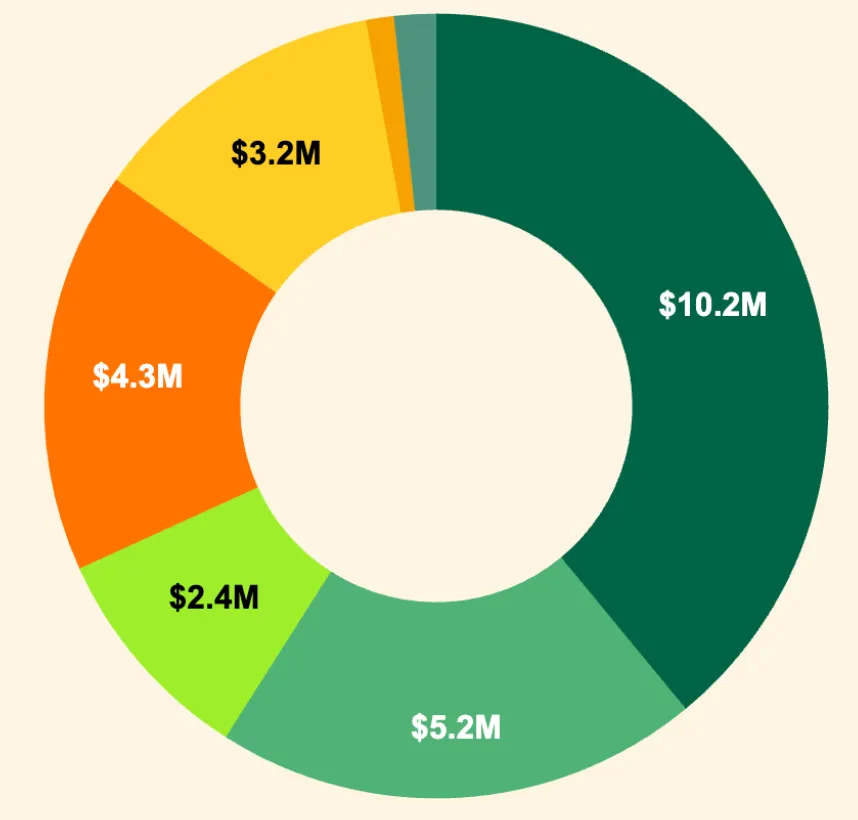
This Giving Season, Giving Green donors are sending $40.5 million USD to high-impact climate nonprofits through the Giving Green Fund (GGF). This marks the largest round in the Fund’s history, bringing our 2026 total to $48.1 million USD. Alongside these grants, we’re announcing this year’s Top Climate Nonprofits and new research to help you decide where to donate to maximize your climate impact.
This milestone belongs to our community of supporters. You understand the urgency of the climate crisis, ask hard questions about effectiveness, and trust rigorous research to make your gifts go further. As GGF marks its fifth year and becomes a prominent source of high-impact climate funding, we thank our donors, partners, and the impact community for this support.

Half of this year’s grants will support climate action in low- and middle-income countries (LMICs), up from 15% in 2025. Despite producing a rising share of global emissions, LMICs receive only a sliver of climate philanthropy. Your gifts are helping close this gap.
Altogether, we’ll make 52 grants this round to high-impact climate organizations working in five of our six prioritized sectors and corresponding philanthropic strategies:
- Food, Agriculture, and Land (FAL) - new sector report
- Scaling Alternative Proteins - new strategy report
- Industry - new sector report
- Decarbonizing Iron and Steel - new strategy report
- Decarbonizing Cement and Concrete - new strategy report
- Power - sector report coming in 2027
- Decarbonizing India’s Power Sector - new strategy report
- Decarbonizing Indonesia’s Power Sector - new strategy report
- Derisking Clean Electricity Investments in LMICs - new strategy report
- Unleashing Clean Energy in the U.S. - 2025 strategy report
- Carbon Dioxide Removal (CDR)
- Scaling Novel Carbon Dioxide Removal - updated strategy report
- Climate Risk Management - new sector report
- Advancing Solar Radiation Modification (SRM) Governance and Research - updated strategy report
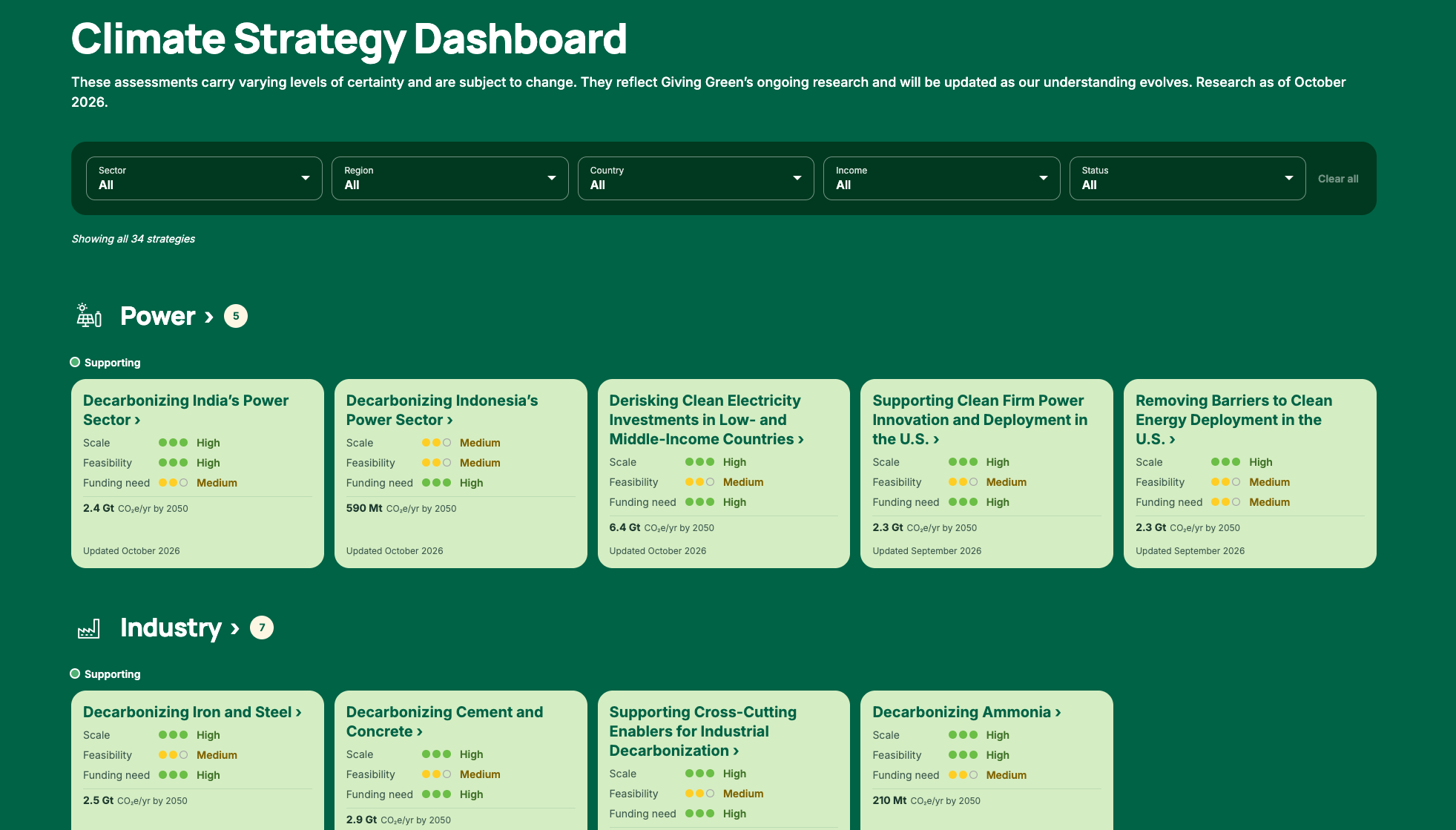
To make it easier for you to explore our growing suite of research products and find giving opportunities that interest you most, we’re also launching a new interactive research dashboard built with revamped scale assessments informed by ClimateWorks' emissions projections data. You can filter by sector, region, country, and other attributes, then explore our research and recommended nonprofits behind each strategy.
In this blog, we’ll outline:
- Why strategic climate donors should prioritize LMICs
- High-impact climate giving opportunities for 2026 and beyond
- This year’s Top Climate Nonprofits
- Year-end Giving Green Fund grantees
- Five ways to take climate action
Why Strategic Climate Donors Should Prioritize LMICs
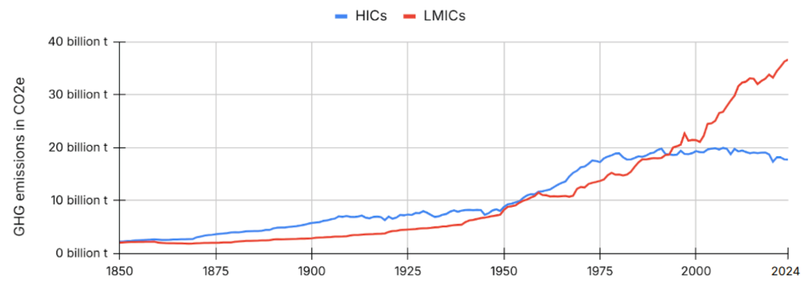
LMICs now produce about two-thirds of the world’s annual greenhouse gas emissions, and their energy demand is rising fast. Yet they receive seven to nine times less philanthropic funding per ton of emissions compared to the EU and the U.S., based on ClimateWorks data.
That makes LMICs one of the most underfunded opportunities in climate philanthropy, despite being one of the most cost-effective. Lower costs and untapped opportunities stretch each dollar further, and early support can help countries avoid locking in emissions-intensive infrastructure for decades.
To learn more about where LMIC giving goes furthest, read our prioritization brief, Accelerating Climate Change Mitigation in Low- and Middle-Income Countries, or join our Giving Tuesday webinar on high-impact giving opportunities in LMICs.
High-Impact Climate Giving Opportunities for 2026 and Beyond
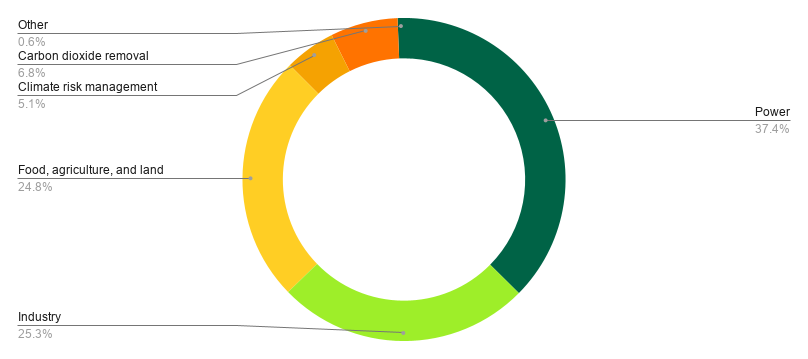
This year, we’re releasing our first-ever sector reports—a single report that connects a set of related strategies under one sectoral umbrella, so you can see the full landscape and how the pieces fit together. In each sector of our global economy, we identify the giving strategies with the greatest potential to cut emissions using our scale, feasibility, and funding need framework.
Below is our sector-by-sector guide to effective climate giving for 2026 and beyond, so you can understand where climate donations can do the most good this Giving Season.
Power
The world is entering an era of growing electricity demand, energy shortages, and reliability risks.
Philanthropy can help meet this demand with clean, reliable, and cheap energy, and this is where our country research and our sector research overlap.
Following our 2025 research into viable pathways for clean energy in the U.S., we shifted our attention to LMICs this year. We zeroed in on the power sectors in India and Indonesia because of their large emissions impact and significant funding need. We also identified regional levers that can lower barriers to clean electricity investment.
Giving strategies we recommend in power:
- Decarbonizing India’s Power Sector
- Decarbonizing Indonesia’s Power Sector
- Derisking Clean Electricity Investments in LMICs
- Unleashing Clean Energy in the U.S.
The Top Climate Nonprofits we recommend:
We plan to release a new sector report on Power in 2027.
Food, Agriculture, and Land (FAL)
Food, agriculture, and land use account for 22–38% of global emissions. Replacing half of the world’s meat and dairy with alternative proteins could avoid 3 billion tons of emissions a year and free up land to store another 3.3 billion. Despite the potential, alternative proteins draw less than 1% of climate philanthropy.
Your donations can help alternative proteins scale by making them cheaper and tastier than conventional meat.
A smaller share of our FAL grants also supports reducing enteric methane, released by cattle and sheep during digestion, to cut emissions from livestock that are not displaced by alternative proteins.
The giving strategy we recommend in food, agriculture, and land:
The Top Climate Nonprofit we recommend:
To learn more, please read our sector report on Food, Agriculture, and Land (FAL).
Industry
Industry produces nearly a third of global greenhouse gas emissions, yet it receives just 2.8% of philanthropic funding for climate mitigation. Iron and steel and cement and concrete are the two heaviest-emitting subsectors, together responsible for about 14% of global emissions.
Cleaner alternatives already exist or are in development, but green premiums remain high. Philanthropy can help address this by lowering the cost of clean production and creating demand.
We also identified decarbonizing light industry, decarbonizing ammonia, and cross-cutting enablers, such as clean high-temperature industrial heat, as promising areas for philanthropy.
Giving strategies we recommend in industry:
The Top Climate Nonprofits we recommend:
To learn more, please read our sector report on Industry.
Carbon Dioxide Removal (CDR)
Even with deep emissions cuts, the world will need to remove carbon already in the atmosphere. Given that carbon removal is a public good with little market demand, and major philanthropic donors have exited the space since 2024, additional funding can make a significant difference.
Philanthropy can create the policy-driven demand and trusted standards that turn carbon removal from a small voluntary market into a durable climate solution that complements deep emissions cuts.
The giving strategy we recommend in carbon dioxide removal:
Climate Risk Management
Climate risk—elevated damage under high-temperature scenarios—matters because damage scales nonlinearly with warming, and the worst-case outcomes carry outsized consequences. We note that our climate risk work complements, rather than replaces, Giving Green’s core focus on cutting emissions.
Solar radiation modification (SRM) is a hypothetical set of technologies that would cool the planet by reflecting sunlight. While we take no position on whether to deploy SRM, we recommend funding the governance and research needed to make any (non-)deployment decision transparent, responsible, and just, including building LMICs’ capacity to shape it.
The giving strategy we recommend in climate risk management:
To learn more, please read our sector report on Climate Risk Management.
Transportation
Reducing emissions from aviation and maritime shipping is challenging because commercially available alternatives to fossil fuel propulsion are limited, and international coordination remains difficult. Philanthropic efforts have historically overlooked greening these transportation subsectors.
While transportation remains one of our prioritized sectors, we evaluated the sector in 2025, so we’re not releasing new research or announcing new grants in this sector this year. We plan to re-evaluate the transportation sector in 2027.
Giving strategies we recommend in transportation:
The Top Climate Nonprofits we recommend:
This Year’s Top Climate Nonprofits
Now in its seventh year, our annual list of Top Climate Nonprofits represents some of the highest-impact giving opportunities today. This Giving Season, we’re also introducing a new cohort model that reflects our biennial evaluation schedule.
We evaluate each organization in the year before its listed cohort, and it remains a recommended Top Climate Nonprofit for the following two years until we evaluate it again. For example, we evaluated organizations in the 2027-2028 cohort this year. All organizations listed below are current recommendations.
Note that organizations are listed in reverse alphabetical order. The listing order shouldn’t be misinterpreted as a reflection of the organizations’ importance or effectiveness.
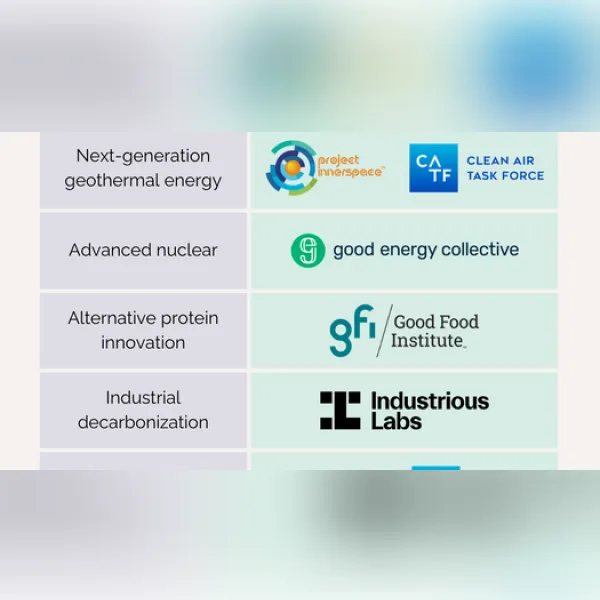
| TOP CLIMATE NONPROFITS | PHILANTHROPIC STRATEGY | COHORT | READ MORE |
|---|---|---|---|
 |
2026-2027 | View Project InnerSpace evaluation | |
 |
2026-2027 | View Opportunity Green evaluation | |
 |
2027-2028 | View Good Food Institute evaluation | |
 |
|
2027-2028 | View Future Cleantech Architects evaluation |
 |
|
2026-2027 | View Clean Air Task Force evaluation |
Year-End Giving Green Fund Grantees
In addition to supporting our Top Climate Nonprofits, the Giving Green Fund also grants to a range of other organizations working across our prioritized sectors and strategies in our year-end grantmaking. We’re also making one discretionary grant to a promising initiative surfaced outside of our usual research and established grantmaking process.
Additionally, we are funding industrial decarbonization work spearheaded by the for-profit think tank, Centre for Research and Implementation for Decarbonization (CRID).
The grantees included in this $40.5 million round are:
- Power
- Clean Air Task Force (CATF)
- Clean Energy Buyers Institute (CEBI)
- DOE Alumni Network
- Duke University’s Nicholas Institute
- Energy Infrastructure Alliance Forum (EIAF)
- Global Power System Transformation Consortium (G-PST)
- Institute for Development of Economics and Finance (INDEF)
- Institute for Energy Economics and Financial Analysis (IEEFA) Indonesia
- Institute for Essential Services Reform (IESR)
- Lighthouse Energy Institute
- National Governors Association (NGA)
- Niskanen Center
- Open Energy Transition (OET)
- Oppenheimer Project
- PowerLines
- Regulatory Assistance Project (RAP)
- RMI
- Vasudha Foundation
- World Resource Institute (WRI), Indonesia
- Food, Agriculture, and Land
- Industry
- Beyond Zero Emissions (BZE)
- The Carboun Institute
- The Center for Green Market Activation (GMA)
- Climate Catalyst
- Council on Energy, Environment and Water (CEEW)
- Future Matters
- Industrious Labs
- International Forum for Environment, Sustainability & Technology (iFOREST)
- Mission Possible Partnership India
- RMI China
- RMI India
- Solutions for Our Climate (SFOC)
- The Superpower Institute
- Vasudha Foundation
- Carbon Dioxide Removal
*Carbon Removal Institute is the 501(c)(3) arm of the Carbon Removal Alliance
- Climate Risk Management
- Other
If you are interested in giving to any of these organizations, we encourage you to reach out to us for more nuanced climate giving guidance and recommendations.
Visit the Giving Green Fund page to explore all year-end grants in more detail and map them to the specific strategies they are targeting.
Grant size depends on several factors, including the organization's size, room for funding, and our collaboration with other donors to support specific opportunities. It shouldn’t be misinterpreted as a reflection of the organizations’ importance or effectiveness.
Five Ways to Take Climate Action
If our research can support your giving this Giving Season, here are five ways to take action:
1. Donate to the Giving Green Fund
Best for: donors who want the simplest way to impact multiple climate solutions
If you want to give based on Giving Green’s recommendations but can’t choose just one organization, the Giving Green Fund makes it easy to support a portfolio of research-backed climate initiatives with a single transaction and without management fees.
2. Donate to Giving Green’s Top Climate Nonprofits
Best for: donors who want to give directly and independently
Alternatively, you can donate directly to one or more of our Top Climate Nonprofits.
3. Support Giving Green’s research and operations
Best for: donors who want to amplify their impact through research
Donations to Giving Green’s operations fuel our research, grantmaking, communications, and more. Plus, your donations keep our climate giving guides free and publicly accessible. For every $1 of operational funding we receive, we unlock an additional $25.90 for effective climate solutions. Donate to Giving Green’s research and operations and multiply your impact.
4. Learn more at our Giving Tuesday webinar
Best for: donors who want to incorporate LMIC giving in their portfolio
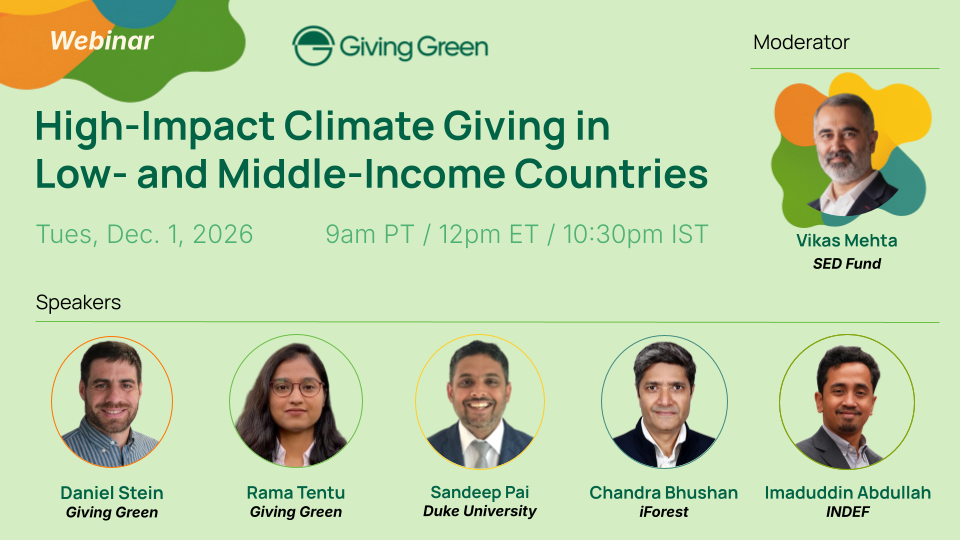
Take a deep dive into high-impact giving opportunities in LMICs at our Giving Tuesday webinar with our founder and executive director, Dan Stein, and our lead LMIC researcher, Rama Tentu. You’ll also hear directly from leaders of climate organizations working in India, Indonesia, and other LMICs on how change happens on the ground.
RSVP for our Giving Tuesday webinar on LMICs here.
5. Reach out to us
We welcome questions, feedback, requests for personalized climate giving support, collaboration inquiries, and more. Whatever it may be and wherever you are in your climate journey, we want to hear from you. Contact us here for personalized climate giving advice.
This is a non-partisan analysis (study or research) and is provided for educational purposes.
Related News


































































Support Our Work
Giving Green Fund
One fund. Global impact. One hundred percent of your gift supports a portfolio of high-impact climate organizations, vetted by our research.
Best for:
Donors who want the simplest way to impact multiple climate solutions.
Top Climate Nonprofits
Meet the organizations on Giving Green’s list of high-impact nonprofits working to decarbonize our future, identified through our rigorous research.
Best for:
Donors who want to give directly and independently.
Support Our Work
We thoroughly research climate initiatives so you can give with confidence. For every $1 we receive, our work unlocks another $25.90 for effective climate solutions.
Best for:
Donors who want to amplify their impact through research.