How Our Team Gives: A Look at Our Personal Donations in 2025
As the end of the year approaches, our team has been reflecting on the causes that inspire us most.
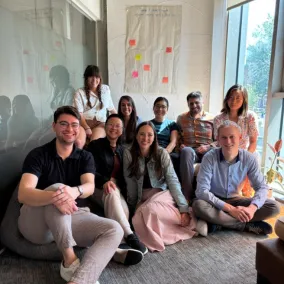
Several of our staff members have volunteered to share where they’ve donated in 2025 and why. Each donation tells a story about what we value, what moves us, and how we hope to make a meaningful impact.
We’re sharing these stories in hopes of sparking connection, gratitude, and maybe even a bit of inspiration for your giving journey.
.webp)
Laura Adkins (Operations Manager)
Over the last few years, I’ve slowly increased the percentage of my yearly earnings that I give. This year, it will be somewhere between 5% and 6%. I plan to keep making incremental increases to this amount in the coming years.
As a former music educator, I will always value the connection, community, self-confidence, and open-mindedness that a good music education can instill. I’ve seen how music education challenges students to think collaboratively and creatively, and equips them with skills to innovate and lead. My largest donations were to three Chicago-area El Sistema-style music programs that I have worked or volunteered for: Chicago Arts and Music Project, Music Inc, and Peoples’ Music School.
I started my role with Giving Green in mid-October, and am excited to learn more about the work of all of our incredible grantees. For now, I’m splitting my climate-related donations between our Giving Green Fund and Good Energy Collective. I’m a lifelong resident of Illinois, which has the most nuclear reactors in the U.S. and generates over half its electricity from nuclear power, so supporting the responsible innovation and deployment of nuclear power feels like a very locally-relevant issue to me.
Finally, this year I also contributed to a number of individual GoFundMe campaigns and local collections for Chicago neighbors targeted by ICE raids and detentions.
Jackie Ciraldo (Associate Director of Growth)
2025 was a big year for local elections! As a New Yorker, a big portion of my household’s giving went toward supporting a candidate in a very important local race.
The rest of my giving went to disaster relief for the communities impacted by Hurricane Melissa in Jamaica. Jamaica has always been a very special place for the women in my family. Since before I was born, my mother has been going with her close friends—she calls them her sisters, I call them my aunties. It’s a happy place and a sanctuary for all of us, in large part due to the hospitality and kindness of the people who run the Rockhouse Hotel, our home away from home when we visit. It’s beautiful and peaceful, but what really makes it one-of-a-kind is its commitment to social and environmental impact. In addition to being a sustainable, Green Globe Certified hotel, they run the Rockhouse Foundation, which has been supporting education in West Jamaica for over 20 years. When Melissa hit, the foundation set up a relief fund to rebuild the Sav Inclusive School and help the students, families, and teachers most affected by the storm.
So, this year, my family and I decided to take a portion of what we would normally spend on Christmas gifts for each other and give it to Hurricane Melissa relief. I gave half of my portion to the Rockhouse Foundation’s relief fund, and the other half to GiveDirectly’s cash relief for Hurricane Melissa survivors in Jamaica.
Greer Gosnell (Director of Research)
My partner and I make monthly recurring donations, directing 85% to Giving Green Top Nonprofits and 15% to value-aligned political movements. We also occasionally make ad hoc donations to friends’ fundraisers or to time-sensitive, high-impact causes. We’re big believers in “voting with our dollars!”
Most of our annual giving goes to the Good Food Institute, reflecting our commitment to reducing food system emissions and our shared passion for environmental and animal welfare (we’re vegan-leaning flexitarians who also care a lot about preventing food waste). We also support the Clean Air Task Force—a nonprofit we’ve backed since first learning about Giving Green and Founders Pledge’s recommendations years ago—to help address bottlenecks in the U.S. clean energy transition.
Now that I work at Giving Green, I imagine our giving portfolio will continue to evolve as I learn more about the impactful work so many inspiring climate nonprofits are doing.
Kim Huynh (Associate Director of Research)
My family plans on donating about 50% of our annual giving to the Giving Green Fund and 50% to GiveWell’s All Grants Fund. I feel very excited about Giving Green’s grantees, especially the ones working to unleash clean energy in the U.S., because they give me hope for the future. I am also donating to GiveWell’s All Grants Fund because, having previously worked at GiveWell, I know that its team has put a ton of effort into identifying high-impact initiatives that can save or improve the most lives per dollar. I think its work has become increasingly important in a world with less funding for global health aid.
My husband and I have also made smaller donations to San Francisco-based organizations—mostly focused on public transit, housing, and the outdoors—and contributed to fundraising by friends, family, and political campaigns. We think it’s important to support causes close to us because we believe we have a responsibility to use our means to help our community.
Enzia Schnyder (Research Associate)
In 2019, a friend ‘donation-pilled’ me, and since then I’ve committed to giving at least 🔸10% of my income each year. I care about a wide range of cause areas, so I try to balance my donations across helping humans and other sentient beings, as well as between near-term and long-term impact. I prefer contributing to thematic regranting funds rather than making direct donations because I think the people managing them are better equipped than I am to identify the most effective organizations.
This year, I split my donations among Giving What We Can’s Animal Welfare, Global Health and Wellbeing, and Risks and Resilience funds. I also supported the Good Food Institute, as I feel especially aligned with their mission and its co-benefits for animal welfare, climate, biodiversity, and pandemic risk. I have also made some small contributions to fundraisers throughout the year that relate to my friends and communities.
This is the first year I’ve chosen not to donate to the Giving Green Fund. Since my professional work already focuses on climate impact, I decided to direct my personal giving toward other cause areas (I use my salary as a rough proxy for the monetary value of my contribution to the climate cause area). If I ever stop working in a high-impact climate organization, I would likely resume contributing to the fund. I am also interested in exploring political donations in future years, but haven’t yet had a chance to look into this further.
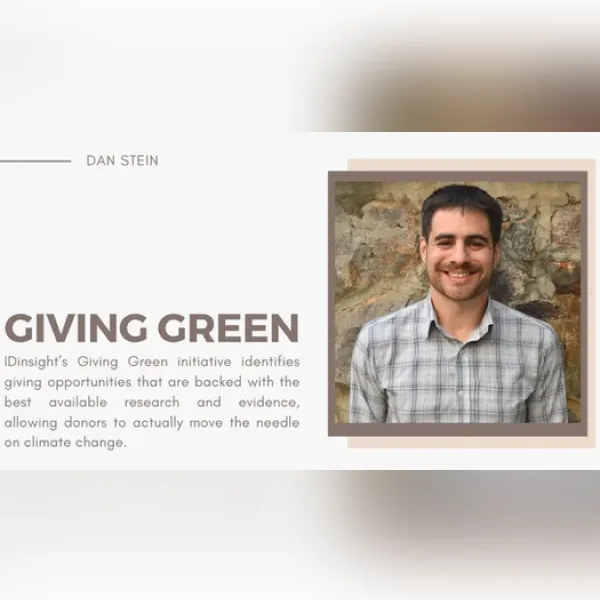
Dan Stein (Executive Director)
In 2025, I plan to split my charitable giving across GiveWell’s All Grants Fund and GiveDirectly. Since I spend most of my time doing climate philanthropy, I like to use my personal giving to support other causes I find meaningful, particularly global health and development. I am broadly impressed with the quality of GiveWell’s work, and would consider them to be a benchmark for my own giving. Since I was once a development economist and am pretty well-connected among development nonprofits, I always have the ambition to use my own analysis and networks to “beat the market”, and identify off-the-radar opportunities that I think are more impactful than GiveWell’s funds. However, this year (as has happened many years), I haven’t found the time to do that.
I am allocating part of my donations to GiveDirectly, which is a former GiveWell Top Charity, and with whom I’ve worked closely over my career. GiveWell’s updated analysis states that GiveDirectly’s work is 30-40% as effective as their benchmark, but I’d consider that well within the margin of error, especially given the tricky nature of comparing health interventions to a cash transfer. I am also attracted to GiveDirectly’s approach as I believe that direct cash transfers have upsides of respect, empowerment, and ownership that cannot be quantitatively integrated into cost-effectiveness models.
Emily Thai (Chief of Staff)
I give at least 10% of my income every year, and feel very fortunate to be in communities like ours where giving is a regular practice! My giving is always intentionally uncorrelated with what Giving Green recommends, for a couple of reasons: I think individual smaller donors can take advantage of our ability to fund smaller/newer organizations and non-c3 efforts, which are systematically neglected by larger funders, and just for vibesy reasons I like to balance my work in climate with giving largely outside of climate.
This year, my largest donations are to (1) Mujeres Unidas y Activas, which organizes immigrant and indigenous women in the Bay Area around both rapid-response needs and longer-term political advocacy; (2) Jane Addams Senior Caucus, which houses a newer tenant union organizing effort in Chicago that I’ve supported for a few years now; (3) a friend’s political campaign. I prefer to make fewer, larger gifts and focus on organizations that I think I can assess as effective; in practice, this usually means organizations that are focused on grassroots organizing and power-building, and where I have the community relationships to understand their work deeply.
It’s also really important to me to encourage more people to give, so I regularly host small fundraisers and try to support friends when they fundraise for a cause! This year, I’ve made smaller donations to organizations like GiveDirectly, Faith in Action Bay Area, Public Grids, and others. I also make small donations to support services I rely on (Signal, local journalism, etc).
Christina N. De Jesús Villanueva (Research Associate)
For me, 2025 has been a year marked by financial insecurity and threats to my stability. At the beginning of the year, I made it my mission to save enough to keep myself afloat should my income suddenly stop. I canceled my recurring donations, streaming services, and cut back on every expense I could.
In the second half of the year, I began working at Giving Green. With a renewed sense of stability—and a rainy-day fund secured—I started making recurring donations again.
I don’t have a yearly goal for my giving. I give what I can, when I can, and I recognize that sometimes I’ll have the privilege to give, and other times, I won’t.
I currently give to National Public Radio (NPR) because, for the first time since its creation, it lost all federal funding support this year. I also donate to Comedores Sociales de Puerto Rico, an organization whose mission is to eradicate hunger in Puerto Rico. They helped me during a period of food insecurity in their early days back in 2013 through their “Mesa Solidaria”. Since then, their services have expanded—especially after Hurricane Maria in 2017—to offer support during crises. I also contribute monthly to Guakia, a local agroecological farm project led by women in Puerto Rico.
Today, I was able to establish a monthly donation to Ayuda Legal Puerto Rico. They provide information that empowers people in Puerto Rico as they navigate the justice system. I value their legal templates, accessible explanations of the law, and their live chat, where you can speak with a lawyer and ask questions.
Soemano Zeijlmans (Research Associate)
In 2025, I took Giving What We Can’s Trial Pledge, committing to donate part of my income to effective charities for at least a year. I’ve set up monthly recurring donations to several organizations and funds working on animal welfare, climate change, and global health.
I give most of my donations to the Shrimp Welfare Project, a relatively new nonprofit working to reduce the (much neglected!) suffering of shrimp on farms and during slaughter. I also support two of Giving Green’s Top Climate Nonprofits: The Good Food Institute (my former employer) and Future Cleantech Architects. Lastly, I donate to expert-led funds through Doneer Effectief, a Dutch foundation that helps people improve the impact of their giving. I support their Poverty & Health Fund and just made my first donation to their newly started Women’s Emancipation Fund.
Besides these donations, I donate a few bucks per month to support the messaging app Signal.
Related News
.webp)
.webp)
.webp)


.webp)
.webp)
.webp)



.webp)


.webp)
.webp)
.webp)
.webp)
.webp)




.webp)
.webp)
.webp)

.webp)




.webp)
.webp)


.webp)
.webp)
.webp)
.webp)


Support Our Work
Giving Green Fund
One fund. Global impact. One hundred percent of your gift supports a portfolio of high-impact climate organizations, vetted by our research.
Best for:
Donors who want the simplest way to impact multiple climate solutions.
Top Climate Nonprofits
Meet the organizations on Giving Green’s list of high-impact nonprofits working to decarbonize our future, identified through our rigorous research.
Best for:
Donors who want to give directly and independently.
Support Our Work
We thoroughly research climate initiatives so you can give with confidence. For every $1 we receive, our work unlocks another $25.90 for effective climate solutions.
Best for:
Donors who want to amplify their impact through research.