Voices of Impact: Sakshi Balani on the Complexities of Decarbonizing Heavy Industry in India and Indonesia
“We now have evidence that with the right policies, the steel industry [in India] can contribute to gross domestic product (GDP) five times compared to the business-as-usual scenario in 2050, enhance trade performance, turn a $405 million USD steel trade deficit into an $8.2 billion surplus, as well as increase labour demand by 40-60%.”
Climate Catalyst is a Giving Green Fund grantee focused on sparking climate action through limited-run projects in crucial sectors and geographies by building evidence bases and networks to shape policies and markets. Giving Green funds its work focused on accelerating climate mitigation in low- and middle-income countries (LMICs), including projects to decarbonize industry in India and Indonesia. Its work sits within three of our prioritized philanthropic strategies:
- Decarbonizing Industry
- Decarbonizing India’s Power Sector
- Decarbonizing Indonesia’s Power Sector
Next month, we will publish new research on all three strategies, along with a prioritization brief breaking down why our research has led us to place a growing emphasis on climate mitigation in LMICs. As a result, you can expect grants to high-impact organizations leading this work—like Climate Catalyst—to become a bigger piece of the Giving Green Fund portfolio.
For this month’s installment of Voices of Impact—a blog series spotlighting Giving Green’s Top Climate Nonprofits and Giving Green Fund grantees—we thought it would be fitting to connect with Sakshi Balani, Director of the India and Policy programs at Climate Catalyst. She walked us through Climate Catalyst’s work, the importance of context when expanding initiatives into new countries, and how she thinks about balancing funding between high-income countries and low- and middle- income countries.
The Q&A has been edited for brevity and clarity. The views and experiences shared in this conversation are those of the authors and reflect their unique perspective. We’re grateful to them for sharing their story with us.
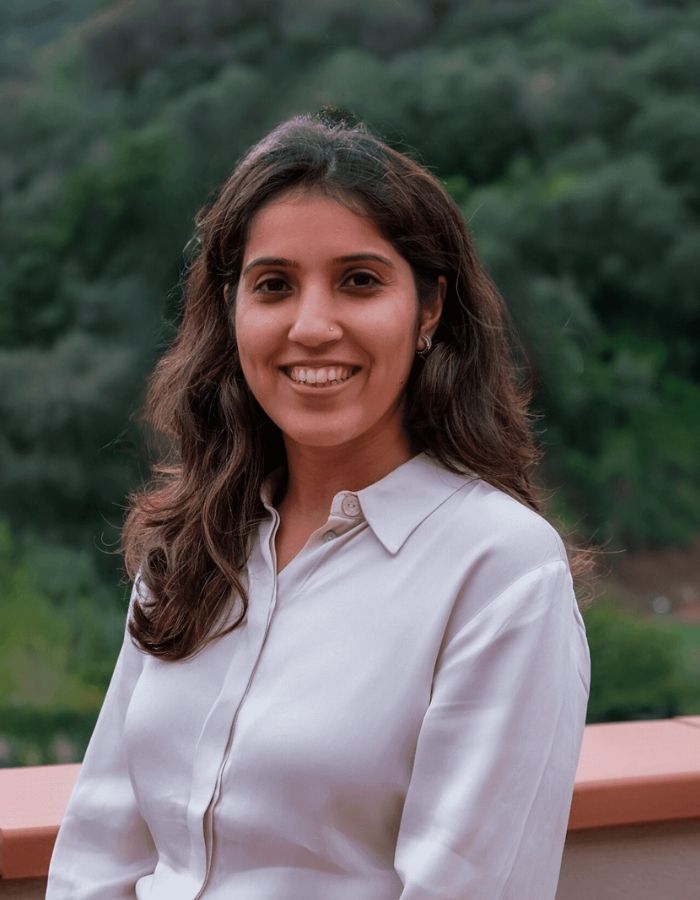
Q: What has been your career path to and within Climate Catalyst?
I grew up in Kolkata, a city in India where the gap between struggle and comfort is impossible to ignore. Early on, I understood that access to healthcare and education was mostly a matter of luck—an accident of birth, not merit. Studying Sociology at Colby College gave me the language for what I’d seen growing up: structural inequality, not misfortune, kept people poor.
That realization pulled me back to India. I joined PRS Legislative Research, advising Members of Parliament on agriculture and rural development legislation. I spent two years embedded in the debate over what became the National Food Security Act. I saw the flaws in India’s public distribution system, but also that turning food access into a legal right meant a poor household could now take the state to court over its own survival. That was the moment I understood policy is the difference between a right you can enforce and a hope you can’t.
After a Master’s in Public Policy in Singapore, I worked across nonprofits on public education, air pollution, transport, and agriculture before joining Climate Catalyst nearly five years ago.
Today I lead our work in India. The country will be one of the hardest hit by climate change, and heavy industry accounts for 25% of its greenhouse gas emissions. Addressing these industries is critical for the country’s future. This work has since become a model we’re now applying in Indonesia, another major steel producer.
Q: Could you briefly introduce Climate Catalyst and your work decarbonizing heavy industry in India and Indonesia?
At Climate Catalyst, we work to accelerate the decarbonisation of heavy-emitting industries in Europe and Asia by building the coalitions needed to secure policy change and shift financial flows. Heavy industries generate roughly 40% of global emissions yet attract under 3% of philanthropic climate funding.
In India, we initially focused on the steel sector—responsible for 12% of domestic emissions. Our ambition is for a net-zero pathway by 2060, a decade ahead of the national target. We established and now manage the India Green Steel Network (IGSN), whose collective engagement directly informed the Ministry of Steel’s September 2024 “Greening the Steel Sector” roadmap.
In 2024, we expanded our work into Indonesia, where heavy industry drives over 43% of national energy consumption. Here we are working towards a net zero steel sector by 2050.
Q: What went into your decision to focus your programs on steel specifically, and what led you to start with India, and now Indonesia?
When we started scoping heavy-emitting industries in 2021, steel was responsible for 11% of global CO2 emissions. Steel emissions were highly concentrated in a few countries, with future growth overwhelmingly coming from India and Southeast Asia.
We started with India as it was the world’s second-largest producer of crude steel. The Indian steel industry’s emissions are ~35% higher than the global average, driven by an 85% reliance on coal and a coal-heavy electricity grid. As India develops, steel production is expected to triple to 600 million tonnes by 2050.
In Indonesia, awareness of deforestation and coal power is high, but industry often flies under the radar, despite accounting for 30% of the country’s emissions. Steel is the second biggest industrial emitter after cement. Decarbonising steel is crucial not only to meet the country’s climate targets, but also to ensure growth doesn’t come at the cost of our health and lives.
Despite some progress by government and industry in both countries, this transition is not happening at the pace or scale needed.
Efforts to decarbonise have been fragmented and under-resourced. We saw an opportunity here.
Q: Collective action and stakeholder engagement play a major part in your theory of change. Which stakeholder groups have been the most challenging to engage in this work in India and Indonesia?
Industry actors and policymakers have been hardest to engage. This is not because they’re unwilling, but because they’re waiting on each other to move first.
Financial institutions tell us there aren’t enough bankable pipelines. Steel companies tell us there’s no market for green products. Within the government, responsibility is split between those focused on standards, procurement, trade, and finance, who often have competing interests and limited fiscal space. Everyone’s logic is individually sound, but it adds up to gridlock.
We’ve found it easier to build trust among civil society organisations and academic institutions, who are already used to collaborating.
Moving industry and policymakers means breaking down silos and building trust between actors who wouldn’t normally be in the same room. This takes time. But by finding the right meeting points and using open dialogue, we’re able to bring our combined knowledge and experience to bear on shared goals.
Q: You’ve done significant work to advance Green Public Procurement (GPP) policy. Could you briefly explain the tenets and challenges of GPP in creating demand for green procurement and policy changes?
Governments procure huge volumes of steel for roads, metros, airports, ports, and housing. A Green Public Procurement (GPP) mandate means those purchases start accounting for how the steel was made, not just what it costs. Producers need confidence there’s a buyer before they’ll invest in capital-intensive green technologies, and GPP gives them that, using money governments already plan to spend.
The scale is significant. In India, public procurement runs over $500 billion a year, and government projects alone use about 31.6 million tonnes of steel. Shifting even a share of that changes the market. In December 2024, India introduced a green steel taxonomy defining what counts as green steel. The next step is a GPP mandate, which we expect soon.
Earlier this year, we published a study with the Confederation of Indian Industry showing that a 26% mandate on government projects could create demand for 16 million tonnes of certified green steel by 2030. Of 28 steel producers surveyed, 93% said they could supply green steel once a mandate is announced. Shifting to green steel would add just 0.2-1.2% to the cost of a project.
Indonesia is earlier in the process. While regulation sets rules for sustainable procurement, there are no carbon limits for steel, making this voluntary in practice. The main challenge is the lack of a strong, credible market signal to support investment at scale, given producers’ large upfront capital requirements.
The obstacles are similar in both countries. Finance ministries are wary of cost, even though it’s marginal for the end product. Buyers want proof green steel can be delivered at scale. Certification systems are still nascent, unable to distinguish green from ordinary steel in a standard tender. And GPP cuts across several ministries, requiring coordination procurement teams haven’t managed before.
Q: You’ve been building a network of green steel orgs in Indonesia, as you did in India—how have you been approaching this, and do differences in external demand and incentives change your approach between these two countries?
Since its formation in 2022, the IGSN has grown to over 70 organizations across civil society, industry, and finance. Our aim was to create a space for shared learning, collaboration, and collective action.
Growing this network has taught us what it takes to build trust and grow meaningful partnerships, and the time that requires. The IGSN began as a forum for civil society organisations. But we quickly realised we also needed to bring industry voices in, to design work that addressed their concerns. When we set up the Green Steel for Growth network in Indonesia, we brought this learning in from the start.
That said, context has always shaped how we design our networks. In India, a key gap was scaling finance for low-emission technology. Our Sustainable Finance Working Group aimed to bring financial institutions, industry, and civil society together to address this.
In Indonesia, many organisations were already working on market creation, but in silos. So we set up a Market Creation Working Group to help members align on a shared strategy, reduce duplication, and collaborate on joint research and events.
Q: What is one major accomplishment from recent years that best illustrates how donations translate into real-world impact?
In Indonesia, the government has made 8% economic growth by 2029 its singular national priority. We quickly learned that to build political will, the environmental urgency of decarbonisation needs to be coupled with the economic opportunity.
So we partnered with Universitas Gadjah Mada to model the potential for economic growth and job creation from the steel transition. At our launch event, we brought our research to over 100 people from industry, civil society, and policy, including four policymakers from the Ministries of Industry, Trade, and the National Procurement Agency.
We now have evidence that with the right policies, the steel industry can contribute to gross domestic product (GDP) five times compared to the business-as-usual scenario in 2050, enhance trade performance, turn a $405 million USD steel trade deficit into an $8.2 billion surplus, as well as increase labour demand by 40-60%.
This evidence makes it easier for policymakers to justify decarbonisation as it aligns with ministerial and presidential priorities. None of this would have happened without philanthropic support for the research and convening.
Q: Given your work with both the public and private sector, how has your approach adapted in the current geopolitical context of changing global trade policy (incentives, tariffs, etc.)? What are you watching closely for the next few years?
The EU’s Carbon Border Adjustment Mechanism (CBAM) came into force this year, and with similar measures being discussed elsewhere, there’s growing recognition that demand for green industrial products will only increase. Markets that can’t supply low-carbon products risk losing exports. That’s creating a real incentive for steel to decarbonise in both countries.
But the implications for India and Indonesia are quite different. India is a domestically focused market. Exports only account for around 4% of its finished steel. Indonesia is the opposite: 80-90% of its steel production is exported, and that industry is specialised and heavily financed by China. So a mechanism like CBAM bites much harder and faster in Indonesia.
In India, where trade exposure is low, our work focuses on building domestic demand through GPP and pushing industry toward greener technologies by supporting innovation and engaging financial institutions. In Indonesia, because export markets are the primary pressure point, our focus is building an economic case based on global steel market trends, using GPP to keep carbon revenues in the country rather than paying for dirtier exports.
I’m watching three things closely: whether CBAM’s scope expands beyond steel, cement, and aluminium into products more central to Indonesia’s exports; whether the U.S., U.K., or Southeast Asian trading partners follow the EU’s lead; and how green finance flows respond, since access to low-cost capital for decarbonisation will increasingly determine who can compete once carbon costs are priced into trade.
Q: High-income countries (HICs) are today’s top emitters, but our research shows that low- and middle-income countries (LMICs) are on track to account for the majority of greenhouse gas emissions by 2040. As an organization that is working on interventions in both HICs and LMICs, what would you say to donors weighing how to consider today’s highest emitters versus tomorrow’s in their giving strategies?
To win on climate, we cannot choose between where emissions are coming from today and where they are heading tomorrow. We need to address both with urgency.
Investing in HICs gives us immediate momentum. These nations can absorb the initial costs of innovation. Funding work here helps lower the cost of green technologies like clean heat and heavy industry solutions. At the same time, supporting LMICs offers a chance to make a lasting difference. By stepping in early as these economies expand, funding can help them skip polluting fossil fuels in this decisive decade as new capacity comes online. By working across both, Climate Catalyst takes proven ideas and policies from HICs and adapts them to the political and economic contexts of the LMICs we work in.
Related News

.webp)

.webp)




.webp)
.webp)


.webp)

.webp)





.webp)


.webp)




.webp)
.webp)

.webp)
.webp)

.webp)


.webp)
.webp)

.webp)




.webp)



.webp)

.webp)
.webp)





.webp)

.webp)
.webp)
Support Our Work
Giving Green Fund
One fund. Global impact. One hundred percent of your gift supports a portfolio of high-impact climate organizations, vetted by our research.
Best for:
Donors who want the simplest way to impact multiple climate solutions.
Top Climate Nonprofits
Meet the organizations on Giving Green’s list of high-impact nonprofits working to decarbonize our future, identified through our rigorous research.
Best for:
Donors who want to give directly and independently.
Support Our Work
We thoroughly research climate initiatives so you can give with confidence. For every $1 we receive, our work unlocks another $25.90 for effective climate solutions.
Best for:
Donors who want to amplify their impact through research.