Future Cleantech Architects: Top Climate Nonprofit Evaluation 2026
Summary
- What is Future Cleantech Architects (FCA)?
Future Cleantech Architects (FCA) is a climate innovation think tank based in Germany. Hard-to-abate sectors—such as heavy industry, firm power, and aviation—require significant technological advances to decarbonize yet are often neglected by funders and governments. FCA was founded in 2020 to close these innovation gaps by (i) engaging with policymakers to prioritize research, development, and demonstration (RD&D) for these critical interventions and (ii) coordinating and contributing to the innovation ecosystem to advance scientific knowledge for these applications.
- How could Future Cleantech Architects address climate change?
FCA promotes and advances innovation in hard-to-abate sectors through policy advocacy, field building, thought leadership, and technical analysis. We believe its efforts will accelerate the transition toward clean industrial processes and energy systems. FCA’s priority sectors include heavy industry, clean firm power, aviation, shipping, and construction.
- What is Future Cleantech Architects’ theory of change?
FCA’s policy advocacy and field-building efforts are based on its technical analysis, which identifies innovation gaps and barriers to progress. We think the main outputs from FCA’s policy advocacy would be the EU increasing its funding for industrial decarbonization RD&D, implementing regulations that support low-carbon production, and enacting low-carbon procurement policies. We think its field-building work elevates neglected and important sectors and results in a) more money and talent directed toward high-impact decarbonization pathways and b) more knowledge, technical, and policy support accessible for producers to advance RD&D projects. Although FCA’s work has an EU focus, we think there is a strong argument for global spillover effects through policy leadership, trade regulations like the carbon border adjustment mechanism, and technological innovation.
- What is Future Cleantech Architects’ cost-effectiveness?
In 2024, we developed a highly subjective cost-effectiveness analysis (CEA) to estimate the costs and impacts of FCA’s policy engagement for the third revision of the EU’s Renewable Energy Directive. Overall, we estimate that FCA is highly cost-effective. We have low confidence in the accuracy of this CEA, and focusing this calculation on one aspect of FCA’s policy engagement is unlikely to generalize to the organization’s overall cost-effectiveness. However, we view it as a positive input into our overall assessment of FCA.
- Is there room for more funding?
FCA has raised €6 million (around $6.7 million USD) in funding commencing in 2027, equivalent to a ~1.7-year runway as of October 2026. FCA would use additional funding to grow its runway, thereby ensuring that it can safely make competitive hires for its expansion plans. Based on its fundraising success, we think FCA may deploy the marginal dollar more slowly than some of our other Top Climate Nonprofits, and that it has a relatively low capacity to absorb additional funds at the time of publication. This assessment is temporary, and we will continue to monitor FCA’s fundraising and expansion plans and update our views accordingly, since we think FCA could have a larger funding gap in the near future.
- Are there major co-benefits or potential risks?
We think the co-benefits and potential risks of FCA’s efforts are similar to those for the broader effort to decarbonize heavy industry—mainly, the co-benefit of improved air quality and uncertain effects on global employment.
- What are the key uncertainties and open questions?
Our key uncertainties include the degree to which FCA can absorb more funding, the feasibility of reducing aviation emissions, and the feasibility of ambitious climate legislation in the current EU policy ecosystem.
- What is the bottom line and what are the next steps?
We classify Future Cleantech Architects (FCA) as one of our Top Climate Nonprofits for 2027-2028. Due to its focus and expertise in neglected areas of climate mitigation, we think FCA fills a critical gap in the civil society ecosystem. We especially value FCA’s pragmatic, holistic, and impact-focused approach to policy advocacy. FCA consistently receives engagement requests from policymakers, resulting in a strong track record of shaping EU and global policy discourse in hard-to-abate sectors.
This is a non-partisan analysis (study or research) and is provided for educational purposes. Unless otherwise cited, information in this nonprofit evaluation comes from direct correspondence with Future Cleantech Architects.
Future Cleantech Architects is a registered nonprofit in Germany.
Questions and comments are welcome at hello@givinggreen.earth.
What Is Future Cleantech Architects?
Future Cleantech Architects (FCA) is a climate innovation think tank based in Germany. FCA was founded in 2020, and its work focuses on neglected and hard-to-abate sectors, such as heavy industry, aviation, and clean firm power. FCA’s key objective is to ensure taxpayers’ funding for cleantech innovation is used effectively. It does this through policy advocacy, field building, thought leadership, and technical analysis. Its scope of work ranges from EU and Member State policy to engagement with international organizations like U.N. bodies. We base our recommendation on FCA’s work on decarbonizing industry, aviation, and shipping and have not deeply assessed its efforts in other sectors. See our reports for more information on Industry, Reducing Aviation Emissions, and Reducing Maritime Shipping Emissions.
FCA was founded by Dr. Peter Schniering. Peter has a PhD in climate policy and technology, has consulted for UN Climate Change and the International Energy Agency (IEA), and has served as a board member of the World Economic Forum’s Sustainable Energy Innovation Panel and its Sustainable Energy Innovation Fund. As of October 2026, FCA has 22 full-time equivalent staff and is headquartered in Remscheid, Germany.1 It has regional hubs in Amsterdam, the Netherlands; Brussels, Belgium; and Cambridge, UK.
-----
1FCA’s total staff count is 27 people, but some staff work part time.
How Could Future Cleantech Architects Reduce Greenhouse Gases?
In 2023, the IEA estimated that around 35% of progress to net zero will come from technologies still under development.2 FCA promotes and advances innovation in neglected sectors by engaging with policymakers to prioritize R&D, building and coordinating the field, and directly engaging in research.
We think the EU is an important region for both technology and policy innovation and that EU policy has spillover effects on global emissions. For example, the EU’s Carbon Border Adjustment Mechanism (CBAM) incentivizes its importers to reduce the embedded emissions of products and incentivizes foreign policymakers to enact their own carbon prices. The EU's fuel rules for aviation and shipping send some of the world's strongest long-term demand signals for low-carbon fuels. Major heavy industry sectors are also included in key EU policy instruments like its Emissions Trading Scheme, Net-Zero Industry Act, and Innovation Fund. We think EU policy is especially open to nonprofit advocacy, that FCA has demonstrated a sophisticated ability to use EU policy to drive progress, and that FCA can help secure further policy wins in the coming years.3
Sectors and Technologies We Assessed
Cement
Cement manufacturing accounts for around 8% of global emissions.4 Cement production is considered difficult to decarbonize because of its high energy demand and because two-thirds of cement’s direct emissions are a result of chemical reactions that cannot be mitigated by using clean energy.5
FCA advocates for a combination of solutions to reduce cement emissions. Namely, reducing demand for concrete; integrating carbon capture, use, and storage (CCUS); using renewables to power manufacturing; and developing alternative manufacturing processes. It advocates for prioritizing the most cost-effective solutions, such as alternative binders, ahead of more costly and disruptive solutions, like CCUS. It specifically recommends policies that enhance material and structural efficiency, leverage carbon pricing, increase access to green finance, mandate green public procurement, and adopt performance-based standards.6
In addition to its policy engagement, FCA also co-developed the CemSol research consortium, a partnership with the German Federal Ministry for Economy and Energy, the German Aerospace Center (DLR) Institute of Future Fuels, ThyssenKrupp, and the DIRKRA group. The consortium investigated how solar thermal energy can supply the high-temperature heat needed for cement manufacture and make capturing process emissions easier. FCA assessed the global scalability of the process, estimating the global mitigation potential of CemSol and co-authored a techno-economic study of the process.7 The project concluded in 2026; the consortium developed a successful technological prototype and found that the economic feasibility was roughly in line with some types of CCUS, but could be less competitive than electrified heating.
Industrial Heat
Three-quarters of industrial CO2 emissions result from burning fossil fuels to provide process heat.8 Temperatures up to ~400°C can be electrified relatively easily with mature technologies and can also, in several instances, be cheaper than fossil-fuel alternatives.9 On the other hand, significant engineering and economic challenges must still be overcome to electrify high-temperature heat (HTH) processes (defined by FCA as 500-2000°C), but commercialization is underway; electrification could be feasible in the medium term.10 FCA works across the industrial heat temperature spectrum, but focuses more on HTH because it requires more innovation.
FCA’s 2024 HTH report provides a technology assessment and policy recommendations for decarbonizing HTH processes. Its HTH decarbonization strategy is based on replacing fossil heat with electric heat and thermal energy storage (TES), along with a further expansion of other clean energy technologies, including clean firm power (e.g., geothermal and nuclear power) and renewable heat (e.g., solar thermal and geothermal heating). It advocates for policies that accelerate the deployment of technologies to lower electricity costs and increase R&D funding for clean electric and thermal heat technologies.
In 2025, FCA published a policy brief on scaling thermal energy storage (TES) and, at the European Commission’s request, prepared case studies showing that TES is a cost-effective enabler for industrial heat electrification in the dairy and steel industries. The Commission’s July 2026 Electrification Action Plan notably cited one of these case studies.11
FCA’s credibility in this area led to it advising the Commission on the design of the EU’s first auction for clean industrial heat in 2025, with a budget of up to €1 billion ($1.1 billion USD).12 The auction selected 65 projects and awarded around €400 million ($450 million) in grants, which the Commission expects to avoid more than 6.6 million metric tons of CO2 over 10 years.13 FCA has since worked with the Commission to assess the auction’s impact after funds allocation, and its valuable contributions led the Commission to invite it to help design the second auction in 2026, also worth €1 billion.
We think the Commission’s continued requests for FCA’s input, and its citation of FCA’s analysis in a flagship policy document, are positive signals of FCA’s position as a trusted technical contributor to EU industrial heat policy.
Aviation and Maritime Shipping
Aviation and maritime shipping account for roughly 2.5% and 3% of global emissions respectively, and both sectors’ emissions are expected to grow as demand rises.14 Aviation’s total climate impact is even larger, because its non-CO2 effects, mostly from contrails, are at least as significant as its CO2 emissions.15 Both sectors are considered hard to abate: aircraft and ships stay in service for decades, much of their activity crosses borders so effective regulation requires multilateral consensus, and decarbonization technologies are still being commercialized.16
FCA’s aviation priorities include reducing aviation’s contrail emissions and directing innovation funding toward critical research gaps across aviation based on hydrogen, electric, and sustainable aviation fuels (SAFs). Its policy priorities include advancing policies to reduce contrail emissions, promoting land-based alternatives to short-haul flights, strengthening carbon pricing mechanisms such as the Emissions Trading System (ETS), increasing R&D spending for innovative electric propulsion technologies, and supporting fuel mandates ReFuelEU Aviation and FuelEU Maritime.
Shipping is an emerging workstream for FCA. It has completed new research on shipping decarbonization and is building an interactive tool for exploring decarbonization pathways. It held its first Coffee & Cleantech briefing on shipping, attended by officials from the European Commission and Parliament.17 It also plans to publish a broader shipping decarbonization report ahead of the revision of FuelEU Maritime.
FCA also advocates for the prioritization of scarce e-fuels and biofuels for aviation and shipping rather than road transport, since their use in road transport is less energy- and cost-effective than electric vehicles or internal combustion engines.18 It recommends removing the fuel credit system from the Commission’s proposed revision of the CO2 standards for cars and vans so that these resources can be instead used for harder-to-decarbonize sectors.19 We think FCA’s cross-sectoral, systems view on resource prioritization is generally neglected in advocacy discourse.
In September 2025, the European Parliament’s Committee on Industry, Research and Energy (ITRE) asked FCA to produce a technical report on the Commission’s Delegated Act setting the greenhouse gas methodology for low-carbon fuels with the purpose of providing evidence to inform the Committee's final decision. FCA was also asked to present its findings directly to ITRE. The Committee agreed with FCA’s recommendation and the Act entered into force in November 2025. We view this engagement as a positive signal that the Parliament values and trusts FCA’s technical expertise and recommendations, especially because the Act was highly contested.20
FCA is also currently preparing a technical assessment of the scalability, risks, and constraints of different SAF production pathways, following its discussions with EU policymakers; chairs a working group on reducing the sulfur and aromatic content of jet fuel to limit contrail formation and air pollution; and participates in an NGO coalition working on the revisions of the EU ETS and ReFuelEU Aviation.
Hydrogen
Hydrogen is likely to play a large role in the future decarbonization of sectors where alternative solutions are unfeasible, such as certain heavy industry and transport applications.21 However, hydrogen production today is almost entirely fossil-based, and low-carbon hydrogen meets only a fraction of global demand.22 Therefore, FCA emphasizes the need for policymakers to prioritize hydrogen use for sectors where it is necessary and deprioritize use for sectors where alternatives exist that are more efficient or have a lower carbon abatement cost, such as light-duty transport, low-temperature heating, and power generation.23
In early 2024, FCA engaged with key journalists and policymakers on hard-to-abate sectors through the Munich Security Conference and the Future Cleantech Festival. As a direct result, it learned of major potential funding to support synthetic natural gas (SNG) deployment. This prompted FCA to conduct a detailed analysis of SNG, finding that it is an inefficient and energy-intensive option compared to other decarbonization pathways.24 FCA summarized its findings in a brief presentation, which was used in bilateral discussions with policymakers and journalists, and also launched a wider social media campaign around different hydrogen derivatives and use cases. Its work resulted in an influential article in Frankfurter Allgemeine, where FCA was extensively quoted. We believe this is indicative of FCA’s thought leadership and expertise on the key concerns and risks associated with SNG. Ultimately, the government chose not to support SNG projects during this round of funding, a result which we believe is in part due to FCA’s work.25
FCA is also engaging with the Commission ahead of the upcoming revision to the EU’s hydrogen strategy. As part of this work, FCA published a 2026 policy standpoint, identifying the most important industrial sectors for hydrogen development, and was also invited to speak in a private policy seminar and the Commission’s energy policy conference.
Clean Firm Power
In general, we think an energy portfolio that includes clean firm power provides a more feasible path to net-zero emissions than one based on intermittent renewables alone because intermittent renewables are dependent on unpredictable weather conditions and fluctuate across the day and seasons.26 We think clean firm power is especially important for decarbonizing heavy industry because these industries require substantial amounts of continuous energy to sustain high-temperature processes, which are difficult to meet when using variable renewable energy sources. FCA advocates for greater mainstreaming of clean firm power sources in policy and public discourse, including hydropower, geothermal, concentrated solar power (CSP), long-duration energy storage (LDES), TES, and nuclear energy. Some of these clean firm power sources (e.g., CSP, LDES, TES, and advanced geothermal) are also classified as ‘innovative renewable energy technologies,’ which FCA has successfully advocated for (see Assumption 1 in ‘Examining the assumptions behind FCA’s theory of change,’ below).
Future Cleantech Architects’ Strategies
Policy Research and Education
FCA engages in policy advocacy through several mechanisms:
- It provides swift and tailored policy advice in response to direct requests from policymakers. FCA also adapts its bilateral policy engagement work to make general, open-access policy briefs, such as its Book and Claim report for sustainable aviation fuels.
- Its technical briefing series ‘Coffee & Cleantech’ brings together policymakers and advisors in Brussels to brief them on the pathways to decarbonize the most neglected sectors.
- It meets monthly with Directorates-General (DGs) and Agencies of the European Commission (e.g., DG Energy, DG Climate Action, DG Research and Innovation, the European Innovation Council (EIC), and the Innovation Fund). The aim of these meetings is to shape upcoming policy discussions and discuss technical and policy priorities for hard-to-abate sectors.
- It participates in closed group discussions with industry and policymakers, such as the European Commission’s Renewable and Low-Carbon Fuels Value Chain Industrial Alliance and the Cleantech Friendship Group, a group of Members of the European Parliament (MEPs) and technical experts who aim to advance clean technology in Europe.
Field Coordination and Thought Leadership
We think one of FCA’s key strengths is its ability to track the innovation landscape of neglected sectors. It uses this knowledge to bring attention to these sectors and actively coordinate efforts to fill research gaps. Its field coordination activities include:
- Co-hosting the Future Cleantech Festival with UN Climate Change, the United Nations Industrial Development Organization (UNIDO), the International Renewable Energy Agency (IRENA), Mission Innovation, and EIC. The festival brings stakeholders together to drive momentum in priority sectors, including by bringing a delegation of policymakers to learn about the techno-economic challenges innovators face.27
- Writing its series ‘The Basics & The Gaps’: FCA’s series of factsheets to summarize key facts, figures, and policy recommendations on urgently needed innovation. These are easily converted into briefs to feature in its ‘Coffee & Cleantech’ series and to otherwise support FCA’s policy advocacy.
- Publishing a joint series on cleantech innovation with Handelsblatt, the widest circulating German-language business and financial newspaper. FCA estimates that this series has reached over 25 million readers in 2026.
- Serving as a technical advisor to the European Commission’s progress report on the competitiveness of clean energy technologies.
- Co-hosting events at COP 26 through COP 30 in partnership with institutions like UN Climate Change, which aimed to inform key decision-makers of cleantech sectors where efforts must be accelerated.
- Collaborating with the Technology Executive Committee (TEC) of UN Climate Change to survey policymakers, planners, innovators, researchers, and NGOs and publish comprehensive findings on the future global RD&D decarbonization needs. FCA and IRENA will lead the development of the TEC’s Policy Brief on the potential for energy storage.
- Partnering with the EIC to elevate the technical, business, and policy challenges of LDES and cement projects. The EIC is an EU body and Europe’s largest deep technology investor, with a €10 billion budget (around $11 billion USD) for transformative innovations.28
Research and Technical Analysis
In addition to its work to steer innovation at a high level, FCA directly contributes to innovation through technical analysis, which makes up roughly one-quarter of its work. For example, it publishes reports on the technological and policy pathways to decarbonizing neglected sectors. It also assembles and contributes to research consortia made up of research institutions, private sector companies, nonprofits, and academia. These projects serve to a) support innovators establishing first-of-a-kind technologies, b) build knowledge among the private sector, and c) gather insights about the technical, institutional, and economic barriers to advancing breakthrough climate technologies, which are used to inform FCA’s policy advocacy. In addition, FCA also collaborates with incumbent industries to help them transition to low-carbon production.
-----
2“In our 2021 report, the share of emissions reductions in 2050 from technologies under development was almost half: that figure has now fallen to around 35% in our updated NZE Scenario.” IEA, 2023
3“In a typical year, the EU supports between 25 and 30 organisations.” European Parliament, n.d. “Targeted advocacy by NGOs such as the European Climate Foundation was also a key ingredient to driving policy change” Kreienkamp, Pegram and Coen, 2022
4“Global cement manufacturing is responsible for about 8% of the world's total CO2 emissions.” World Economic Forum, 2024
5“A key example is the CO2 that results from the calcination reaction that is necessary to produce clinker, the active ingredient in cement, and that constitutes around two-thirds of the direct emissions in the sector.” IEA, 2020
6Section: Recommendations FCA, 2024
7The coupling capability refers to the use of solar thermal energy to improve the performance of CCUS, since it could “promote the activity and/or manipulate selectivity in CO2 reduction” Wang et al., 2019; “FCA is in charge of the investigation of the scalability and coupling capability of the process and will also identify fields in which the technology can be implemented. Finally, FCA will lead the techno-economic study that will provide indications of the further scale-up potential of such a technology compared to reference processes.” FCA, n.d.
8“Three quarters of industrial CO2 emissions result from burning fossil fuels that provide process heat for the production of industrial goods” Agora Industry, 2024
9Stage 1: Entry points for industry electrification with mature technologies has temperature limits of 100-400°C; “St2 [stage 2] involves technologies that are already established in industry and can supply heat above 400 °C.” Madeddu et al., 2020 ; "[E]ven without carbon taxation, the levelized cost of heat decreases by 19% compared to a gas boiler at a maximum heat pump temperature of 160 °C." Vieren et al., 2025
10“Direct electrification technologies expected to be available by 2035 could meet 90 percent of the energy demand not yet electrified by European industry.” Agora Industry, 2024
11“For instance, a case study in the dairy sector concluded that investments in high-temperature heat pumps can break even with gas systems in 10 years if the electricity-gas price ratio is around 2.” European Commission, 2026
12 “Launched in February 2025 as part of the Clean Industrial Deal, the Innovation Fund 2025 Heat Auction (IF25 Heat Auction) promotes the decarbonisation of key industrial processes.”; “This fixed-premium auction has a budget of up to €1 billion raised from the auctioning of EU Emissions Trading System (EU ETS) allowances” European Commission, n.d. [accessed Oct 2026]
13“The selected projects, with their use of innovative technologies, will avoid more than 6.6 million tonnes of CO2 emissions over 10 years by replacing natural gas-fuelled heat production systems”; “The projects will receive a total amount of around €400 million in grants from the Innovation Fund.” European Commission, 2026
14“While aviation accounts for around 2.5% of global CO2 emissions, its overall contribution to climate change is higher.” Our World in Data, 2024; “The share of shipping emissions in global anthropogenic emissions has increased from 2.76% in 2012 to 2.89% in 2018.” IMO, 2020; “Emissions are projected to increase from about 90% of 2008 emissions in 2018 to 90-130% of 2008 emissions by 2050 for a range of plausible long-term economic and energy scenarios” IMO, 2020; “annual emissions nearly triple assuming BAU changes (+175%), driven by surging demand for air transport” Bergero et al., 2023
15“The climate impact of aviation’s non-CO₂ effects is at least as important as the impact of aviation’s CO₂” T&E, n.d.
16“Planes are built to last, with an average lifetime of 25 years.” FCA, 2024; “Vessels operate for decades, which means a slower replacement cycle than other industries” CTVC, 2023; “Over 1/2 of aviation’s emissions come from international travel, which requires multilateral consensus to be regulated.” FCA, 2023
17“Key points discussed with representatives from the European Commission and the European Parliament” FCA, 2026
18“From an efficiency perspective, producing e-fuels for cars proves to be the least efficient conversion pathway at ~16% efficiency when compared to conventional fuels at 27% efficiency, and BEVs at 73% efficiency.”; “From a total cost of ownership (TCO) perspective, an e-fueled car proves to be the most expensive option with a lifetime cost that is ~91% more expensive than a conventional ICEV, and ~112% more expensive than a BEV.” FCA, 2026
19“Proposals that have been put forward to delay or limit electrification in road transport may incentivize the use of biofuels and e-fuels in road transport, despite a need for these resources in sectors with few alternatives such as aviation and shipping” FCA, 2026
20“The European Parliament has rejected two motions seeking to block the European Commission's delegated act on low-carbon hydrogen, clearing the way for the text to enter into force unless the European Council objects by 8 November. The parliament vote followed months of intense political debate over the act, which was put forward in July aiming to provide legal clarity for hydrogen producers and investors.” Argus Media, 2025
21“Hydrogen and hydrogen-based fuels can play an important role in the decarbonisation of sectors where emissions are hard to abate and alternative solutions are either unavailable or difficult to implement, such as heavy industry and long-distance transport. “ IEA, n.d.
22Graph: Global hydrogen production by technology (Mt): >99% fossil; “Low-carbon H2 can only meet a minimal fraction of today’s global demand” FCA, 2024
23Section: Hydrogen prioritization: Incompatible Sectors (buildings, road transport, electric power generation); “Hydrogen should be prioritized for the sectors where it has the most effective carbon abatement potential” ” FCA, 2024
24“The SNG pathway is an inefficient and energy-intensive option when compared to other decarbonization options.” FCA, 2024
25“Keine Förderung von synthetischem Erdgas durch Klimaschutzverträge” (translation: “No promotion of synthetic natural gas through climate protection agreements”) Handelsblatt, 2024
26“As the share of renewables increases from current levels (20–30%), the inherent variability of renewable supply - intermittency - will be felt across the whole system. Wind and solar outputs are completely dependent on the weather, its natural changes, its uncertainties and its periodicity.” Cosgrove, Roulstone, & Zachary, 2023
27See the takeaways from FCA’s 2026 festival from FCA and EIC
28“It has a budget of €10.1 billion to support game changing innovations throughout the lifecycle from early stage research, to proof of concept, technology transfer, and the financing and scale up of start-ups and SMEs.” EIC, 2024
Our Theory of Change for Future Cleantech Architects
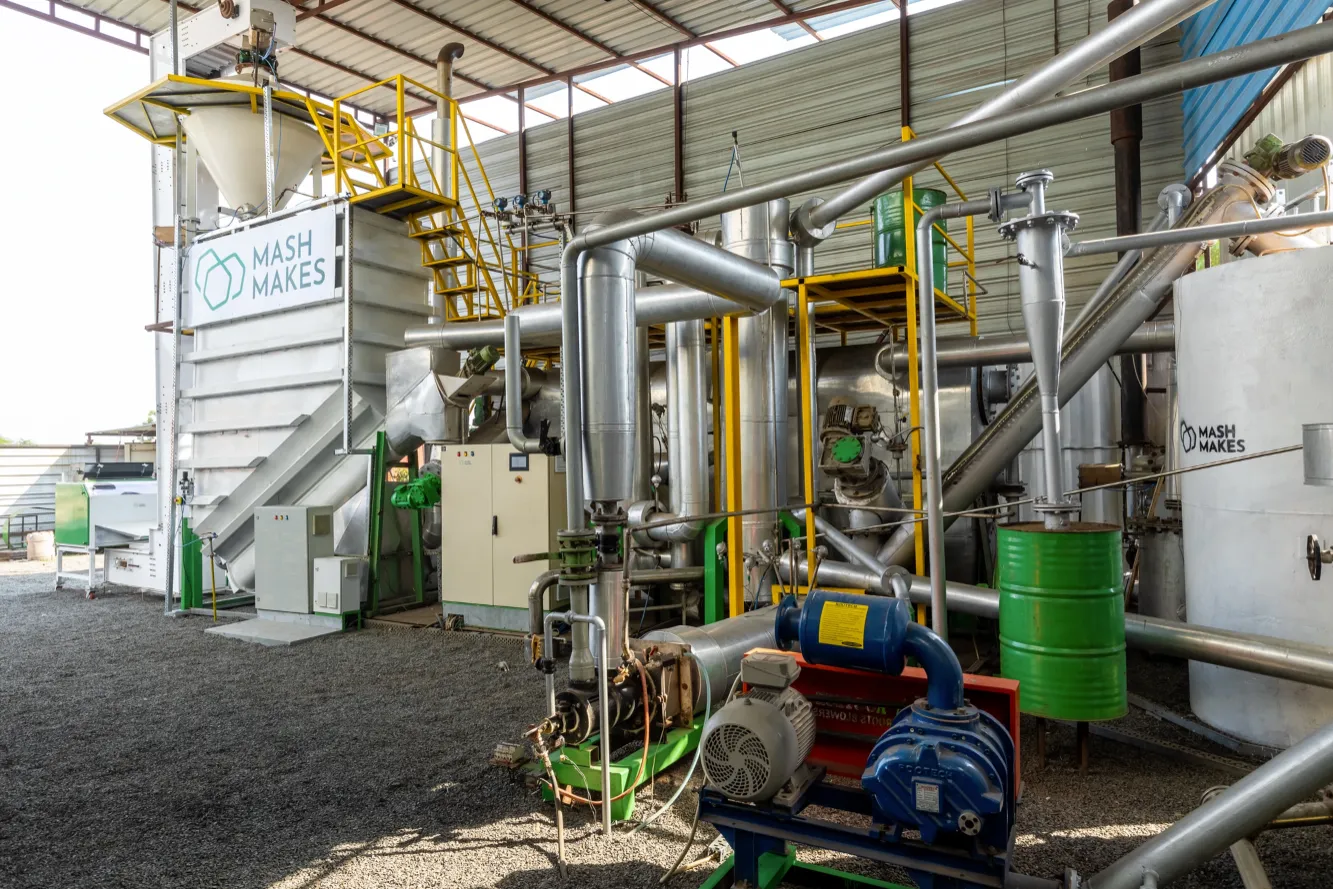
We use the above strategies to construct a theory of change that reflects our impression of how FCA can influence the decarbonization of heavy industry (Figure 1). FCA’s policy advocacy and field-building efforts are based on its technical analysis, which identifies innovation gaps and barriers to progress. The main outputs from FCA’s policy advocacy would be the EU increasing its funding for RD&D in hard-to-abate sectors, implementing regulations that support low-carbon production, and enacting low-carbon procurement policies. We think its field-building work elevates neglected and important sectors and results in a) more money and talent directed toward high-impact decarbonization pathways and b) more knowledge, technical, and policy support accessible for producers to advance RD&D projects. Although FCA’s work has an EU focus, we think there is a strong argument for global spillover effects through policy leadership, trade regulations like the Carbon Border Adjustment Mechanism, and technological innovation (see Assumption 2 in ‘Examining the Assumptions Behind FCA’s Theory of Change,’ below).

Examining the Assumptions Behind Future Cleantech Architects’ Theory of Change
Below, we evaluate the main assumptions behind our understanding of FCA’s theory of change and rate our certainty in each as low, medium, or high.29 Our ratings rest on primary and secondary evidence and our general impression of each assumption’s plausibility. Importantly, many stages of FCA’s theory of change are difficult to measure, lack a robust evidence base, or have not yet occurred.
- FCA’s advocacy leads to the EU establishing supportive policy instruments for heavy industry decarbonization (medium certainty)
EU policymakers have a history of collaboration with nonprofits, and we think that EU policymakers are open to advocacy efforts.30 The EU has shown a willingness to establish strong policy instruments to decarbonize heavy industry, such as its ETS, the €100 billion ($112 billion) Industrial Decarbonisation Bank, and the Net Zero Industry Act. It also regularly revises and strengthens these policy tools. For example, in 2023, the ETS was revised to raise its mitigation potential; introduce a second ETS to cover emissions from road transport, buildings, and additional sectors; and enact the CBAM to extend its carbon pricing to imported goods.31 It is currently being revised again, with the next agreement scheduled for 2027.32 Our discussions with EU policymakers have highlighted the valued role of nonprofits with sector expertise that can provide targeted technical support to further climate policy, such as FCA.
FCA has a promising track record of effective policy advocacy. For example, FCA partnered with two other nonprofits to pitch ideas at a multilateral stakeholder briefing for the EU’s third revision of its Renewable Energy Directive (RED III). Because of the high quality of FCA’s pitch, which advocated for a target of 5% innovative technologies within newly installed renewable energy capacity by 2030, it developed a bilateral relationship with the MEP in charge of the policy.33 The 5% target successfully navigated the two-year legislative process and was enacted in 2023, and FCA was publicly credited by the MEP for its input on the process at COP28.34 FCA estimates that this target could lead to 21 million metric tons of CO2e fewer emissions from 2023 to 2030.35 FCA has consistent requests for engagement from EU policy entities. For example, the Commission requested FCA’s analysis on industrial heat electrification and cited it in the Electrification Action Plan; the Commission consulted it on both Innovation Fund heat auctions; and ITRE commissioned FCA’s technical report on the low-carbon fuels Delegated Act (detailed in the ‘Industrial Heat’ and ‘Aviation and Maritime Shipping’ sections above). We think these are stronger signals than briefing attendance because they involve EU institutions actively seeking out FCA’s analysis on ongoing policy design.
Furthermore, FCA has received strong engagement on its ‘Coffee & Cleantech’ series, with typical attendance of over 20 policymakers, and its presentations have been described by MEPs as being exceptionally clear and effective.36 Several positive policy outcomes have resulted from these briefings. For example, FCA built and strengthened relationships with several policymakers that have led to bilateral engagements on hydrogen, ETS revenues, industrial emissions, and e-fuels; it also built relationships with the EIC and the EU Innovation Fund, leading to fruitful partnerships with both of these bodies. This series also increased FCA's profile in Brussels, expanding its audience past its initial target policymakers to include key advisors, research institutions, think tanks, and other political institutions. This has resulted in more policy engagement with various DGs of the European Commission (e.g., DG Climate Action and DG Energy). FCA has also been asked by MEPs for input on policy mechanisms for low-carbon hydrogen and decarbonizing aviation and invited to participate in the Cleantech Friendship Group and the Renewable and Low-Carbon Fuels Value Chain Industrial Alliance.
We think these outcomes indicate that FCA is a trusted and valued collaborator of some policymakers in the EU and that its advocacy could lead to the EU adopting policy instruments that support decarbonization of hard-to-abate sectors. We rate our certainty as medium because 1) policy influence is difficult to assess with high confidence since decision-making inputs are often opaque, and 2) the EU policy environment has generally become less amenable to climate policy since the 2024 election.
- EU-based advocacy leads to global spillover effects (high certainty)
We think the EU is an important region for both technology and policy innovation and that EU policy is likely to continue to affect global emissions through policy leadership, trade regulations, and technology advancements. In addition, FCA is a globally-oriented organization, with an advocacy strategy that prioritizes activities that could lead to global spillover effects. Its engagement with international bodies like the Technology Executive Committee of UN Climate Change further facilitates international spillover. For example, it recently co-hosted an event in Brussels with the UN University Vice-Rectorate in Europe, advocating for an EU-Africa partnership on green hydrogen and innovative fertilizer production.
Policy Leadership
The EU established the first-ever ETS covering all greenhouse gas emissions, which continues to be a global leader among emissions trading schemes—with the highest carbon price, largest trading volume, and first-of-a-kind additions like the CBAM.37 In addition to the ETS, the EU has a suite of regulatory and procedural instruments in its climate policy portfolio, and it has been highlighted as a source of inspiration for other countries and a source of international policy diffusion.38 Emissions trading has continued to spread: As of 2026, 41 systems are currently active, covering 26% of global greenhouse gas emissions.39
We think the EU could feasibly increase its focus on international spillover effects in its future policy instruments. For example, its 2026 ETS revision proposal included the first policy frameworks to reduce contrail emissions and expanded its scope to include flights departing the EU to destinations within 5,000 kilometers of Frankfurt.40
The Carbon Border Adjustment Mechanism and Other Trade Regulations
The EU’s CBAM is an especially effective case of policy leadership because of its trade focus. The CBAM imposes a levy on goods imported into the EU based on the difference between the EU’s carbon price and the price paid in producing countries. This incentivizes importers to reduce their products' embedded emissions and incentivizes foreign policymakers to introduce their own carbon prices. It was enacted in 2023 and entered its definitive phase on 1 January 2026, although importers will not need to buy CBAM certificates until February 2027.41 Notably, partially as a response to CBAM, China expanded its national ETS to cover steel, cement, and aluminum smelting in March 2025, covering around 15% of global emissions.42
In addition, other countries are now implementing their own CBAMs. For example, the U.K. has legislated its own CBAM, which takes effect from January 2027, and Australia’s government-commissioned Carbon Leakage Review recommended a phased border carbon adjustment in February 2026.43
Technology Advancement
We think the EU is an important region for technology innovation, as it contains five of the ten most innovative countries as ranked by the U.N.’s World Intellectual Property Organization.44 Innovation is also a key strategy of European decarbonization, and the EU houses one of the world’s largest funding programs for innovative low-carbon technologies.45 For 2028-2034, the Commission has proposed a €234.3 billion European Competitiveness Fund, including a €26.2 billion window for clean transition and industrial decarbonization, alongside a €175 billion successor to Horizon Europe.46 If low-carbon innovation programs result in manufacturing techniques with lower costs and better performance, we think some natural spillover to international markets is likely.
- FCA’s field-building efforts result in more resources allocated to high-leverage pathways for industrial decarbonization (medium certainty)
Our discussions with EU policy stakeholders in nonprofits and international organizations have highlighted FCA’s strong reputation and relationships with influential bodies. For example, FCA regularly collaborates with international organizations like UN Climate Change, UNIDO, and IRENA; funding bodies like the European Innovation Council; major media outlets like Handelsblatt; and influential nonprofits like Breakthrough Energy and Project Innerspace. We think this could expand the reach of its messages and policy recommendations (e.g., through co-hosting events at platforms like COP) and shape how these large institutions and/or their audiences allocate resources.
FCA has co-hosted the Future Cleantech Festival since 2022.47 We think this festival could raise awareness of neglected sectors, facilitate connections between stakeholders from different interest groups, and build momentum toward effective solutions. As a result, it could lead to additional projects to decarbonize heavy industry and increase capacity directed at these solutions. Several testimonials from policymakers, nonprofits, and intergovernmental organizations have highlighted the value of the event.48 The 2026 festival drew EU and national-level policymakers across the political spectrum, as well as industry participation from both start-ups and incumbents.
-----
29We describe our certainty as low/medium/high to increase readability and avoid false precision. Since these terms can be interpreted differently, we use rough heuristics to define them as percentage likelihoods the assumption is, on average, correct. Low = 0-60%, medium = 60-80%, high = 80-100%
30Referring to environmental NGOs: “In a typical year, the EU supports between 25 and 30 organisations.” European Parliament, n.d. “Targeted advocacy by NGOs such as the European Climate Foundation was also a key ingredient to driving policy change” Kreienkamp et al., 2022.
31“The revised EU ETS Directive, which entered into force on 5 June 2023, raises overall emissions reductions by 2030” European Parliament, 2023
32“The Council and Parliament are targeting political agreement by Q1 2027” Linklaters, 2026
33The term ‘innovative technologies’ is defined by the European Parliament as “renewable energy generation technology that improves, in at least one way, comparable state-of-the-art renewable energy technology or that renders renewable energy technology that is not fully commercialised or that involves a clear degree of risk exploitable” European Parliament, 2023. For example, advanced photovoltaics, floating offshore wind and geothermal energy.
345% target: “each Member State should set an indicative target for innovative renewable energy technology of at least 5 % of newly installed renewable energy capacity by 2030.” European Union, 2023; FCA credit: “FCA, who have also provided input on the innovative elements of RED III” Markus Pieper, 2023
35See FCA’s Guesstimate model
36“The policy factsheet presented was one of the most effective and succinct on the topic I have seen” - MEP | Group of the Greens; “I am very impressed by this Cleantech-event. The information is presented in a clear and accessible manner and it is easy understandable” - MEP | Group of the Progressive Alliance of Socialists and Democrats in the European Parliament FCA, n.d.
37First ETS: ‘Since the introduction of the first ETS for GHGs in the European Union in 2005” ICAP, n.d.; Largest volume and highest price: Figure: ‘Different dimensions of ETS’; “The EU ETS continues to be the largest system in force, in terms of trading volume and value.” ICAP, 2024 ; first CBAM “In December 2022, the EU reached a provisional agreement on a first-of-its-kind Carbon Border Adjustment Mechanism (CBAM).” Wood Mackenzie, 2022

38“EU climate policies have increasingly become a benchmark and a source of inspiration for others. Since international policy diffusion also hinges on the fit of EU policies with domestic conditions in recipient countries, the considerable expansion of the EU's climate policy portfolio, including a diversified set of market-based, regulatory and procedural instruments, has enhanced the diffusion potential.” “EU climate diplomacy has helped diffuse domestic policies internationally” Oberthür & Dupont, 2021
39“41 emissions trading systems [...] in force worldwide, covering 26% of global GHG emissions” ICAP, 2026
40“the EU’s fair share of certain extra-European departing flights”; “The use of contrail forecasting models to support cost-effective mitigation of contrails” European Commission, 2026, explanatory memorandum and recital 13; on the 5,000 km radius from Frankfurt, Clyde & Co, 2026
41The Carbon Border Adjustment Mechanism (CBAM) successfully entered into force on the 1 January 2026, following a coordinated deployment across all EU Member States, integrating seamlessly the CBAM Registry with National Customs Import Systems, Taric and EU Customs Single Window.” European Commission, 2026; “01.02.2027 Start of sale of CBAM certificates” Luxembourg Ministry of the Environment, 2025
42“The plan extends the ETS to include the cement, steel, and aluminum sectors.”; “approximately 8 billion tonnes, equivalent to about 15% of global emissions” ICAP, 2025; “Chinese authorities hope lower emissions will help soften the blow from a new carbon tariff, known as CBAM, to be imposed by the European Union from 2026”; Bloomberg News, 2024.
43“The Carbon Border Adjustment Mechanism (CBAM) will be introduced from 1 January 2027.” HM Treasury, 2026; “The Australian Government has released the Carbon Leakage Review’s final report.”; “We will consider these issues further in the 2026-27 review of the Safeguard Mechanism.” DCCEEW, 2026
44‘Global Rankings’ UN WIPO, 2026
45“The Innovation Fund is one of the world’s largest funding programmes for the demonstration of innovative low-carbon technologies.” European Commission, n.d.
46“The proposed financial envelope for the implementation of the ECF for the period from 1 January 2028 to 31 December 2034 will be EUR 234.3 billion. [...] 1) A Clean Transition and Industrial Decarbonisation window with a budget of EUR 26.2 billion” European Parliament, 2025; “For the 2028-2034 period, the Commission proposes to increase the Horizon Europe budget to €175 billion (€154.9 billion in 2025 prices)” European Court of Auditors, 2026
47FCA did not host the Festival in 2025 due to capacity constraints
48Example testimonials: “I look forward to attending the next festival because of the enormous value-add” Julia Souder, Executive Director, LDES Council; “we are able to reach in one event most of the stakeholders around energy” Francesco Matteucci, Program Manager, European Innovation Council; “This festival brings together policymakers, academia, as well as financials and investors. And this is super important” Bhava Dhungana, Team Lead Climate Technology Sub-division, UN Climate Change Future Cleantech Festival, n.d.
Is There Room for More Funding?
FCA’s 2026 budget was €3.1 million ($3.5 million). FCA plans to grow its budget to €4.1 million in 2027 ($4.6 million). It has comfortably raised funds for its current budget, with €6 million ($6.7 million) in secured and mostly unrestricted funding commencing in 2027, equivalent to a ~1.7-year runway as of October 2026. 86% of FCA’s funding comes from regrantors, such as Giving Green, Effektiv Spenden, and Doneer Effectief.49 FCA has a relatively conservative fundraising target of reaching 1.75 years of runway, and would use additional funds to secure this runway.
Based on its fundraising success, we think FCA may deploy the marginal dollar more slowly than some of our other Top Climate Nonprofits, and that it has a relatively low capacity to absorb additional funds at the time of publication. This assessment is temporary, and we will continue to monitor FCA’s fundraising and expansion plans and update our views accordingly, since we think FCA could have a larger funding gap in the near future.
In line with its expansion plans, FCA plans to increase its staff count by over 50% across technology, policy, and operations over the next 12 months. Its hiring priorities are listed below:

-----
49“86.3% Accumulators (such as Giving Green, Effektiv Spenden, Doneer Effectief, and others)” FCA, 2026
Are There Major Co-Benefits or Potential Risks?
We think the co-benefits and potential risks of FCA’s efforts are similar to those for the broader effort to decarbonize industry, aviation, and shipping (see our reports on Industry, Reducing Aviation Emissions, and Reducing Maritime Shipping Emissions).
Co-Benefits
- Reduced local air pollution: In the absence of new pollution laws or increased enforcement of existing laws, decarbonizing heavy industry generally reduces pollution from manufacturing plants (e.g., cement plants). In transport, replacing jet fuel and heavy marine fuels with cleaner alternatives reduces emissions of nitrogen oxides, sulfur oxides, and particulate matter, which particularly affect communities near airports and ports.50 Port communities are often lower-income and bear a disproportionate share of these impacts.51
- Technological spillover across heavy-emitting sectors: For example, scaling up electrolyzers and hydrogen distribution networks would benefit aviation, shipping, low-carbon industry, and fertilizer production.
- Reduced noise pollution: Electric and fuel-cell aircraft could also reduce noise pollution around airports, which has been linked to higher risks of stroke and cardiovascular disease, although we are unsure what share of the fleet they will make up.52
Potential Risks
- Unclear effects on global employment: Decarbonizing industry has unclear impacts on global employment, through shifts in key manufacturing regions.
- High Resource Intensity: In aviation and shipping, alternative fuels are highly resource-intensive. Heavy reliance on crop-based biofuels could harm food security and increase land-use change emissions, while e-fuels require large amounts of renewable electricity.53 We think FCA’s advocacy for reserving scarce hydrogen, e-fuels, and biofuels for sectors with few alternatives helps mitigate this risk.
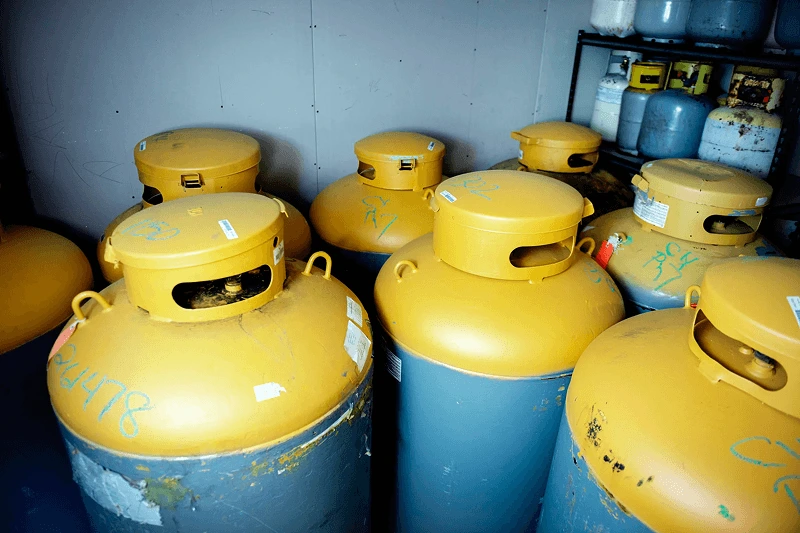
- Health and ecosystem risks of ammonia: Ammonia is toxic, and its use could increase nitrous oxide and reactive nitrogen emissions if leaks are not tightly controlled.54
- Cost burden and equity: Decarbonization measures that raise airline ticket prices would reduce access to flying, especially for lower-income households.
-----
50“Despite these reductions, low-sulphur marine fuels will still account for ~250k deaths and ~6.4 M childhood asthma cases annually, and more stringent standards beyond 2020 may provide additional health benefits” Sofiev et al., 2018; “We found that while excess mortality due to the aviation sector emissions is greater in 2050 compared to 2006, improved fuel policies (technology and operations improvements yielding smaller increases in fuel burn compared to 2006, and conversion to fully sustainable fuels) in 2050 could lead to 72% fewer deaths for adults 25 years and older than a 2050 scenario with no fuel improvements.” Morita et al., 2014
51“Port communities [...] bear a disproportionate share of these impacts” Ocean Conservancy, 2024

52High levels of aircraft noise were associated with increased risks of stroke, coronary heart disease, and cardiovascular disease for both hospital admissions and mortality in areas near Heathrow airport in London.” Hansell et al., 2013
53“Realising these roadmaps could require 9 % of global renewable electricity and 30 % of sustainably available biomass in 2050, with significant energy ‘losses’.” Becken, Mackey and Lee, 2023; “The required amount of low-carbon electricity is significant, with Power-and-Biomass-to-Liquid (PBtL) expected to consume 9-16% of the world’s planned low-carbon grid by 2050, and Power-to-Liquid (PtL) requiring 23-41%.” AIA, 2024
54“if nitrogen releases from ammonia are not tightly controlled” the global nitrogen cycle could be substantially altered, Wolfram et al., 2022; “the environmental risks arising from leaks must be closely scrutinised” The Royal Society, 2020
Key Uncertainties and Open Questions
- FCA’s capacity to absorb more funding: We are uncertain about the degree to which FCA has room for more funding. We are moderately confident that it can productively absorb additional funding at present. However, as FCA continues to develop a high-impact track record, it may enjoy substantial fundraising success. Depending on its expansion rate and strategy, FCA may be able to meet its funding needs without a recommendation from Giving Green. We plan to re-assess FCA’s room for more funding as part of our 2027 giving season review.
- Feasibility of decarbonizing aviation: Aviation is one of the most difficult sectors to decarbonize, as there is no clear, viable technological pathway. We believe that FCA has the requisite technical expertise and impact evaluation experience to identify the highest-leverage pathways to reduce aviation emissions, but it is still possible that none of these approaches will be able to significantly reduce emissions. In this scenario, the aviation sector may not fully decarbonize and could instead rely on carbon dioxide removal to compensate for significant unabated emissions.
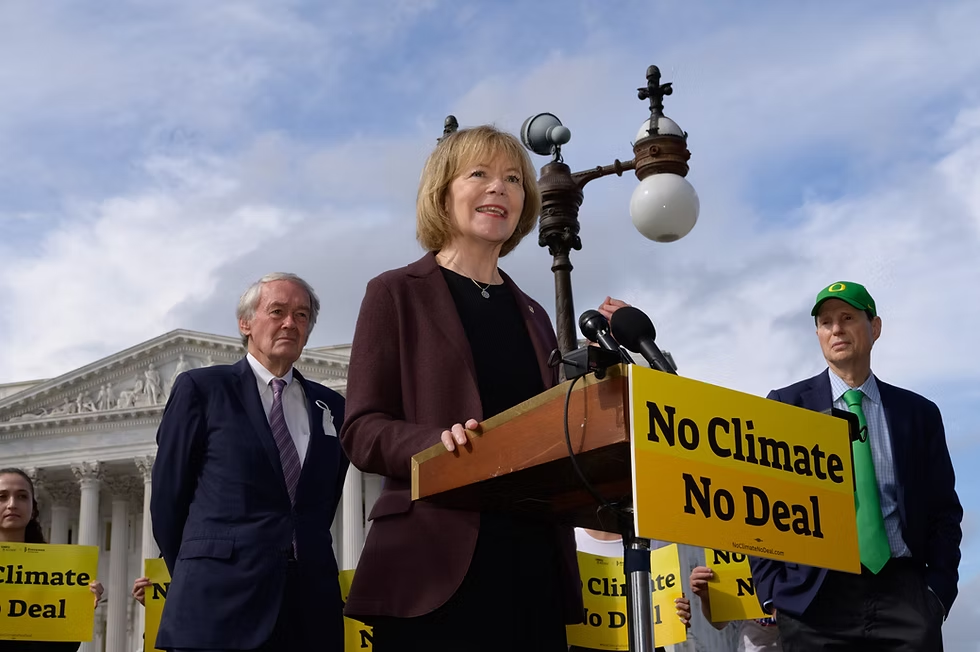
- Tractability of ambitious climate legislation in the current EU policy ecosystem: The 2024 EU elections saw right-wing parties strengthen their presence, with the Green parties significantly losing representation.55 As a result, we think climate action is likely to be less of a priority than it was during the 2019-2024 policy cycle.56 This could mean that Europe may not currently be the best political context in which to focus mitigation efforts; on the other hand, climate advocacy could be more important during this election cycle to ensure that support for climate remains in upcoming revisions to flagship policies like the ETS. In general, we think strategic policy work will continue to be tractable because the president of the Commission, Ursula von der Leyen, remains committed to Europe’s climate targets.57 Her party, which sits on the center-right, is Europe’s largest political party and contains climate champions that have established working relationships with FCA. For example, MEP Markus Pieper spoke at FCA’s event at COP28 after working with FCA on RED III. As part of our 2026 strategy to decarbonize heavy industry, we diversified funding across the U.S., Europe, Asia, Africa, and Australia to leverage the unique advantages of each of these regions and hedge against geography-specific risks.

-----
55“The first one is the self-evident main election outcome at the aggregate level. The right and far-right European party families – the governing European People’s Party and the European Conservatives and Reformists, plus the NI group – visibly increased their vote share, while the more progressive Renew Europe liberal party and, in particular, the Greens lost significantly.” Carbon Brief, 2024
56“while centrist parties continue to hold a majority in the new European parliament, the stronger presence of right-wing parties could make ambitious new laws harder to pass.” Carbon Brief, 2024
57Von Der Leyen: “Von der Leyen signals continuity by committing to all goals set out in the European Green Deal and implementing the EU’s legal framework to meet the 2030 target. She endorses a 90% emission reduction target for 2040 and aims to move further away from fossil fuels.” E3G, 2024
Bottom Line and Next Steps
Giving Green classifies FCA as one of our Top Climate Nonprofits for 2027-2028. We think FCA’s focus on and expertise in neglected areas in the climate mitigation portfolio fill a critical space in the civil society ecosystem, and we especially value FCA’s pragmatic, holistic, and impact-focused approach to policy advocacy. In addition, our impression is that FCA has been successful at folding this technical expertise into the EU policymaking process, thereby increasing policymakers’ knowledge and the effectiveness of policy vehicles. FCA consistently receives engagement requests from policymakers, resulting in a strong track record of shaping EU and global policy discourse in hard-to-abate sectors. FCA would use additional funding to expand its capacity in power electronics and chemicals, as well as hiring operations and communications staff to facilitate its advocacy work.
Key accomplishments include:
- Securing a 5% target for innovative renewables within the EU’s Renewable Energy Directive (RED III) framework. FCA saw the 5% target through a two-year legislative process and was publicly credited for its input on the process at COP28.
- Advising the European Commission on the design of its 2025 Industrial Heat Auction, budgeted for €1 billion. FCA also engaged with the Commission to assess the auction’s impact after fund allocations.
- Contributing to the European Commission’s 2026 Electrification Action Plan by generating evidence, at the European Commission’s request, on how thermal energy storage is a cost-effective enabler for industrial heat electrification. The final Plan cited FCA’s case study on the dairy industry.
Our main uncertainties are FCA’s capacity to absorb more funding and the feasibility of reducing aviation emissions. FCA would use additional funding to grow its runway, thereby ensuring that it can safely make competitive hires for its expansion plans.
Explore ways to give to FCA and more.
Support Our Work
Giving Green Fund
One fund. Global impact. One hundred percent of your gift supports a portfolio of high-impact climate organizations, vetted by our research.
Best for:
Donors who want the simplest way to impact multiple climate solutions.
Top Climate Nonprofits
Meet the organizations on Giving Green’s list of high-impact nonprofits working to decarbonize our future, identified through our rigorous research.
Best for:
Donors who want to give directly and independently.
Support Our Work
We thoroughly research climate initiatives so you can give with confidence. For every $1 we receive, our work unlocks another $25.90 for effective climate solutions.
Best for:
Donors who want to amplify their impact through research.


.jpeg)

.webp)


.webp)


.webp)

.webp)


.webp)


.webp)

.webp)


.webp)

.webp)

.webp)
.webp)


.webp)

.webp)

%20(1).webp)


.webp)
.webp)
.webp)
.webp)
.webp)


.webp)


.webp)


.webp)
.webp)
.png)


.webp)


.webp)


.webp)


.webp)


.webp)