Resiliency Law Center: Nonprofit Evaluation
Summary
- What is Resiliency Law Center?
Resiliency Law Center (RLC) is a Puerto Rico–based nonprofit legal and advocacy organization that strengthens climate resilience and energy reliability by improving transparency in energy governance. In 2025, RLC monitored over 200 legislative measures, distributed updates to more than 1,000 subscribers, published 17 policy pieces, delivered 18 workshops, and facilitated at least 500 instances of citizen participation across 70 municipalities.
- How could Resiliency Law Center support climate objectives in Puerto Rico?
Resiliency Law Center addresses climate change by strengthening community capacity, legal protections, and policy advocacy to increase transparency, enforcement, and participation in Puerto Rico’s energy governance, improving the likelihood that renewable mandates are implemented, fossil fuel expansion is constrained, and climate adaptation and recovery decisions are equitable and resilience-oriented.
- What is Resiliency Law Center’s theory of change?
The Resiliency Law Center’s theory of change suggests that equipping communities with legal tools, policy knowledge, and advocacy skills—while increasing transparency in legislative processes—enables them to influence climate and energy policy and drive the adoption of equitable, renewable, and resilient energy systems in Puerto Rico.
- Is there room for more funding?
Resiliency Law Center operates with an agile model that combines part-time and volunteer staff aligned with its current annual budget of approximately $300,000 to $350,000, positioning the organization for strong team expansion as it continues to strengthen and diversify its funding base. Due to the nature of its legal and advocacy work, RLC does not receive government funding or grants and relies primarily on a small number of foundation grants, reflecting both strong funder alignment and significant opportunity for strategic funding diversification and growth. Additional funding would allow RLC to strengthen operational and programmatic capacity, hire interdisciplinary staff, and focus more on long-term systemic change.
- Are there major co-benefits or potential risks?
We have not identified major adverse effects that would substantively change our assessment. RLC’s work also produces meaningful co-benefits, including strengthening environmental justice, democratic governance, and community power, which are closely linked to long-term climate and resilience outcomes.
- What are the key uncertainties and open questions?
We are unsure about policymakers' receptivity to RLC-supported policy and legal advocacy approaches, the durability of policy implementation over time, and the extent to which governance improvements translate into measurable long-term reliability gains.
- What is the bottom line, and what are the next steps?
This research was conducted as part of a consulting project to help a client find the most impactful climate nonprofits in Puerto Rico. As explained in our strategy report produced as part of this engagement, we recommended that the client focus on energy resilience and reliability. As part of this strategy, we recommended that our client make a grant to Resiliency Law Center based on its high-leverage focus on strengthening energy governance, demonstrated execution in legislative monitoring, advocacy, strategic legal enforcement, and clear room for additional funding to expand its impact on renewable integration and long-term grid stability in Puerto Rico.
Donors interested in supporting its work can make a direct donation to Resiliency Law Center.
This is a non-partisan analysis (study or research) and is provided for educational purposes. Unless otherwise cited, information in this nonprofit evaluation comes from direct correspondence with Resiliency Law Center.
Resiliency Law Center is a 501(c)(3) tax-exempt organization in the United States.
Questions and comments are welcome at hello@givinggreen.earth.
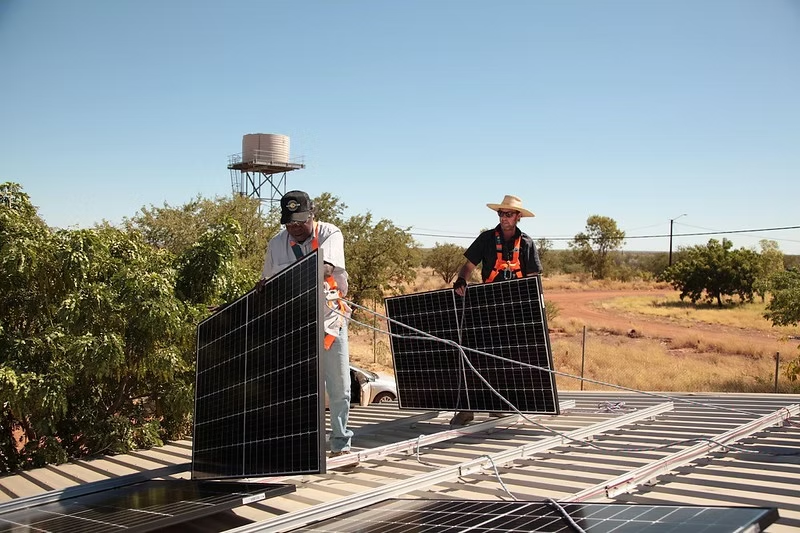
Cover image: Resiliency Law Center
What Is Resiliency Law Center?
Resiliency Law Center (RLC) is a Puerto Rico-based legal and advocacy nonprofit organization focused on strengthening climate resilience, environmental justice, and democratic participation by equipping communities with legal tools, policy knowledge, and advocacy capacity. RLC also functions as a critical intermediary and ecosystem-building organization that connects communities, policymakers, and civil society actors to improve transparency, accountability, and implementation of climate and energy policy in Puerto Rico. Formally incorporated in 2022, RLC emerged from earlier work within the University of Puerto Rico School of Law, supporting communities and nonprofits navigating disaster recovery following 2017’s Hurricanes Irma and María. Headquartered in San Juan, RLC works exclusively in Puerto Rico, focusing on energy, climate, and environmental governance.
RLC’s core activities include legal services, public policy advocacy, and capacity building. It provides legal support on issues such as land tenure, access to public information, disaster recovery compliance, and environmental permitting. Its advocacy work centers on climate and energy policy through legislative monitoring, public comments, strategic litigation, and coalition efforts to advance renewable energy, transparency, and climate adaptation planning. Complementing this advocacy work, RLC delivers workshops and trainings that empower community groups and nonprofits to engage directly in legislative and policy processes.
How Could Resiliency Law Center Address Energy Resilience and Reliability in Puerto Rico?
Key Ideas: Resiliency Law Center’s strategy
- The Resiliency Law Center advances to influence equitable climate and energy policy outcomes by strengthening advocacy, improving access to public information, and supporting communities to actively shape renewable energy, transparency, and climate-resilient policy decisions. Energy and climate decisions in Puerto Rico are often made through opaque legislative and regulatory processes that are difficult for communities to access or influence. These decisions represent a critical and time-sensitive window that will determine Puerto Rico’s energy trajectory for decades. According to our expert consultations, this complexity and lack of transparency limits public participation, slows renewable energy adoption, and restricts challenges to policies that reinforce grid fragility and fossil fuel dependence.
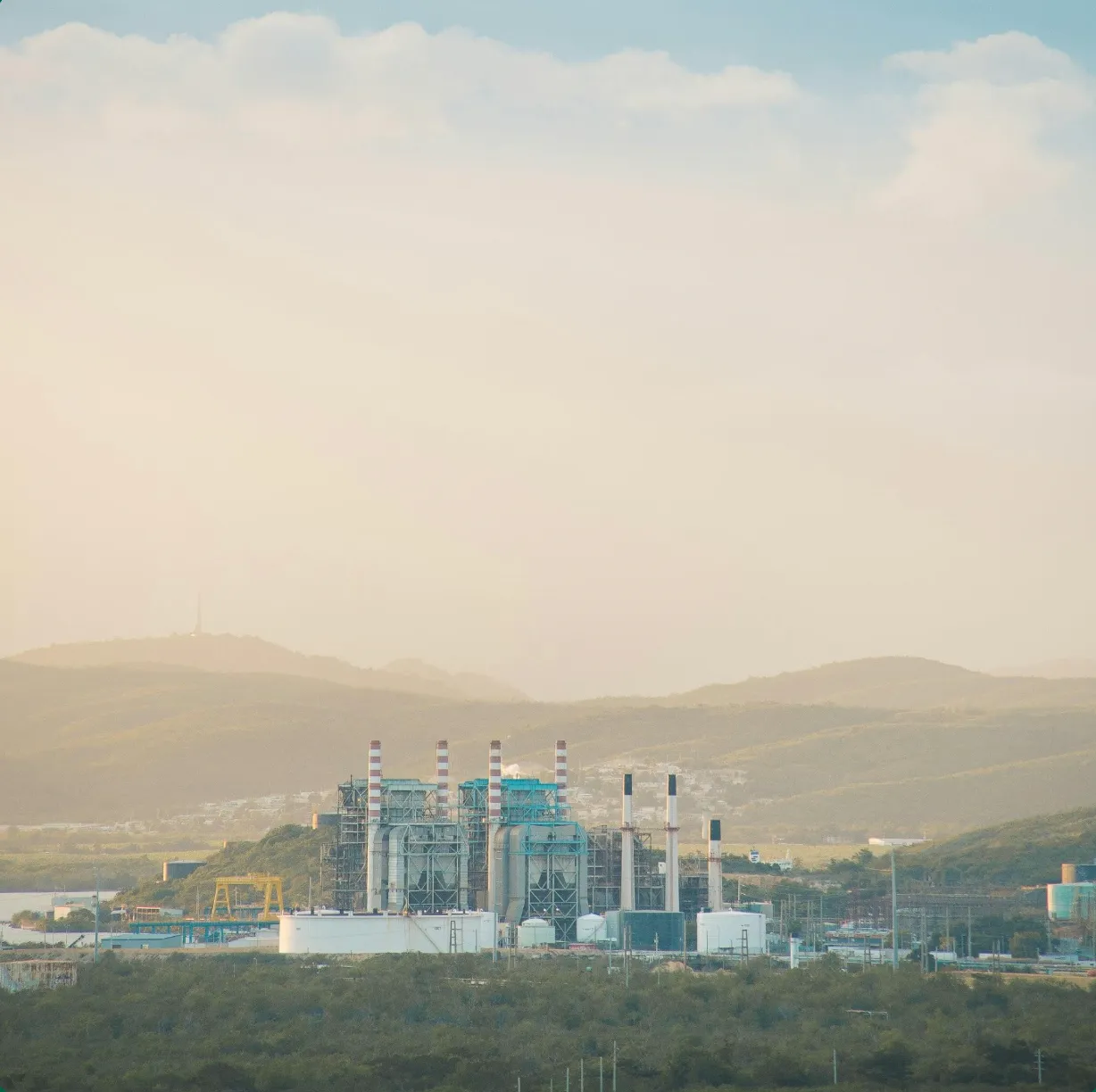
- Puerto Rico’s renewable energy targets and public policy hold that the island should reach 100% renewable energy by 2050. Nevertheless, Puerto Rico’s electricity system remains highly centralized and fossil-fuel dependent, with 94% of generation coming from oil, natural gas, and coal. Renewables account for just 7% of supply1, despite a statutory mandate to reach 40% renewables by 2025 and 100% by 2050.2 Energy resilience and reliability depend not only on technology (e.g., distributed solar and storage) but also on public policy, regulatory frameworks, and community participation that determine which solutions are allowed, funded, and scaled.3
- The Resiliency Law Center actively drives accountability and enforcement through legal and policy advocacy and constituent empowerment to increase energy resilience and reliability and uphold climate policy. Through strategic legal action, public comments, and coordinated advocacy, RLC supports enforcement and implementation of existing climate and energy laws. The RLC seeks to democratize policy information by developing legislative monitoring platforms, accessible policy summaries, and public briefings. These tools translate complex energy and climate legislation into actionable information for communities and civil society organizations. Finally, through capacity building and the democratization of policy information, RLC trains community leaders and nonprofit organizations in legislative advocacy so they can collectively advocate for renewable energy, transparency, and climate-resilient policies, while building civic infrastructure for sustained policy engagement and accountability.
Energy Resilience as a Governance Challenge: Policy, Transparency, and Participation in Puerto Rico
As Puerto Rico’s centralized electricity system continued to experience outages and policy volatility following the passage of Act 17-2019—which established renewable energy targets—and Act 33-2019—which mandated climate mitigation and adaptation planning—RLC has shifted the focus of its efforts toward sustained engagement in climate and energy governance. Recognizing that decisions about renewable energy targets, fossil fuel expansion, and grid modernization are determined through legislative and regulatory processes, RLC developed a structured legislative monitoring platform and began producing accessible policy summaries to reduce information asymmetries between policymakers and civil society. Over the past two years, RLC has tracked more than 200 climate- and energy-related measures and distributed monthly updates to over 1,000 subscribers, building a civic infrastructure for informed participation in energy decision-making.
Complementing its monitoring work, RLC has invested in advocacy training and legal enforcement mechanisms to ensure that existing climate and renewable energy mandates—particularly those established under Act 33-2019—are implemented rather than diluted or delayed. Through workshops, public comment support, and strategic litigation aimed at advancing statutory climate planning requirements, RLC works to increase the likelihood that renewable-supportive policies are enforced and that fossil fuel lock-in risks are scrutinized. By targeting governance bottlenecks rather than deploying infrastructure directly, RLC links energy resilience and reliability to institutional transparency, accountability, and community participation.
RLC integrates legislative monitoring, advocacy training, and legal intervention into a coordinated strategy that operates across multiple policy windows, enabling sustained civic oversight and strengthening accountability in energy and climate governance processes. This approach aims to ensure that as billions of dollars in federal reconstruction funding and grid modernization decisions move forward, communities have both the information and legal tools needed to influence outcomes. By strengthening the governance conditions under which energy infrastructure is planned and regulated, RLC seeks to create durable, system-wide improvements in renewable integration, grid resilience, and long-term reliability across Puerto Rico.
Resiliency Law Center’s Strategies
Legislative Monitoring & Policy Transparency
RLC develops and maintains tools to monitor, analyze, and disseminate information on environmental, climate, and energy-related legislation in Puerto Rico. Over the past two years, it has operated a legislative monitoring tool that tracks bills, resolutions, and executive actions across topic areas such as renewable energy, climate planning, fossil fuel expansion, land use, and environmental protection. The platform organizes measures by chamber, topic, and procedural status, and provides plain-language summaries and direct links to official legislative documents.
In addition to maintaining the monitoring tool, RLC produces periodic legislative updates, alerts, and synthesized reports that document trends in climate and energy policymaking. These materials are shared through mailing lists, partner organizations, and public-facing communications, with the aim of enabling earlier and more informed participation by community groups, nonprofits, and advocates. This strategy is intended to improve transparency and accountability in energy-related decision-making, which RLC views as a prerequisite for advancing resilience-oriented policies with direct implications for emissions reduction and infrastructure investment decisions.
Community Capacity Building and Advocacy Training
RLC engages in structured capacity-building efforts to help communities and civil society organizations participate more effectively in climate and energy governance. In the last two years, it has delivered workshops and trainings focused on legislative processes, public policy advocacy, drafting public comments, preparing testimony for hearings, and engaging with policymakers and media. These trainings are designed to be practical and applied, often combining informational sessions with guided exercises tailored to current legislative issues.
Beyond standalone trainings, RLC provides ongoing accompaniment to participating organizations and community leaders as they apply advocacy skills in real policy contexts, including support in identifying priority issues, understanding procedural entry points, and coordinating advocacy actions across groups. The emphasis of this strategy is on skill transfer and empowerment, with the goal of building durable advocacy capacity that persists beyond RLC’s direct involvement and supports sustained engagement on energy and climate policy. This approach contributes to long-term community power building and governance participation.
Legal Support and Strategic Policy Intervention
RLC also deploys legal expertise to support climate- and energy-related advocacy, particularly where government agencies fail to meet statutory obligations. Over the past two years, this work has included legal analysis, representation, and procedural interventions related to climate planning, environmental regulation, and public participation requirements. These efforts are often closely linked to RLC’s advocacy and monitoring work, with cases emerging from issues identified through legislative tracking or community engagement.
In parallel, RLC provides legal guidance to nonprofit organizations and community groups navigating regulatory and administrative processes connected to climate adaptation, land use, and environmental protection. This strategy supports the enforcement of climate and environmental laws and helps prevent policy backsliding that could lock in fossil fuel dependence or increase vulnerability to climate impacts. RLC frames this legal work as a complement to advocacy and capacity building, reinforcing the institutional foundations needed for long-term energy resilience and emissions mitigation.
Evidence of Resiliency Law Center’s Ability to Execute Its Activities
Legislative Monitoring and Policy Transparency
We have a positive impression of RLC’s execution of its legislative monitoring and policy transparency work, particularly given limited staffing and financial resources. Over the past two years, RLC has tracked more than 200 climate-, energy-, and environment-related measures in a single legislative cycle and produced consistent monthly updates translating complex developments into accessible summaries for over 1,000 subscribers, as well as partner briefings. In 2025, RLC published 17 policy pieces and dedicated more than 650 hours to advocacy and monitoring, coordinating with over 20 allied organizations and facilitating more than 500 instances of citizen participation across 70 municipalities. We view this sustained pace and reach as evidence of strong execution. External organizations rely on RLC’s tracking to inform advocacy, invite RLC to provide trainings, and partner on synthesis reports, indicating the tool is actively used beyond the organization.
Community Capacity Building and Advocacy Training
We have a favorable impression of RLC’s ability to deliver advocacy training tied to live policy processes. From 2023-2025, RLC conducted workshops on legislative engagement, public comment drafting, and hearing participation, including 18 structured workshops in 2025 and reaching approximately 50 organizations per year. Trainings include practical exercises and follow-on support, and RLC reports measurable knowledge gains through pre- and post-assessments and high participant satisfaction. Approximately 40 participants completed a certification track, indicating efforts extend beyond one-off workshops toward sustained capacity building. Repeat engagements, coalition invitations, and curriculum refinement based on feedback indicate credible execution.
Legal Support and Strategic Policy Intervention
We have a positive impression of RLC’s ability to execute legal and policy interventions in complex administrative and judicial processes related to climate and energy governance. In recent years, RLC has pursued legal actions aimed at enforcing statutory obligations and agency compliance with environmental and climate laws. RLC reports that in 2022, it had to file a mandamus to the Court of First Instance in San Juan to order the Department of Natural Resources and the Environment to implement Act 33-2019. That mandamus resulted in the publication of the Draft of the Climate Change Mitigation, Adaptation, and Resilience Plan. In 2025, RLC increased the number of municipalities impacted by approximately 15% and more than doubled the number of communities served year-over-year through their legal assistance, organizational support, and community trainings on disaster recovery processes, property rights, and environmental governance. Its in-house legal capacity enables sustained litigation and strategic policy engagement despite resource constraints.
-----
1 “In 2024, petroleum-fired power plants provided 62% of Puerto Rico's electricity generating capacity, followed by natural gas (24%), coal (8%), and renewables (7%).” Puerto Rico Territory Energy Profile, U.S. Energy Information Administration (accessed on December 31, 2025)
2 “In April 2019, Puerto Rico enacted the Puerto Rico Energy Public Policy Act (Act 17-2019) [...] This law mandates renewable energy targets of 40% by 2025, 60% by 2040, and 100% by 2050.” Ilic et al, 2024 (p. 3)
3 “The community movement emerges as a key force in this process, with examples like Casa Pueblo in Adjuntas demonstrating the feasibility of change from within communities. The “Queremos Sol” proposal aims to promote renewable energy in Puerto Rico, backed by over 100 organizations" Muñoz Vazquez, 2023 (p. 201)

What Is Resiliency Law Center’s Theory of Change?
The theory of change for Resiliency Law Center is grounded in the premise that durable energy resilience and reliability in Puerto Rico are best achieved through transparent governance, enforceable legal frameworks, and meaningful community participation in energy decision-making. This approach reflects a systems-change model that targets governance as a leverage point.

Examining the Assumptions Behind Resiliency Law Center’s Theory of Change
Below, we discuss and evaluate the main assumptions related to Resiliency Law Center’s theory of change. For each of the assumptions, we rank whether we have low, medium, or high certainty about the assumption. Our assessment is based on both primary and secondary evidence, as well as our general impression of the plausibility of the assumption.4 Importantly, a number of the stages of Resiliency Law Center’s theory of change may not be amenable to easy measurement or quantification, are not supported by a robust evidence base, or are expected to occur in the future but have not occurred as of yet.
- Improvements in climate and energy governance translate into meaningful improvements in long-term energy resilience and reliability. (medium certainty)
We have medium certainty that improvements in climate and energy governance translate into meaningful improvements in long-term energy resilience and reliability. While climate planning frameworks and renewable standards can shape infrastructure investment and reduce fossil fuel lock-in risk, Puerto Rico’s experience shows that policy commitments alone do not guarantee implementation. For example, despite having multiple energy transformation laws, renewables accounted for 7% of generation, highlighting gaps between policy adoption and execution. Governance interventions such as transparency, accountability, and public participation may help narrow this gap, but it remains uncertain how consistently they translate into implemented energy system changes.
- Strategic litigation and legislative advocacy can meaningfully influence climate and energy governance outcomes in Puerto Rico. (medium certainty)
We have medium certainty that strategic litigation and legislative advocacy can meaningfully influence climate and energy governance outcomes in Puerto Rico. This assumption holds that RLC’s legal actions, legislative monitoring, and direct engagement with policymakers can shape whether climate and energy frameworks are advanced or enforced. We are uncertain whether policymakers will be receptive to advocacy efforts and follow through with policy changes over time. Supporting evidence includes RLC’s successful mandamus5 action advancing Puerto Rico’s Climate Change Mitigation, Adaptation, and Resilience Plan under Act 33 (2019), demonstrating its ability to move stalled processes, as well as broader research indicating that transparency and civic participation mechanisms increase governmental accountability and policy responsiveness.
-----
4 We describe our certainty as low/medium/high to increase readability and avoid false precision. Since these terms can be interpreted differently, we use rough heuristics to define them as percentage likelihoods the assumption is, on average, correct. Low = 0-60%, medium = 60-80%, high = 80-100%.
5 Madamus or “a writ issued by a superior court commanding the performance of a specified official act or duty” Merriam-Webster. (n.d.). Mandamus. In Merriam-Webster.com dictionary. (accessed March 3, 2026)
Is There Room for More Funding?
Resiliency Law Center currently relies primarily on a small number of foundation grants, and has historically faced structural and administrative barriers to accessing governmental funding opportunities, creating vulnerability to funding volatility.6 Marginal dollars would primarily support expanded legislative monitoring, increased policy advocacy staffing, coalition coordination, and rapid-response engagement during critical energy and climate decision windows.
The funding landscape, which is concentrated and project-restricted, suggests meaningful room for more funding, particularly for flexible support that strengthens institutional capacity rather than isolated program activities. The scale of energy resilience and climate governance needs in Puerto Rico—especially given ongoing grid instability and large federal reconstruction flows—substantially exceeds current funding available for policy oversight and accountability work. Because RLC’s activities focus on public-interest governance and legal advocacy, they are not typically structured to attract traditional private-sector investment models, making philanthropic support especially important for sustaining this work.
RLC operates with an annual budget of approximately $300,000 to $350,000 and projects similar spending levels for the upcoming year, contingent on foundation renewals. Based on current staffing and program activities, RLC’s annual operating budget is roughly $325,000, primarily supporting legal services, legislative monitoring, and advocacy training.
-----
6 In their 2024 annual report, Resiliency Law Center reported funding from Fundación Fondo de Acceso a la Justicia, Inc, Fundación Segarra Boerman, OnePointFive Climate Change, Filantropía Puerto Rico.
Are There Major Co-Benefits or Potential Risks?
We have not identified co-benefits or adverse effects that would cause us to prioritize or deprioritize additional investigation.
Key Uncertainties and Open Questions
- Attribution and counterfactual impact: It may be difficult to isolate RLC’s influence in Puerto Rico.
- Policymaker receptivity: The extent to which legislators, regulators, and agencies remain responsive to sustained advocacy and legal pressure; if receptivity declines, RLC’s leverage could diminish.
Bottom Line and Next Steps
This research was conducted as part of a consulting project to help a client find the most impactful climate nonprofits in Puerto Rico. We recommended that our client make a grant to the Resiliency Law Center due to its high-leverage focus on upstream policy decisions that shape island-wide infrastructure and reliability outcomes, demonstrated ability to influence climate governance—including successful litigation advancing Puerto Rico’s Climate Mitigation, Adaptation, and Resilience Plan—and its clear room for more funding to expand advocacy and legislative engagement capacity.
RLC works to advance and enforce climate and energy planning frameworks that prioritize renewable integration and resilience standards, increase transparency and oversight of energy-related legislation and regulatory decisions affecting grid modernization, and strengthen community and civil society participation in energy governance to improve accountability and long-term system stability. By combining strategic litigation, legislative monitoring, and policy advocacy, RLC influences the legal and regulatory frameworks that determine renewable energy integration, fossil fuel lock-in risk, and resilience-oriented reconstruction.
We remain uncertain about policymakers’ receptivity to RLC’s policy and legal strategies, the durability of policy implementation over time, and the extent to which governance improvements translate into measurable long-term reliability gains. RLC represents a high-leverage, systems-level intervention in Puerto Rico’s climate and energy transition.
Support Our Work
Giving Green Fund
One fund. Global impact. One hundred percent of your gift supports a portfolio of high-impact climate organizations, vetted by our research.
Best for:
Donors who want the simplest way to impact multiple climate solutions.
Top Climate Nonprofits
Meet the organizations on Giving Green’s list of high-impact nonprofits working to decarbonize our future, identified through our rigorous research.
Best for:
Donors who want to give directly and independently.
Support Our Work
We thoroughly research climate initiatives so you can give with confidence. For every $1 we receive, our work unlocks another $21 for effective climate solutions.
Best for:
Donors who want to amplify their impact through research.

.png)


.png)


.png)


.png)
.png)

.png)


.png)


.png)


.png)


.png)
.png)
.jpg)
.png)

.png)
.png)
.png)
.jpg)
.png)


.png)
.png)

.png)


.png)


.png)


.png)

.png)
.png)

.png)
.png)


.png)
.png)


.png)