Improving Energy Reliability and Resilience in Puerto Rico: Strategy Report
Summary
- What is energy resilience and reliability, and why is it important?
Energy resilience and reliability describe a system’s ability to maintain or quickly restore electricity during routine failures and extreme events. From 2021-2024, residents of Puerto Rico experienced an average of 27 hours of outages per year under normal operating conditions (i.e., excluding major events), which is more than 13 times higher than the U.S. average of approximately 2 hours per year.
In 2024, customers in Puerto Rico also experienced an average of 19 service interruptions (14 without major events and 5 from major events), compared to an average of 1.3 interruptions for customers in the mainland U.S. in 2023.
Territory-wide interruptions can cost about $1 billion per day, and during Hurricane Maria, prolonged grid failure was linked to more than 4,600 excess deaths. Moreover, the power sector produces roughly 18 million metric tons of CO₂e annually, approximately 53% of the island’s total greenhouse gas emissions.
Strengthening resilience could substantially reduce these human and economic costs as extreme events increase and intensify, while additionally contributing to climate change mitigation efforts.
- Why support energy resilience and reliability in Puerto Rico?
Our analysis of over 20 climate change mitigation and adaptation strategies for Puerto Rico found that energy reliability and resilience offers the strongest combination of large, quantifiable benefits and underfunded philanthropic levers.
Puerto Rico's grid failures impose severe costs, yet philanthropic funding to address them remains extremely limited despite clear opportunities to influence public investment, strengthen community energy solutions, and advance grid-modernizing technologies. Philanthropic support can help guide over $20 billion in public reconstruction funding toward more resilient, renewable, and well-integrated energy systems.
- What do our findings suggest are the most promising philanthropic pathways for increasing energy resilience and reliability?
Based on our evaluation of scale, feasibility, and funding need, we identified two complementary approaches for improving energy resilience and reliability in Puerto Rico: distributed renewable energy and storage programs, and centralized grid resilience and reliability. Together, these two approaches address both everyday reliability challenges and long-term resilience to extreme weather.
Our research found three key sub-strategies that have the potential to reshape how Puerto Rico’s energy system is planned and rebuilt:
- Advocacy for reliable and resilient renewable energy targets. Puerto Rico is legally committed to 100% renewable electricity by 2050, but reconstruction decisions are favoring fossil fuels. Philanthropy can fund organizations that engage regulators and hold decision-makers accountable to existing commitments.
- Litigation to increase renewable energy adoption and hold the government accountable. A recent court ruling forced FEMA to consider distributed solar in grid reconstruction plans—demonstrating that strategic legal action can redirect billions in public recovery funds toward resilient, renewable outcomes. This work depends entirely on philanthropic investment.
- Advocacy for technology enhancements for dynamic grid monitoring. Puerto Rico's grid is not built to handle high levels of renewable energy, and current reconstruction plans don not address this gap. Modern grid-monitoring technologies could maintain power for at least 50% of customers during major storms while enabling solar integration at scale.
- Is there room for more funding?
Philanthropic support for energy resilience is small, likely representing less than 1% of total philanthropic climate funding in Puerto Rico. Total public-sector climate and energy funding directed toward Puerto Rico’s electricity system amounts to around $20 billion (USD), driven primarily by federal disaster recovery, grid reconstruction, and energy resilience programs.
We think efforts to improve energy resilience and reliability in Puerto Rico are underfunded from a philanthropic perspective, particularly given the scale of public investment at stake and the role that advocacy and litigation could play in influencing whether those investments translate into resilient, reliable, and renewable energy outcomes.
- Are there major co-benefits or potential risks?
Improving energy resilience and reliability in Puerto Rico has the co-benefits of decreasing reliance on diesel generators and associated air pollution, increasing the renewable energy workforce, and strengthening local capacity to maintain critical services during routine outages and extreme weather events. These improvements can also support broader climate change mitigation goals by reducing dependence on fossil-fuel generation.
At the same time, expanding distributed energy systems may introduce risks if installations are not designed to withstand extreme weather, and if installation reduces the number of grid customers contributing to the grid’s routine operation and recovery.
- What are the key uncertainties and open questions?
Our key uncertainties include political and regulatory instability, the ability of civil society to shape federally driven investments, and the scalability of distributed solar under workforce and grid integration constraints.
- What is the bottom line, and what are the next steps?
Given the persistent energy reliability challenges in Puerto Rico, the large human and economic costs associated with power outages, and the low level of philanthropic funding directed toward energy resilience and reliability advocacy and litigation, we think it is important to direct more philanthropic funding toward improving energy resilience and reliability on the island.
We recommend that philanthropists who are interested in climate change adaptation and mitigation in Puerto Rico consider funding organizations that are working to address the challenges outlined in this report and consider grants aligned with the strategies we have laid out.
For examples of nonprofits working on these strategies, please see the climate nonprofits we evaluated in Puerto Rico.
This is a non-partisan analysis (study or research) and is provided for educational purposes.
Questions and comments are welcome at hello@givinggreen.earth.
Background
This research was conducted as part of a consulting project with the aim of helping a client identify the most impactful, underinvested philanthropic climate change mitigation and adaptation strategies in Puerto Rico. We applied Giving Green’s heuristic approach to evaluate over 20 potential impact strategies, ranging from nature-based solutions for carbon sequestration to improved waste management to reduced methane emissions. By evaluating each strategy based on its scale, feasibility, and funding need, we narrowed the selection to flood management and energy resilience and reliability. Following further evaluation, detailed in the Appendix, we selected energy resilience and reliability for its dual mitigation and adaptation potential, as well as its ability to unlock additional investment through philanthropic support.
Energy reliability and resilience refer to uninterrupted generation of and access to power, particularly in the face of increasing climate-related extreme weather events.1 Energy reliability ensures continuous access to myriad energy services, including maintaining operations of critical infrastructure during and in the recovery from climate-related extreme weather events. Energy resilience focuses on the electricity grid’s ability to adapt, resist, absorb, and recover from the effects of these weather events in a timely manner.2
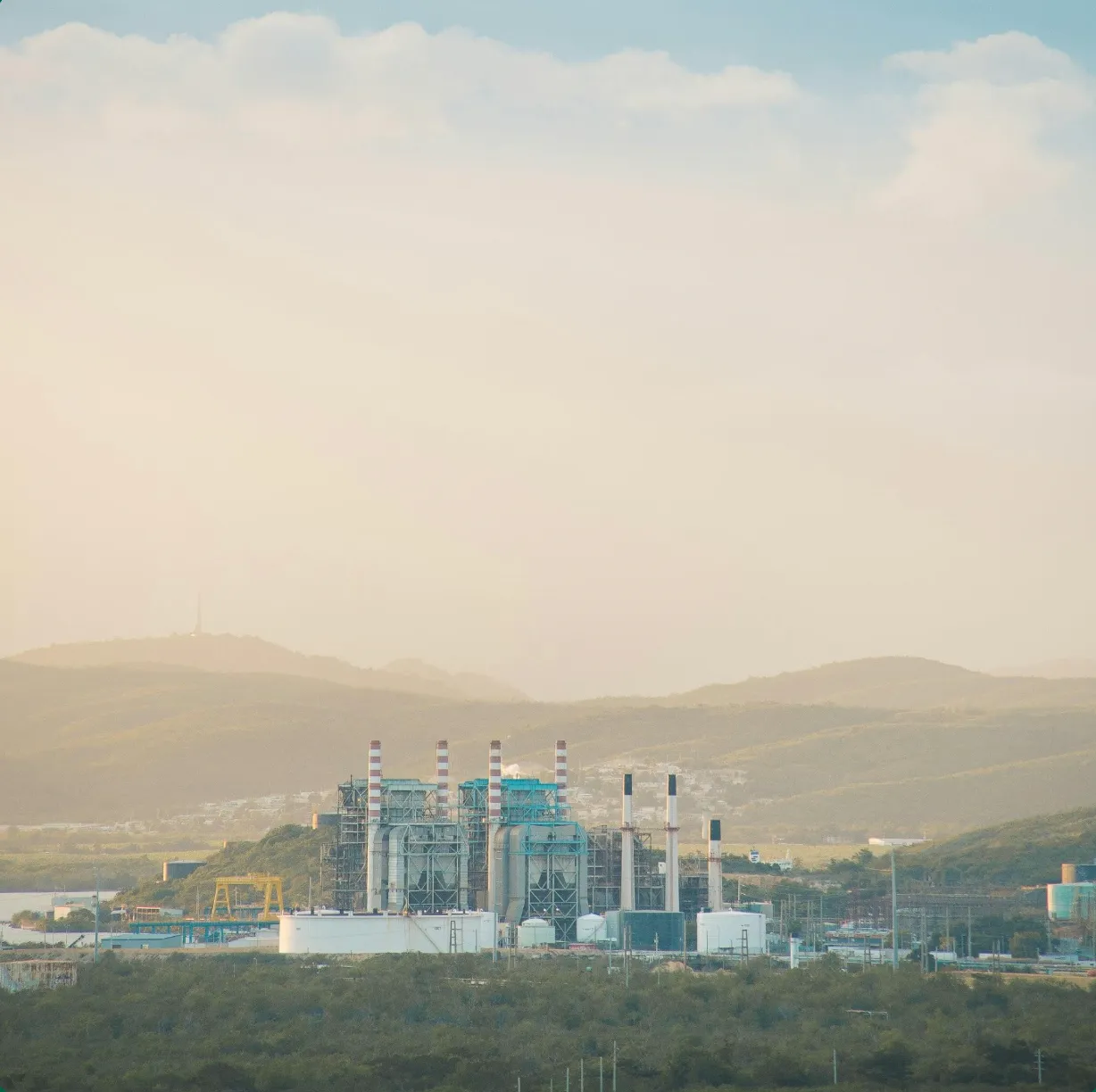
Puerto Rico’s electricity system is primarily powered by fossil fuels—which account for roughly 93% of the system’s total power production—with petroleum, natural gas, and coal supplying most of the island’s electricity in 2024.3 Power generation is the single largest greenhouse gas emitting sector in Puerto Rico, producing 52% of total emissions in 2021. Increasing the proportion of energy generated from renewable sources could therefore significantly reduce the island's climate change impacts.4
Despite Puerto Rico’s historic dependence on dispatchable fossil fuel-based power generation, energy reliability on the island is among the lowest in the United States. Even in the absence of major climate events, the average customer experienced 26-30 hours of power outages from 2021-2024, as summarized in Figure 1.5 By comparison, the average electricity customer in the mainland U.S. experiences approximately 2 hours of outages per year (excluding major events), meaning outage durations in Puerto Rico are more than 13 times higher.6

These outages have far-ranging consequences. In 2025, estimates suggest that territory-wide outages could result in direct economic losses ranging from $1 billion for a one-day disruption to $29 billion for a 30-day interruption, with losses of roughly $5 billion after 14 days. In their estimates, the authors note that these are lower bound impacts because they do not incorporate indirect impacts, infrastructure costs, or broader society-level costs (e.g., impacts on human health and life).8 This lack of energy reliability—outside of extreme weather events—is largely attributed to the absence of continued public investment in the grid’s infrastructure,9 the vulnerability of the centralized grid, and the inability of energy generation to continuously meet energy demand.10
Energy resilience, or the grid’s ability to withstand and recover from weather events, is also poor in the territory. Before, during, and after extreme weather conditions–such as tropical storms, hurricanes, and heat waves–the archipelago has suffered from power outages ranging from days to a record-breaking ten months, as shown in Figure 2.11

A notable example of the absence of energy resilience followed Hurricane Maria’s landfall in 2017. This Category 4 storm led to over four billion customer-hours of interruption in Puerto Rico, the longest recorded blackout in U.S. history.13 The hurricane downed all of the transmission lines on the island,14 leading to a reduction in medical services,15 loss of municipal water supplies and telecommunications,16 and excess indirect deaths of over 4,600 people.17 The loss of potable water sources further exposed Puerto Ricans to health hazards, as they turned to alternative non-regulated springs or community-managed sources to meet their needs.18 This chain reaction between energy loss, essential services loss, and loss of life demonstrates the need to address energy resilience and reliability to increase the population’s ability to adapt to the increasingly severe weather events resulting from climate change.
Nearly a decade following the devastating damages caused by Hurricane Maria, Puerto Rico’s centralized energy grid has remained vulnerable to cascading system failure. Combined impacts of infrastructure vulnerabilities, damage from extreme weather events, and the system’s weaknesses in responding to rapid shifts in demand have resulted in island-wide blackouts. In 2022, for example, Category 1 Hurricane Fiona triggered a system-wide blackout, which reportedly began with distribution line failures.19
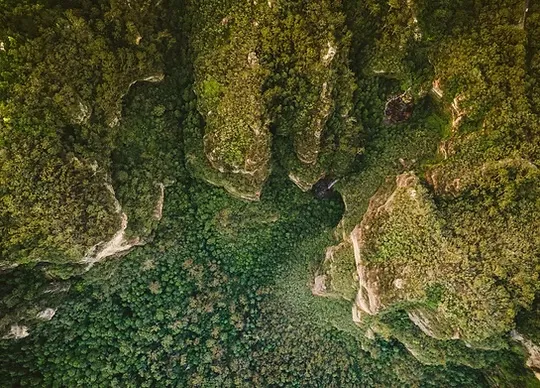
Analysis of the grid’s topography—with power plants scattered throughout the island and major generation facilities located along the coast—indicates that this centralized design increases vulnerability to blackouts. In this system, electricity must travel long distances through the transmission system to reach population centers.20 These lines cross the mountainous Central Cordillera, where rugged terrain, limited road access, and vegetation growth can impede both routine maintenance and post-storm repairs, as depicted in Figure 3. Research shows that multiple transmission segments remain vulnerable to accessibility constraints after hurricanes, contributing to prolonged restoration times.21

The island’s reliance on imported fossil fuels introduces an additional vulnerability. Fuel must enter through coastal ports that are themselves exposed to severe weather. When hurricanes damage port infrastructure or disrupt shipping, fuel delivery can be delayed.23
Additionally, due to its geographic location in the Caribbean, Puerto Rico faces increasing sea level rise, extreme heat events, and hurricanes of greater frequency and intensity associated with climate change.24 As a result, efforts to improve access to resilient and reliable energy are closely tied to broader strategies for climate adaptation and post-hurricane recovery. This linkage is reflected in the island’s public policy framework. In particular, the Ley de Mitigacion, Adaptacion y Resiliencia al Cambio Climático de Puerto Rico25 promotes a transition toward decentralized and renewable energy generation as a means of reducing the island’s dependence on fossil fuels for energy, while supporting both adaptation and mitigation goals.26
In practice, Puerto Rico has taken two primary approaches to improving energy resilience and reliability over recent years, namely grid enhancements and decentralized generation. The former has focused on increasing infrastructure resilience and improving the existing grid to enhance reliability, and is primarily governed by the 2017 Hurricane Maria-fueled disaster recovery efforts led by federal agencies, local governments, private grid operators, and regulators.27 The latter is a community-driven, decentralized approach to energy access. Communities in Puerto Rico have been developing and launching solar photovoltaic (PV) community microgrids, distributed solar, and resilience hub projects to increase energy reliability and resilience.28 Federal investments toward energy resilience and reliability also support these community-led programs.29
-----
1 “...reliability, the ability to meet full demand during a few equipment failures […] resilience, the ability to withstand or recover from widespread damage.” Ilic et al., 2024 (p. 168)
2 ”...The focus of resilience is different from reliability [...] in that extreme events are rare, can cause multiple instantaneous component failures, affect a large number of customers, and require relatively complex restoration strategies. In contrast, widely accepted reliability metrics, including the System Average Interruption Duration Index (SAIDI), the System Average Interruption Frequency Index (SAIFI), and the Customer Average Interruption Duration Index (CAIDI), often exclude major outages caused by unexpected events. As a result, by existing reliability metrics, a highly reliable power system is not necessarily resilient. The core of resilience is not purely aiming to resist all possible disaster scenarios, but to have fast efficient restoration measures as well.” Bie et al., 2017 (pp. 1254-1255); Table 2. Summary of resilience definitions and its key properties provides the definition of grid resilience by organization, among them the Intergovernmental Panel on Climate Change (IPCC), U.K Energy Research Centre (UKERC), and Presidential Policy Directive (PPD-21). Jufri et al., 2019 (p. 1051)
3 “In 2024, petroleum-fired power plants provided 62% of Puerto Rico's electricity generating capacity, followed by natural gas (24%), coal (8%), and renewables (7%).” Puerto Rico Territory Energy Profile, U.S. Energy Information Administration (accessed on December 31, 2025)
4 Note that we expect the benefits of mitigation-focused philanthropic strategies in Puerto Rico to be small relative to other strategies Giving Green supports given the country’s limited contribution to global emissions. As such, our research placed greater emphasis on adaptation benefits.
5 “Even without accounting for electricity interruptions resulting from major events such as hurricanes, customers in Puerto Rico experienced on average 27 hours of power grid interruptions per year between 2021 and 2024. By comparison, electricity customers in the mainland United States generally experience about two hours of electricity interruptions per year without major events.” U.S. Energy Information Administration (accessed on December 8, 2025)
6 “Since 2013, the average duration of electricity interruptions each year has remained consistently around two hours after excluding major events.” U.S Energy Information Administration (accessed on February 15, 2026)
7 “Even without hurricanes, customers in Puerto Rico lose about 27 hours of power per year.” U.S. Energy Information Administration (accessed on December 12, 2025)
8 “We estimate that a territory-wide power outage may cost customers $1, $5 and $29 billion during one-, 14-, and 30-day interruptions, respectively. However, these are lower-bound estimates because our study focused on direct economic costs and, by necessity, did not fully incorporate (1) indirect impacts to the economy; (2) costs to repair or replace damaged utility infrastructure; and (3) the broader societal consequences including increased morbidity- and mortality related costs.” Baik et al., 2025 (p. vii)
9 “[...] a pervasive fiscal deficit of $74 billion, systemic underinvestment, and political corruption have further weakened PR’s infrastructure. Privatization of the energy sector, through contracts with companies like LUMA Energy and Genera PR,has failed to stabilize electric services, leading to increasingly frequent and prolonged blackouts and brownouts despite rising energy costs.” Rivera-Rodríguez et al., 2025 (p. 2)
10 “Beyond the impact of severe weather events like hurricanes, the frequency and length of power interruptions in Puerto Rico are linked to issues with the transmission and distribution system and generating capacity.”; “Puerto Rico’s electric power system largely relies on 10 electric generators fueled by petroleum liquids, natural gas, or coal that collectively provide about half of Puerto Rico’s total generating capacity. As a result, a lack of fuel supply or an unplanned outage of even one of these units can compromise the system’s reliability.” U.S. Energy Information Administration (accessed on December 8, 2025)
11 “...resilience studies should not be considered exclusively a technical problem but they are also an economic and organizational and management problem. It has also been shown that because of PREPA’s financial and management problems, it is possible to argue that the disaster that affected Puerto Rico’s grid was a combined human and natural disaster which started years before Hurricane Maria made landfall on the island and, in which, this hurricane was the last disruption stage of the disaster. Arguably, it is difficult to find economic, financial and political solutions that are applicable to Puerto Rico’s particular context. In the short term, the bottom-up approach to build decentralized resiliency from individual solar home systems, to microgrids, and all the way to the main grid needs to be explored.” Kwasinski et al., 2019 (p. 93)
12 Kwasinski et al., 2019 (p. 90)
13 “Hurricane Maria caused over 4.0 billion customer hours of interruption–the longest recorded blackout in U.S. history, and the second largest power outage in recorded history after the Typhoon Haiyan.” Roman et al., 2019 (p. 14)
14 ”Maria knocked down 80 percent of Puerto Rico’s utility poles and all transmission lines, resulting in the loss of power to essentially all of the island’s 3.4 million residents. Practically all cell phone service was lost and municipal water supplies were knocked out. As of the end of 2017, nearly half of Puerto Rico’s residents were still without power, and by the end of January 2018, electricity had been restored to about 65% of the island.”National Oceanographic and Atmospheric Administration | National Hurricane Center, 2017 (p. 7-8)
15 “On average, households went 84 days without electricity, 68 days without water, and 41days without cellular telephone coverage after the hurricane and until December 31, 2017.[...]Considerable disruptions to medical services were reported (Fig. 3B) across all categories irrespective of remoteness, with 31% of households reporting an issue. The most frequently reported problems were an inability to access medications (14.4% of households) and the need for respiratory equipment requiring electricity (9.5%), but many households also reported problems with closed medical facilities (8.6%) or absent doctors (6.1%). In the most remote category, 8.8% of households reported that they had been unable to reach 911 services by telephone. [...] In our survey, interruption of medical care was the primary cause of sustained high mortality rates in the months after the hurricane, a finding consistent with the widely reported disruption of health systems” Kishore et al., 2018 (pp. 165-166, 168)
16 “Cell phone service was lost and municipal water supplies were knocked out. As of the end of 2017, nearly half of Puerto Rico’s residents were still without power, and by the end of January 2018, electricity had been restored to about 65% of the island.”National Oceanographic and Atmospheric Administration | National Hurricane Center, 2017 (p. 7-8)
17 “We calculated a 62% increase in the mortality rate from September 20 through December 31 in 2017 as compared with the same period in 2016, corresponding to an annual mortality rate of 14.3 deaths (95% CI, 9.8 to 18.9) per 1000 persons and an estimated 4645 excess deaths.” Kishore et al., 2018 (p. 166)
18 “Due to extensive power outages, residents increasingly leveraged community-managed and unmanaged sources to fulfill their needs, and these sources showed a higher prevalence of microbiological hazards. However, an unexpected finding in the first sampling campaign was high concentrations of lead in a subset of samples collected from exterior taps.“ Warren et al., 2023 (p. 354)
19 “...Puerto Rico experienced an island-wide power outage due to impacts to distribution and transmission damage from Hurricane Fiona, which caused a system imbalance that tripped generation units offline.” United States Department of Energy, 2022 (p. 1); “Consistently, the US official report indicates that escalating damages to distribution and transmission infrastructure led to a system-wide imbalance between electricity supply and demand. This imbalance triggered the off-grid protection of generation units, resulting in system instability.”; “The power grid exhibits a supply-demand structure with major generation in the south and the primary load centers in the north (San Juan). The structure heightens the risk of power imbalance during disruptions of the transmission network.” Xu et al., 2024 (pp. 2-4)
20 “The major generation areas are in the southeast region near the municipality Guayama, the southwest region near the municipality of Ponce, and in the northeast region near the capital city of San Juan, the most populated municipality in Puerto Rico.” Birk Jones et al., 2022 (p. 300)
21 “It is assumed that restricted access due to general proximity and/or hazards can increase the system’s restoration time, which means that excessive distances between existing roadways and transmission lines significantly limits line crews’ ability to access and repair electrical lines or poles. This can be exacerbated in hazardous areas, such as the mountainous regions of the island where roads are historically impaired by landslides after a major storm. Or, floods, from extreme rain, may cover roadways and prevent access to damaged electrical lines which will therefore delay repairs.” Birk Jones et al., 2022 (p. 299)
22 Birk Jones et al., 2022 (p. 300)
23 “With disasters there is typically limited information flow, loss of utilities, low resource availability, damaged equipment, limited fuel, labor shortages, higher degrees of unpredictability in the market, and other impacts affecting supply chains.” Kim and Bui, 2019 (p. 3)
24 “Strong evidence suggests that, under climate change scenarios, the Caribbean Region is getting warmer and extreme heat episodes are becoming more frequent; however, knowledge about the effects of this kind of extreme events in the region is scarce. More than 100 years of record for San Juan suggest that the occurrence of prolonged heat episodes is becoming more frequent.” Méndez-Lázaro et al., 2018 (p. 204); “In recent years great emphasis has been given to the potential impact that human induced increases in atmospheric carbon dioxide (CO2) will have on the global climate during the next 50-100 years (IPCC, 2001, 2007a). Significant changes are expected to occur in the air temperature, sea surface temperature, sea level rise, and the magnitude and frequency of extreme weather events. Potential impacts on water resources in rain-dominated catchments, such as those found in the Caribbean Region (IPCC, 2007b) include: higher precipitation extremes, increase in streamflow seasonal variability, with higher flows during the wet season and lower flows during the dry season; increase in extended dry period probabilities; and a greater risk of droughts and flood.” Harmsen et al., 2009 (p. 1085)
25 This law amended energy policy in Law 82-2010, as amended, known as Public Policy for Energy Diversification through Sustainable and Alternative Renewable Energy in Puerto Rico, Act No. 82 of July 19, 2010, as amended.
26 Ley Número 33, May 22, 2019, Article 4, Purpose 4: “Promote the transition to a competitive, sustainable and low-carbon economy, with a decentralized energy system and renewable energies, aimed at substantially reducing dependence on fossil fuels by 2035.” Translated from Spanish by the author (p. 11)
27 “On February 2, 2022, DOE joined the Department of Homeland Security (DHS), the Department of Housing and Urban Development (HUD), and the Commonwealth of Puerto Rico to announce a new effort to accelerate work to strengthen the island’s grid resilience and advance new initiatives to enhance Puerto Rico’s energy future. The parties executed a Memorandum of Understanding (MOU) that enhances collaboration among Federal agencies and the Commonwealth.” U.S. Department of Energy (accessed on December 8, 2025)
28 “...about 600 solar panels have been installed so far in Adjuntas, population 18,500. Complete with battery backup from repurposed 135-kilowatt batteries pulled from Rivian prototype vehicles, a community-solar microgrid is emerging in Adjuntas.” Krantz, 2020 (p.23)
29 As we draft this report, the federal commitments to community-led renewable energy products appear to roll-back previously allocated funding, and changes are ongoing. One example: “The U.S. Department of Energy (DOE) has cancelled cooperative agreements and funding designated for community solar energy projects across Puerto Rico, a decision that, according to participating nonprofits, will halt planned rooftop solar and battery installations for thousands of low‑income households. The notification was issued on Jan. 9, affecting several initiatives…” The San Juan Star, 2026 (accessed on February 1, 2026)
Strategies to Increase Energy Resilience and Reliability
We think aligning public policy with a transition toward decentralized renewable energy generation—primarily rooftop and community-scale solar paired with battery storage—is a promising approach to improving energy resilience and reliability in Puerto Rico. There should be simultaneous efforts to ensure that the centralized grid can effectively regulate, transmit, and distribute renewable energy as adoption grows. Together with increased financial and technical support for community-led and community-managed energy access projects, these efforts can strengthen reliable access to electricity during routine outages and extreme weather events.
Strategies to improve energy resilience and reliability in Puerto Rico can therefore be grouped into two strategic approaches: one targeting improved resilience and reliability via the centralized grid, and the other via distributed renewable energy generation and storage programs.
Distributed Renewable Energy and Storage Programs
A first approach to improving energy resilience and reliability in Puerto Rico centers on decentralizing energy generation and expanding access to distributed renewable energy, primarily through rooftop solar, battery storage, and community microgrids. These decentralized initiatives address both everyday reliability challenges and resilience to extreme weather events.30
Due to cost declines and grid instability, renewable energy generation capacity has grown in Puerto Rico in recent years. Renewable energy generation through solar farms (i.e., utility-scale), solar microgrids, and residential solar with battery storage have gained particular attention on the island. In contrast to wave energy, hydroelectricity, or wind power, solar is considered the most achievable renewable energy source due to its affordability, relatively well-established technology, and energy generation capacity. Distributed solar and microgrids with battery storage improve energy resilience and reliability by generating electricity at or near the point of use, reducing reliance on long and vulnerable transmission infrastructure, lowering demand on the centralized grid during system stress, and enabling faster partial restoration of power during outages and recovery periods.31
Since utility-scale solar projects remain dependent on the centralized transmission system and are subject to current operating policies that require system shutdowns during major weather events, the available evidence suggests they do not, on their own, meaningfully increase energy resilience or reliability.32 While we think utility-scale solar may be cost-effective from a mitigation perspective that narrowly focuses on Puerto Rico, we think that the adaptation benefits of grid resilience and reliability outweigh the mitigation benefits given Puerto Rico’s relatively small contribution to global climate change. As a result, we deprioritized sub-strategies that aim to increase utility-scale solar.
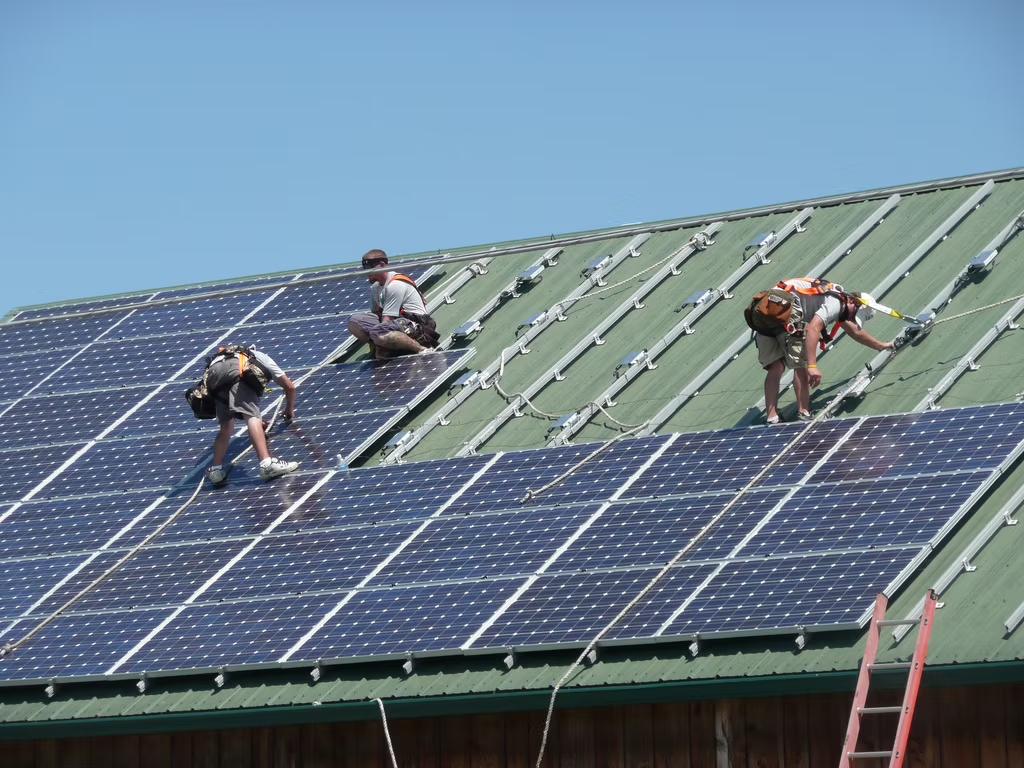
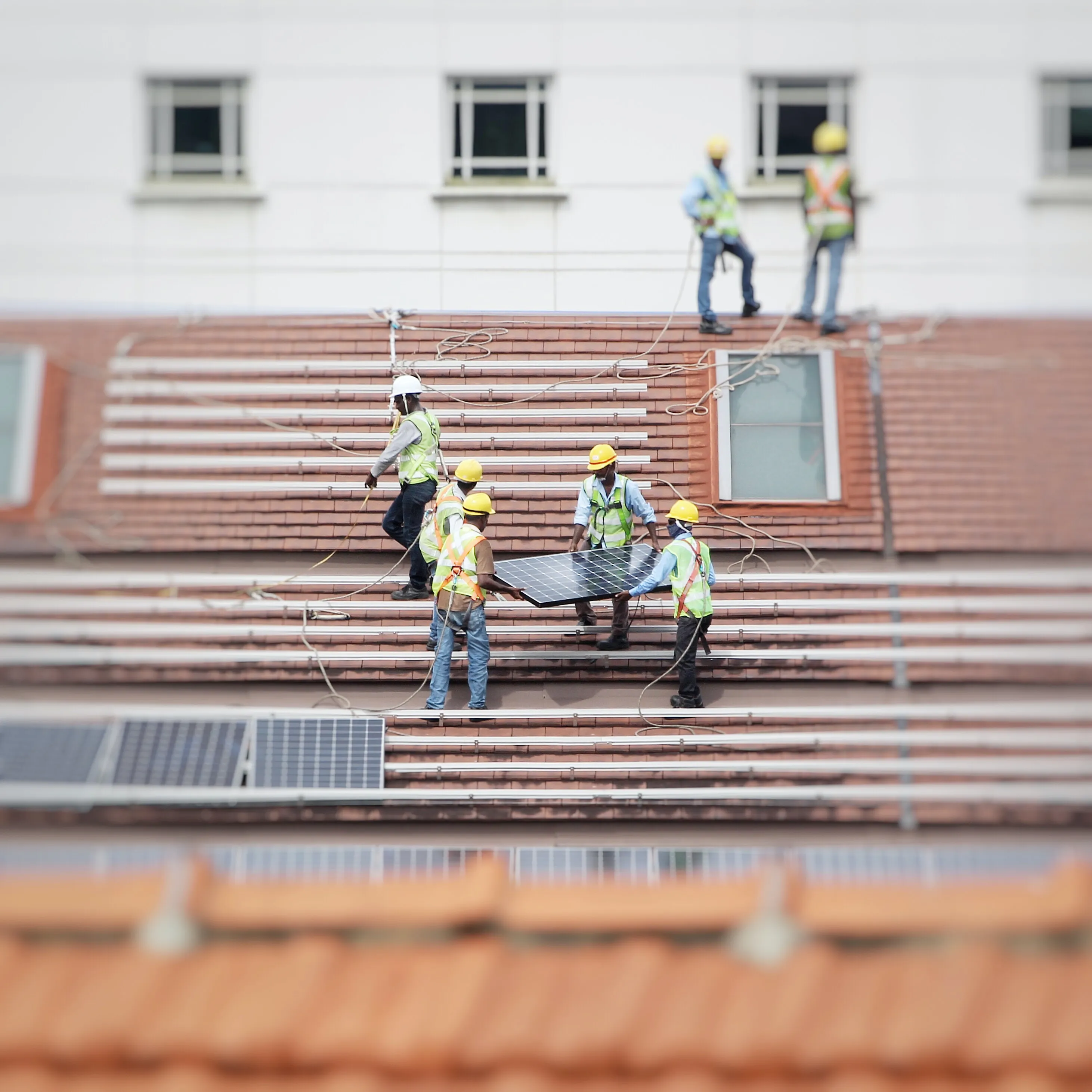
Distributed rooftop solar, on the other hand, can continue to supply electricity locally during grid outages, and demand has been trending upward. Rooftop solar adoption in Puerto Rico has doubled from 2022-2024,33 and according to the National Renewable Energy Laboratory’s (NREL) ”Puerto Rico Low-to-Moderate Income Rooftop PV and Solar Savings Potential” report, annual residential solar energy generation could reach 24.6 terawatt-hours,34 exceeding residential consumption by four times.35 While Puerto Rico’s geographic location makes it vulnerable to increasingly intense and frequent storms, its tropical climate and high solar irradiance, as demonstrated in Figure 4, make distributed solar generation especially viable for sustaining energy access during extreme weather events.

To improve reliable everyday access, distributed rooftop solar and battery installation projects have been delivered through more than 70 nonprofit organizations.37 These have brought greater energy reliability to individual residents, community centers, and vulnerable communities (e.g., by supplying continuous power to community healthcare facilities).38 These projects provide an alternative source of energy that is not susceptible to the high number of grid outages Puerto Ricans regularly face.39
To increase resilience in the face of disasters, initiatives are overarchingly focused on providing enough energy to maintain essential health, communications, and refrigeration services during extreme tropical storms, and in the subsequent days to months until grid power is restored.40 This focus has led to the expansion of rooftop solar paired with battery storage and the development of microgrids that can sustain critical services when the centralized grid fails. Priority sites for these projects include community centers, pharmacies that store temperature-sensitive medicines, telecommunications hubs that provide internet and phone access, and public plazas where residents can charge devices.41 Some systems operate as fully off-grid microgrids, using solar generation and battery storage as a primary energy source with minimal reliance on LUMA’s distribution system. Others function as hybrid systems that provide power during blackouts while relying on the centralized grid during regular operation.
We think that improving energy reliability and resilience through decentralized approaches—while still relying on the centralized grid during regular operation—could be accelerated by addressing persistent structural barriers identified in our research. Conversations with experts highlighted two key challenges. First, many distributed solar and battery installations lack durable maintenance and financing models, leaving communities without the resources or training needed to sustain systems over time. Second, projects implemented at the individual household level can improve resilience locally, but without community ownership or coordination, their benefits do not scale across neighborhoods or contribute meaningfully to system-wide reliability.
Rather than funding direct deployment, we think philanthropy is better positioned to address system-level barriers through advocacy, litigation, and technology-focused interventions. Community organizations have already demonstrated that distributed solar and battery systems can provide reliable power during routine outages and sustain essential services during extended post-storm recovery periods, but their broader impact is constrained by underfunded advocacy capacity, limited integration of distributed resources into centralized grid operations,42 and misalignment between statutory energy goals and reconstruction decisions. Advocacy for technology enhancements for the grid monitoring as part of its reconstruction can help ensure that locally generated power supports day-to-day reliability, while advocacy for reliable and resilient renewable energy targets—paired with litigation to influence how public recovery funds are allocated—can help close the gap between policy commitments and implementation. Although philanthropy currently supports isolated efforts in these areas, funding remains fragmented and insufficient to shift system-wide outcomes. Sustained philanthropic support across these pathways could meaningfully influence grid planning, regulatory oversight, and public investment priorities, enabling distributed energy resources to play a more central and scalable role in Puerto Rico’s long-term energy reliability and resilience.
Centralized Grid Resilience and Reliability
One approach to improving energy resilience and reliability focuses on rebuilding and modernizing the existing centralized power grid. This strategy is heavily controlled and funded by territorial and federal government agencies. We think that there is room for philanthropic funding in supporting advocacy work that ensures that government-led reconstruction projects integrate renewable energy generation. We think that renewable energy can help support existing generation shortfalls and increase the grid’s reliability when paired with technology enhancements for intermittency management. Due to Puerto Rico’s power grid governance history, we think supporting advocacy is key for improving energy resilience and reliability.
Puerto Rico’s power grid was previously owned and operated by the island’s now bankrupt public utility, the Puerto Rico Energy and Power Authority (PREPA). In 2020, Puerto Rico transferred operation of its transmission and distribution system to LUMA Energy, and most of its generation assets were placed under the operation of GeneraPR in 2024.43 Together, these two private companies are undertaking the reconstruction of Puerto Rico’s power generation, transmission, and distribution systems, following the allocation of more than $20 billion in federal hurricane recovery funds for grid modernization and resilience over nine years.44
The process of rebuilding and upgrading Puerto Rico’s power grid has been slow. This process involves rebuilding a system that was already fragile before Hurricane María while navigating a highly fragmented and stakeholder-heavy decision-making process. Reconstruction and modernization require coordination among the Puerto Rico Energy Bureau (El Negociado de Energía), Puerto Rico House and Senate Committees on Energy and Public-Private Partnerships, Puerto Rico Department of Housing, Federal Emergency Management Agency (FEMA), U.S. Department of Housing and Urban Development (HUD), U.S. Department of Energy (DOE), Fiscal Oversight and Management Board, and private operators LUMA and GeneraPR, as illustrated in Figure 5—each with distinct authorities and priorities. Together, these organizations have sought to improve energy resilience and reliability mainly through grid hardening and technology enhancement.45

Grid hardening refers to improving the physical components that regulate, transmit, and distribute energy. In Puerto Rico, these projects focus on installing more hurricane-resistant poles, transmission lines, and transformer substations, as well as managing vegetation.47 This approach improves energy resilience and reliability by reducing the infrastructure’s vulnerability to mechanical failures during everyday operations or during extreme weather events.
We think that grid hardening provides an additional opportunity to increase resilience and reliability by helping prepare Puerto Rico for increasingly affordable renewable energy technologies over time. Several studies have found that most of Puerto Rico’s energy needs, now and to 2050, can be supplied through a combination of infrastructure improvements, energy storage, emerging technologies, and renewable energy generation sources,48 as depicted in Figure 6. However, these pathways assume sustained deployment over multiple decades and depend on the timely modernization of grid infrastructure.49

The opportunity is already becoming apparent as residential solar and battery systems in Puerto Rico increasingly generate excess electricity that can be sold back to the grid through LUMA’s net metering program. In addition, a pilot initiative that allows aggregators to manage multiple residential batteries and sell their combined excess energy to the grid, known as LUMA’s Customer Battery Energy Sharing Program, has moved beyond the pilot stage and is being expanded to include more participants from 2026-2028.51 We think the reported success of this program,52 together with the continued growth of residential solar and battery adoption, signals the viability of scaling distributed solar generation as a meaningful pathway to improve energy resilience and reliability.
Technology enhancements such as real-time grid operation monitoring can provide immediate visibility into outages, load demand, and voltage fluctuations, enabling operators to respond more quickly to faults and variability in energy production.53 These tools are essential for Puerto Rico’s transition away from fossil fuels because they allow the grid to manage the intermittency associated with distributed variable renewable energy resources, such as solar.
A 2024 analysis found that neither Puerto Rico’s Renewable Energy Adoption Act 17 of 2019 (“Act 17-2019” hereafter) nor PREPA’s system plans adequately address how operational and grid-control practices will adapt to large-scale renewable energy integration.54 Similarly, LUMA’s proposed budget filings and 2025-2029 five-year transmission and distribution investment plans—while focused on vegetation management, pole replacement, automation devices, and storm hardening—do not articulate how grid reconstruction will prepare the system for high penetrations of distributed renewable energy.55 Without technological enhancements to prepare the grid for a high-renewables future, utilities are more likely to rely on dispatchable generation—such as the combined-cycle gas plant approved in 2024 for construction in San Juan56—to manage rapid changes in load,57 a strategy that would increase costs and potentially discourage renewable energy adoption. Advancing grid monitoring and control technologies can reduce these uncertainties,58 lower the operational need for fossil fuel ramping resources, and better prepare the grid to integrate solar and storage while reducing the frequency and duration of outages.
We think philanthropy is well-positioned to support grid hardening and technology enhancement efforts that prepare Puerto Rico’s electrical system to incorporate more solar generation. Nonprofits, grassroots organizations, and coalitions have already played a critical role in shaping grid reconstruction plans through advocacy, public engagement, and litigation, pushing lawmakers, regulatory agencies,59 LUMA, and GeneraPR to align rebuilding efforts with statutory renewable energy targets and the needs of communities most affected by outages.60 Although Act 17-2019 established a 100% renewable energy mandate by 2050, the current territorial administration has prioritized expanding natural gas generation, creating a widening gap between policy commitments and implementation. Advocacy groups are actively working to narrow this gap, and we think there is room for philanthropic support to strengthen their efforts.
In summary, we think that supporting advocacy for grid hardening and technology enhancements that enable distributed renewable integration offers a philanthropic pathway to increase energy resilience and reliability while reducing emissions.
Summary of key philanthropic pathways to increase energy resilience and reliability:
We group strategies into two approaches: distributed renewable energy and storage programs, and centralized grid resilience and reliability. Across both, we think philanthropy is best positioned to support advocacy, litigation, and technology-focused interventions that address system-level barriers rather than direct deployment
- Advocacy for reliable and resilient renewable energy targets.
- Litigation to increase renewable energy adoption in the centralized grid and hold the government accountable to climate commitments.
- Advocacy for technology enhancements for dynamic grid monitoring.
Together, these pathways aim to strengthen day-to-day reliability and long-term resilience while shaping how large public investments determine Puerto Rico’s energy future.
-----
30 “[...]various independent initiatives aim to sustainably transform Puerto Rico’s electric system. Since 2017, a few communities—including those with rural aqueducts—small-scale farmers, and an estimated 16,000 individual homeowners scattered throughout Puerto Rico have installed or are planning to install solar photovoltaic (PV) energy systems. For instance, the community-based organization Casa Pueblo, a leader in renewable energy in Puerto Rico, is currently implementing a PV project to power the Adjuntas town center as well as local small businesses. An organization called AMANESER facilitated installation of small solar kits in the community of Veguita Zama in the municipality of Jayuya, which experienced a nine-month power outage after Hurricane María. Grassroots community collectives, like the Comité Diálogo Ambiental, the El Coquí Community Board, and the Iniciativa de Eco Desarrollo de Bahía de Jobos (IDEBAJO), have planned and partially implemented a community solar project as an alternative to the oil-burning thermoelectric Aguirre Power Complex and the AES coal plant, both located in Jobos Bay. In the community of Toro Negro, the nonprofit organization Puerto Rico Community Foundation was instrumental in the installation of a large rooftop solar array. Several other foundations and nonprofit entities have also supported the installation of PV systems with battery energy storage systems (BESS) at community centers, schools, hospitals, and other critical facilities to serve as resiliency hubs during the frequent power outages.” Santiago et al., 2020 (pp 178-179)
31 In an interview, engineer and expert Dr. Marcel Castro Sitiriche expresses his opposition to solar farms in Puerto Rico (5:19), despite acknowledging their global potential, such as those in Portugal producing energy at 3 cents per kilowatt-hour (5:22-5:27). He explains that while solar farms can be built and function effectively with good sun exposure, the primary concern in Puerto Rico is the vulnerability of the electrical grid to hurricanes (6:38). If a hurricane destroys the grid, large solar farms cannot deliver energy to homes, even if the panels themselves are protected (6:42-6:50). In contrast, rooftop solar systems, even if partially damaged (2-5% according to his estimates), would still allow 95% of homes to have electricity the day after a hurricane, ensuring energy independence and saving lives due to maintaining services like refrigeration (6:52-7:32). He also highlights that the cost of energy from proposed solar farms in Puerto Rico is being negotiated at 9 to 12 cents per kilowatt-hour, which he considers too high compared to global prices of 4 or 5 cents (7:56-8:12), making rooftop solar a more cost-effective solution (8:14-8:16).
32 “The 2017 hurricanes destroyed most of the small number of PV installations on the island. The few that remained provided no resilience because of the utility safety regulations…” Ilic et al., 2024 (p. 175)
33 “According to PREPA, in December 2024, residential rooftop solar generation capacity was about 900 megawatts, more than double from 2022.” Energy Information Administration, 2025 (accessed December 12, 2025)
34 We were not able to identify information on the consumer trends in energy storage or the amount of battery storage available.
35 “Annual residential solar potential is 24.6 TWh – Roughly 4x of residential electricity consumption • LMI opportunity is 11.87 TWh, nearly half (48%) of total annual residential solar potential • Average household potential is 19,883 kWh – Potential is slightly greater for higher incomes but still considerable for even very low income groups (17,924 kWh/household). ”Puerto Rico Low-to-Moderate Income Rooftop PV and Solar Savings Potential.” National Renewable Energy Laboratory, 2020 (pp. 7-8)
36 Figure 13, Grue et al., 2021 (p. 14)
37 “71 non-profit organizations, coalitions or community-based organizations were identified. 45% of the organizations identified started work in Puerto Rico or were organized in 2017 or after. 38% of these are non-local entities. Almost 70% of the organizations identified can be associated with climate justice work.” Solar Renewable Energy Landscape in Puerto Rico, April 2023, Filantropia Puerto Rico 2023 (p. 1)
38 “The largest proportion of philanthropic funds have been awarded to install rooftop solar energy for community health centers (330 Centers), houses and key businesses in vulnerable communities (Toro Negro, Adjuntas, Culebra, Orocovis, etc.), and community aqueducts.” Filantropia Puerto Rico 2023 (p. 2)
39 “Even without hurricanes, customers in Puerto Rico lose about 27 hours of power per year.” U.S Energy Information Administration (accessed December 12, 2025)
40 “Hurricanes and other major events add to the outage time customers experience. In August 2024, Hurricane Ernesto affected at least 1 million customers in Puerto Rico. On average in 2024, customers in Puerto Rico went without electricity for more than 73 hours, of which 43 hours were attributed to major events such as hurricanes. In September 2022, Hurricane Fiona left all 1.5 million electricity customers in Puerto Rico without power. The average customer in Puerto Rico experienced almost 200 hours of electricity interruptions that year.” Energy Information Administration (accessed on December 12, 2025)
41 In Adjuntas for example “Thirty- one homes and structures went solar, like cucubanos or fireflies: Barrio Tanamá and Barrio Guilarte; the Solar Corridors at the Forest School in La Olimpia neighborhood; Finca Madre Isla in the Vacas Saltillo neighborhood; the People's Forest in the neighborhoods of Vegas Abajo, Juan González, and Pellejas; the Callejón del Sapo Community’s Solar Alleyway in the town center; La Playita; and the home of Doña Martina on Water Street.” Alexis Massol González, 2022 (p. 180)
42 “PR utility has implemented constraints on the use of distributed energy resources (DERs) into its grid. For instance, the AES Solar Farm in Guayama has a 20 MW capacity, at an agreed rate of $0.18/kWh, but only generates 2 MW ‘because LUMA won’t accept more. Similarly, Pattern Wind Farm in Santa Isabel has a 101 MW capacity but only generates 5 MW “because LUMA can’t handle more.” Ilic et al., 2024 (pp. 169-170)
43 “In June 2020, the private entity LUMA Energy was selected to operate Puerto Rico's electricity transmission and distribution system. In June 2021, LUMA Energy began its role to reduce power interruptions, provide reliable electricity service to the island's residents and businesses, and upgrade the power grid.” Energy Information Administration, 2025 (accessed on December 12, 2025); In January 2023, Genera PR, a subsidiary of New Fortress Energy Inc., was selected to operate, maintain, and decommission, where applicable, PREPA's aging electricity generating assets through a 10-year agreement.” Energy Information Administration, 2025 (accessed on December 12, 2025)
44 We provide an estimate of total federal funding for grid reconstruction, since a single definitive figure is difficult to identify given the number of congressional funding sources and evolving commitments tied to changing administrative priorities. “Congress has provided funding for Puerto Rico's electric power infrastructure through a variety of channels since the 2017 hurricanes, although comprehensive and authoritative data on the status of awards is difficult to collect. “According to the Puerto Rico Electric Power Authority (PREPA), as of June 2023, the Federal Emergency Management Agency (FEMA), the Department of Housing and Urban Development (HUD), and other agencies ‘awarded over $15 billion of federal funding in total.’ Available data as of May 2025 reported by Puerto Rico's Central Office for Recovery, Reconstruction and Resiliency (COR3) indicates that federal funding since the 2017 hurricanes includes FEMA Public Assistance (approximately $13.6 billion obligated, including approximately $2.5 billion for emergency protective measures), FEMA Hazard Mitigation Assistance (approximately $1 billion authorized), HUD Community Development Block Grant (CDBG)-Disaster Recovery (DR): Electric Grid (approximately $1.9 billion), other HUD CDBG-DR funds (approximately $0.4 billion), and HUD CDBG-Mitigation funds (approximately $0.5 billion) for the Community Energy and Water Resilience Installations Program and other energy-related programs. Other funding includes the Puerto Rico Energy Resilience Fund ($1.0 billion) administered by the Department of Energy (DOE). From 2023 to 2025, DOE issued a partial loan guarantee to Sunnova Energy Corporation (reportedly canceled in May 2025); a loan guarantee to Clean Flexible Energy LLC, for Project Marahu; and a loan guarantee to subsidiaries of Convergent Energy and Power Inc., for projects that include renewable and battery storage development in Puerto Rico. Other authorized federal programs that could provide financial assistance for energy projects in Puerto Rico include the Environmental Protection Agency's Solar for All program and several U.S. Department of Agriculture Rural Development programs. Some funding has been allocated to grantees, but the majority of obligated funds remain undisbursed. For example, of the more than $10 billion obligated by FEMA for permanent work under Public Assistance, approximately $2 billion has been disbursed as of May 2025. Of the $1.9 billion obligated by HUD's CDBG-DR for the electric grid, less than 1% had been disbursed as of July 2024.” Congressional Research Service, 2025 (p. 1)
45 We do not provide an exhaustive, fully researched or all encompassing report on every action taken by the organizations leading grid reconstruction and modernization in Puerto Rico, as the complexity of these administrative roles is evolving and difficult to identify. Here we seek to provide the reader with a broad understanding of the complex organizational landscape that is shaping the process of grid reconstruction. We may have missed actions taken by these organizations at the time of drafting this report, and advise the reader to seek up-to-date or comprehensive coverage of the grid’s reconstruction as needed.
46 Government Accountability Office, 2019 (p. 25)
47 “System hardening is defined as the physical changes to the utility’s infrastructure to make it less susceptible to extreme events. Hardening measures usually require a large amount of investment. Some common hardening practices are summarized as follows: undergrounding the distribution/ transmission lines; upgrading poles with stronger, more robust materials; elevating substations and relocating facilities; redundancy in transmission and distribution systems; tree trimming/vegetation management.”Bie et al., 2017 (p. 1258)
48 “Independence from imported fossil fuel, lowering high energy prices for consumers, and improving grid reliability under high hurricane risk were also major factors that led to the 2019 Puerto Rico Energy Public Policy Act (Puerto Rico Legislative Assembly 2019a), and by extension to PR100. To develop an energy system dynamic and robust enough to reach these goals, utility-scale solar production will play only a contributing role. Transmission infrastructure improvements, land-based and offshore wind power, energy storage, and other emerging technologies will be required. However, because of the unique potential for solar production in Puerto Rico revealed by PR100 along with the scale of the energy production required, utility-scale solar production may be expected to play a significant role in the process.” Baggu et al., 2024 (p. 116)
49 “Additional analysis is required to assess the feasibility of deployment timelines and interconnection design required to support reliable and secure future systems.” Baggu et al., 2024 (p. 241)
50 Baggu et al., 2024 (p. 14)
51 “Customer battery energy sharing (CBES) was recently approved by the Puerto Rico Energy Bureau (PREB) to progress from a pilot to a program through fiscal years 2026–2028, including an expansion of participation and total energy required to meet grid needs in both immediate and ongoing scenarios. In particular, PREB has approved an expansion of the program during Summer of 2025 to help alleviate impacts from potential generation shortfall, which both the Department of Energy (DOE) and Puerto Rico’s government have announced an energy emergency which requires swift action to deliver immediate energy solutions.” LUMA, 2025 (accessed on December 9, 2025)
52 We could not identify metrics on the success of this pilot program to verify the scale of success, from LUMA we identified several social media posts stating on X (formerly known as Twitter), Facebook and Instagram with the message: “We celebrate a big achievement energetically, thanks to the commitment and collaboration of our clients the CBES program last night, was able to dispatch approximately 70,000 batteries, contributing approximately 48MW of energy for the grid. This collaboration allowed us to cover a 50 MW generation deficit, helping avoid multiple programmed load relays, and keeping the lights on for more time in communities across the island. We continue supporting alliances with our clients to support the stability of the electric system in Puerto Rico.” LUMA on X, 2025, translated from Spanish by the author; A separate source repeated the same information in an article sponsored by Resource Innovations, “LUMA’S CBES program has grown into the nation’s largest behind-the-meter virtual power plant, with more than 81,000 customers enrolled. Participation rates are as high as 82% during demand response events, reflecting strong community engagement in the scheme. Thanks to this high participation rate, LUMA recently used about 70,000 home batteries to send 48MW of electricity to the grid. This helped cover a gap of nearly 50MW in power supply in the Summer, preventing grid overloads and keeping the lights on longer in communities across Puerto Rico. Building on this success, LUMA has secured regulatory approval to scale the pilot into a three-year permanent program.” Utility Dive, 2025 (accessed on January 14, 2026)
53 “Smart grid technologies can improve the overall efficiency of the power system operation, and increase power system visibility and system response to faults and outages. These technologies enable the power system to fast locate power outages and restore loads more efficiently. With the ongoing efforts on smart grid and smart distribution system, there will be more operational strategies available for the resilient power system, such as: risk assessment and management for evaluating and preparation; disaster assessment and priority setting; installation of DER or other onsite generation units; accurate estimation of the natural disaster location and severity;fault location, isolation, and service restoration; demand side management; microgrid island operation; advanced control and protection schemes.” Bie et al., 2017 (p. 1258)
54 “In April 2019, Puerto Rico enacted the Puerto Rico Energy Public Policy Act (Act 17-2019) eliminating the renewable energy targets previously in effect, which were based on the 2014 Siemens study. This law mandates renewable energy targets of 40% by 2025, 60% by 2040, and 100% by 2050. This is a dramatic mandate. Both the PREPA’s Puerto Rico Integrated Resource Plan (IRP) 2018-2019 and Act 17-201 do not offer any model-based analysis as to whether and how current operating and control practices should be enhanced to enable resilient and efficient integration of renewables in Puerto Rico’s existing electric power grid.” Ilic et al., 2024 (p. 3)
55 Though LUMA’s FY2025–FY2029 investment plan directs nearly $9 billion toward transmission and distribution hardening and reconstruction, most funding is concentrated on physical assets and outage reduction rather than on grid-control upgrades explicitly designed to support high penetrations of distributed renewable energy. For example, the plan mentions their initiatives are necessary for the integration of renewable energy sources, but the specificity of how each program enhances renewable energy integration is limited to the Distribution Line Rebuild program which includes an initiative for “[i]ncreasing conductor capacity to provide acceptable thermal loading for future load projections, accommodate customer electrification, and ensure acceptable voltage performance with high levels of renewable generation.” LUMA, 2024 (p. 13)
56 “On the 20th of December [2026] the Public Private partnerships authority of Puerto Rico (P3) announced a 30-year contract for the construction and operation of a combined cycle gas plant that will allegedly convert to 100% green hydrogen by the year 2050. A consortium between Tropigas and Cratos Energy Holdings will have ownership over the plant and its operations, and New Fortress Energy will supply the gas. The power plant will be located near the San Juan generation plant, and the New Fortress Energy import docks.” Institute for Energy Economics and Financial Analysis (accessed 31 January 2026), translated from Spanish by the author.
57 “LUMA must also accommodate surges in demand. Large fossil fuel-based power generation plants take time to ramp up their output, typically no more than 20% per hour. This is inadequate to support changes in demand that occur within minutes. Even worse, solar PV and other renewables are uncontrolled and unpredictable under today’s grid control paradigm. This means renewables are seen by the utility as fast-ramping negative demand. Preventive dispatch software currently used in control centers is not predictive, so utilities require fast-responding power plants, such as combined cycle gas generation plants, to follow fast variations in system demand.” Ilic et al., 2024 (p .169)
58 See Ilic et al., 2024 for an in-depth discussion of the resilience challenges caused by the intermittency of renewable energy generation for centralized, hierarchical fossil fueled energy grids.
59 El Puente de Williamsburg, Inc. v. Departamento de Recursos Naturales y Ambientales, Civil Núm. SJ2022cv03708 (907) (Tribunal de Primera Instancia, San Juan, May 10, 2022); Comite Dialogo Ambiental, Inc. v. Federal Emergency Management Agency, No. 3:24-cv-01145 (D.P.R. Mar. 26, 2024).
60 “The community movement emerges as a key force in this process, with examples like Casa Pueblo in Adjuntas demonstrating the feasibility of change from within communities. The “Queremos Sol” proposal aims to promote renewable energy in Puerto Rico, backed by over 100 organizations." Muñoz Vazquez, 2023 (p. 201)
Assessment of Philanthropic Sub-Strategies
We identified seven promising philanthropic sub-strategies and evaluated each sub-strategy's scale, feasibility, and funding need (see Table 1). For more information on these metrics and our research process, see Giving Green's Research Overview.
Scale, feasibility, and funding need of approaches nonprofits use to improve energy resilience and reliability:
- Advocacy for reliable and resilient renewable energy targets
- Scale: High. We think advocacy for distributed renewable energy targets can have high-scale impacts because it can help unlock and redirect public investment toward distributed energy generation projects, shaping how large, existing funding streams are allocated. Such advocacy focuses on ensuring climate and energy goals are met by prioritizing locally owned solar, storage, and microgrids as core elements of grid planning and reconstruction. We think that this advocacy work—if directed toward ensuring Puerto Rico’s 2019 Ley de Política Pública Energética and its 100% renewable energy generation targets are met, and advocating for distributed solar-plus-storage systems in federally funded reconstruction projects—could lead to more public investment in distributed energy project development.
- Feasibility: Medium. We identified several organizations working together in coalitions to advance distributed energy access, including through coordinated efforts to advocate for the use of existing rooftops to increase energy access and reliability. We rate feasibility as medium given our belief that advocacy efforts in Puerto Rico have led to some important climate policy wins, though the relevant organizations we identified have a limited track record to date.
- Funding Need: High. According to our expert interviews, advocacy is largely responsive rather than preemptive, and it relies heavily on volunteer campaigns. Based on conversations with the few relevant organizations that we identified, we think there is room for more funding to help increase the amount of staff time and organizational capacity that can be dedicated to this work.
- Litigation
- Scale: High. We think litigation could influence public investment toward energy resilience and reliability strategies. At a territorial level, Puerto Rico has already adopted ambitious renewable energy and climate policy frameworks (Ley Núm. 17-2019 and 33-2019) that establish a statutory commitment to 100% renewable electricity generation by 2050 and economy-wide greenhouse gas emissions reductions consistent with mid-century net-zero targets. We think litigation can help hold the government accountable to these commitments, while litigation at the federal level can redirect large amounts of funding. For example, successful recent litigation to change eligibility for FEMA funding could open the opportunity to direct a portion of the agency’s billions in disaster recovery funds toward renewable energy solutions.
- Feasibility: Medium. At the federal level, coalition movements in Puerto Rico have had moderate to significant success in litigating against the U.S. government and its agencies to demand that climate adaptation and renewable energy policies be developed and implemented on the island. Notable examples include successful litigation compelling the drafting of Puerto Rico’s climate adaptation, resilience, and mitigation strategies, as well as a recent lawsuit requiring FEMA to include distributed solar projects as an option in grid resilience and reconstruction efforts. We are not yet fully confident in litigation as an energy reliability and resilience strategy given the lack of evidence on success rates, uncertainty about the impact of additional funding, and the absence of known reliability- or resilience-focused litigation in Puerto Rico.
- Funding Need: High. Expert interviews suggest that legal capacity is significantly constrained by limited funding, and we found that current initiatives tend to be grassroots and have limited funding commitments. This type of work cannot be funded through public grants and depends entirely on philanthropic investment.
- Advocacy for technology enhancements for dynamic grid monitoring as part of grid reconstruction
- Scale: High. Improved grid monitoring technologies could help stabilize Puerto Rico’s electricity system, potentially maintaining at least 50% of power access during severe storms.61 Additionally, this sub-strategy would support the integration of distributed energy resources (DER), such as rooftop solar, utility-scale solar, and microgrids, by preparing the grid to respond dynamically to intermittent and fluctuating energy generation. The integration of DER will additionally lead to meaningful reductions in Puerto Rico’s greenhouse gas emissions. Fossil fuel based energy generation is the largest single source of greenhouse gas emissions for the island, accounting for 52% of emissions (18.7 MMT CO2e) in 2021.62
- Feasibility: Medium. We learned from experts that policymakers often lack sufficient technical understanding of energy resilience and reliability to develop policies that drive systemic change. At the same time, Puerto Rico has a strong network of NGOs and community groups that have demonstrated the capacity to advocate for renewable energy–driven improvements in resilience and reliability. Coalitions on the island have partnered with academic experts to show that a distributed renewable energy system is feasible, more resilient, and more cost-effective than those reliant on fossil fuels.63 Their role is to articulate a system-wide alternative to the current generation mix and to defend this pathway in regulatory and planning processes. Though these groups are organized, data-driven, and experienced in policy advocacy, we rate the feasibility of advocacy as medium because no single fundable organization was identified as working on this sub-strategy.
- Funding Need: Medium. Based on our expert interviews, much advocacy work is carried out through volunteer networks. We did not identify personnel dedicated to this work on a full-time basis, and we remain uncertain whether current funding levels are sufficient to support sustained, proactive advocacy.
- Policy advocacy for increased incentives for off-grid solar
- Scale: High. We think that advocacy to increase off-grid solar could incentivize decentralized energy production—including interconnected microgrid systems built through a community-driven model—that is less susceptible to grid disruptions. Government subsidies can significantly decrease consumers’ costs of installing distributed solar systems: a study of California’s rebate structure found that for every dollar invested in subsidies, consumers received between $0.78 and $1.53 for their installations.64 Incentives in this sector may help attract private investment by lowering upfront costs, encouraging finance options, and/or improving the likelihood that projects get financed, and creating market pull dynamics that attract installers and investors.65
- Feasibility: Low. Current local incentives dating back to 2008 provide a 25% tax credit for the purchase and installation of solar equipment.66 This incentive is in addition to the federally funded Puerto Rico Department of Housing program that covers 30% of the costs or up to $15,000 up-front.67 The current tax credit has been reduced from 75% of the solar system’s costs up until 2008 to 25% over time (per a tax credit reduction scheme), and since significant federal funding for renewable energy programs has been cut, we think the feasibility of achieving additional incentives through government subsidies is low. Moreover, we are unaware of organizations that philanthropy can fund that are working on this sub-strategy.
- Funding Need: Not assessed. We did not assess funding need because we determined feasibility to be low.
- Advocacy to influence grid hardening
- Scale: High. We think that advocacy to ensure that generation, transmission, and distribution infrastructure are capable of maintaining energy access under increased climate-related pressures—for instance, increased energy demand to cope with heatwaves and increased wind speeds during storms—would decrease the frequency and length of power outages. Grid hardening would increase energy reliability both during and outside of climate-related weather events. The energy grid is receiving ~$20 billion dollars in federal investment toward grid hardening, though the extent to which reconstruction is guided by climate adaptation and resilience is unknown. Because advocacy to influence grid hardening can improve energy resilience during both routine operations and recovery from extreme weather events, we think this sub-strategy has high potential impact.
- Feasibility: Low. We assess feasibility as low because expert consultations indicated that opportunities for civil society to influence grid hardening decisions have declined following the privatization of Puerto Rico’s electricity system. Key infrastructure decisions are now largely controlled by private generation and distribution companies operating under long-term contracts, with limited mechanisms for sustained public input. Compared to the period when the grid was publicly managed, experts noted reduced transparency and fewer effective channels for advocacy to shape outcomes.
- Funding Need: Not assessed. We did not assess funding need because we determined feasibility to be low.
- Direct training to develop the photovoltaic (PV) and battery storage workforce
- Scale: Low. Expert consultations suggested that the absence of a workforce to deliver distributed solar projects in Puerto Rico has created a progress bottleneck. In 2024, Puerto Rico had a reported 3,412 solar jobs, a 3% increase from 2023.68 The PR100 renewable energy report estimated 25,000 jobs were necessary to reach 100% renewable targets, suggesting that the workforce would need to expand by over 700% to reach 100% renewable energy by 2050. We think that philanthropically funded projects that directly train individuals have limited potential to develop the workforce necessary given our understanding of the expensive nature of such training, ranging from $3,000 to $8,000 per participant among nonprofits we identified, suggesting $75 million would be needed to train a 25,000-person workforce. We think more cost-effective large-scale workforce expansion could be achieved through technical certification programs, expanded public school vocational programs, and university technical certifications, but we did not find nonprofit organizations in Puerto Rico working on these strategies.
- Feasibility: High. We identified four nonprofit organizations that perform direct training to develop the workforce for PV installation and maintenance. Since these training programs exist and are delivered by multiple organizations, we assessed the feasibility of direct training programs as high.
- Funding Need: Not assessed. We did not assess funding need because we determined the scale to be low.
- Community-led energy access, relief, and targeted solar installations
- Scale: Low. We think that direct implementation interventions typically do not effectively leverage philanthropic dollars to crowd in additional sources of funding, catalyze nascent markets and technologies, or influence policy. However, they can provide the potential for immediate, targeted resilience and reliability improvements if community-led projects focus on maintaining energy access for critical infrastructure or services following climate-related weather events. Because of the limited reach of this strategy and because it does not offer a pathway to systemic change, we have classified the potential impact of directly funding community-led programs as low.
- Feasibility: Medium. Projects to provide continued access to energy, targeting critical services, have been delivered by some organizations in Puerto Rico for the last 25 years. These projects focus on using solar-plus-battery systems to create resiliency centers for communities. We think that the organizations are in place to continue expanding these projects. Nevertheless, capacity bottlenecks due to a lack of installers on the island may impact feasibility at scale. Because we have observed that the delivery of these initiatives continues despite workforce constraints, we have rated the feasibility as medium.
- Funding Need: Not assessed. We did not assess funding need because we determined the scale to be low
-
We chose to center sub-strategies with two high ratings and no low ratings in our sector strategy, while also including sub-strategies with at least one high rating and no low ratings as supplementary approaches. Based on the above evaluations, the most promising philanthropic sub-strategies are advocacy for reliable and resilient renewable energy targets and litigation. As a supplementary approach, we also support advocacy for technology enhancements for dynamic grid monitoring as part of grid reconstruction, which combines high potential scale with plausible pathways for philanthropic influence despite some feasibility constraints.
-----
61 “General conclusions are that the proposed solutions (1) supporting end-to-end information exchange among industry layers; (2) Implement DyMonDS-enabled on-line interactive dispatch; (3) Adopt dynamic dispatch which utilizes weather and major equipment status predictions; (4) embed decision-making software into end users for enabling participation in power balancing, could serve at least 50% of the load in what remain as electrically connected load to the existing generation.“ Ilic et al., 2024 (pp. 328 -332)
62 “Puerto Rico’s greenhouse gas emissions totaled 33.4 MMT CO2e in 2019 and 34.3 MMT CO2e in 2021 (see Figure 12). These estimates are based on the Intergovernmental Panel on Climate Change (IPCC) Sixth Assessment Report’s (AR6) global warming potentials (GWPs)”(p. 19).; “the Power Supply sector results in more than half of all economy-wide greenhouse gas emissions: 18.4 MMT CO2e in 2019 and 18.7 MMT CO2e in 2021.” Stanton et al., 2023 (p. 22)
63 “The combination of solar PVs, battery additions, and fossil generator retirements creates a resource mix that is fundamentally different from the one Puerto Rico has today and would take time to develop. For the purposes of long-term planning, the transition is spread across a 20-year horizon, as shown in Figure 1. On an installed capacity basis, solar and storage [inverter-based resources (IBRs)] become the largest form of capacity by the 50% DER scenario, and total installed capacity in Puerto Rico increases to more than 10 GW by the 75% DER scenario, nearly double today’s capacity despite increased energy efficiency.” Stenclik and Richwine, 2022 (p. 46)
64 “We allow pass-through to differ between buyers and lessees of solar systems. We find that pass-through is remarkably high in both markets and over-shifts for lessees. Pass-through to consumers who purchase their solar panels is about 78 cents for every dollar increase in subsidies. For leases, a $1 increase in subsidies translates to a decrease in solar system prices of $1.53. These estimates do not support popular claims that solar companies appropriate most of the subsidies.” Pless & van Benthem, 2019 (p. 398)
65 “In this paper, we used 13 years of state level data to examine the effect of four types of financial incentives offered by states. Overall, we found that states offering cash incentives had significantly stronger market deployment of PV than states not offering cash incentives, while states offering tax incentives (income, property, and sales) did not have systematically stronger deployment than other states. Further, we observe that cash incentives and RPS increased solar PV deployment on average across the full study period but also that each additional year of these policies resulted in incrementally higher deployment.” A. Sarzynski et al. 2012 (p. 256)
66 “Law Number 248 establishes a Law Number 248 establishes a tax credit for the purchase and installation of solar electric equipment at the taxpayer's principal residence or at the business of a person or legal entity, equal to seventy-five percent (75%) of the cost of said solar equipment during fiscal years 2007-2008 through 2008-2009. Then, for fiscal years 2009-2010 through 2010-2011, the credit amount is equal to fifty percent (50%) of the cost of the equipment. From fiscal year 2011-2012 onward, the credit is limited to twenty-five percent (25%) of the cost of the equipment. For purposes of the credit, the cost of the equipment includes its installation.” Carta circular de rentas internas 08-13 (p. 1), translated from Spanish by the author.
67 “Will cover 30% or up to a maximum of $15,000 of renewable energy systems installation costs for residents that own a single-family structure in which they reside full time. The Program will serve families that are not Low to Moderate Income LMI).” https://recuperacion.pr.gov/en/solar-incentive-program/ (accessed January 18, 2026)
68 “Puerto Rico had 3,412 solar jobs as of 2024, a 3% increase from 2023.” IREC, 2025 (accessed on January 24, 2026)
Theory of Change for Philanthropic Engagement
Based on the current state of Puerto Rico’s centralized grid, the rapid growth of distributed solar adoption, the gaps in policy implementation, and the limited institutional willingness to integrate renewable energy into grid reconstruction, we developed a high-level theory of change for how philanthropic actors can strengthen energy resilience and reliability (Figure 7). Theories of change enable us to better understand the pathways of influence, the likelihood of each pathway, and the avenues of greatest impact for philanthropic and civil society efforts.
We also discuss and evaluate the main assumptions related to the theory of change and rank whether we have low, medium, or high certainty for each assumption. Our assessment is based on both primary and secondary evidence, as well as our general impression of the assumption’s plausibility.
Key assumptions behind this model are examined in the following section.

Evaluating Key Assumptions
- Policymakers will adopt more ambitious resilience and distributed energy policies when supported by strong technical evidence, legal pressure, and organized civic advocacy. (medium certainty)
We think that strengthening energy resilience and reliability in Puerto Rico will require regulatory and planning decisions that prioritize distributed energy resources, modern grid-monitoring technologies, and resilience-focused reconstruction. Philanthropic strategies such as policy advocacy and litigation rely on the assumption that decision-makers will incorporate evidence presented by subject matter experts. We have high certainty that policymakers respond, at least under some circumstances, to public pressure and technical analysis, as demonstrated by litigation compelling FEMA to include distributed solar in reconstruction options and by advocacy coalitions influencing legislation and municipal policy across the island in 2024.70
However, we have low certainty about the consistency of this responsiveness. Expert consultations highlighted entrenched political interests (“inversionismo político”), limited institutional willingness to deviate from centralized fossil gas planning, and reduced opportunities for meaningful public participation under privatized grid management. These uncertainties make us adjust our confidence that advocacy alone can secure systemic change.
Overall, we assign medium certainty: the pathways exist and have precedent, but political resistance creates meaningful risk.
- Distributed renewable energy systems meaningfully improve energy resilience and reliability for end users in Puerto Rico. (medium certainty)
Our theory of change assumes that distributed renewable energy and battery storage systems can reduce the human and economic costs of outages. We have high certainty that distributed systems can provide life-saving benefits, evidenced by post-Maria research on solar for refrigeration of medicines, communications, and community services.71 Technical research further suggests that advanced grid-monitoring architectures could maintain power for 50-74% of customers during Maria-scale events.72
The uncertainty arises from deployment speed and system integration. Puerto Rico currently has 3,412 solar jobs,73 only 14% of the workforce required based on an estimated need of 25,000 to reach 100% renewable energy targets.74 Experts emphasized workforce shortages, uneven installer quality, and challenges integrating distributed generation into the existing grid. These issues raise questions about whether distributed systems will scale fast enough to achieve population-level resilience gains.
Thus, we assign medium certainty given that the resilience potential is strong, but delivery hinges on overcoming substantial logistical and technical constraints.
- Philanthropic action can shift Puerto Rico’s energy system despite political fragmentation, limited institutional willingness, and ongoing privatization. (low certainty)
Our strategy relies on the premise that philanthropy, through advocacy and legal support, can play a catalytic role in Puerto Rico’s energy transition. We have high certainty that philanthropy is urgently needed, as multiple expert interviews emphasized that advocacy organizations rely heavily on volunteers. However, we have low certainty about philanthropy’s ability to overcome structural barriers.
Experts noted diminished transparency and reduced public engagement opportunities under privatized grid management. Regulatory bodies have approved long-term plans favoring centralized natural gas, and political shifts—not technical considerations—continue to shape reconstruction.75 These conditions introduce significant uncertainty around whether philanthropic pressure can direct a meaningful portion of the $20 billion in federal grid investments.
We assign low certainty given that philanthropic action may shape important pathways, but the political and institutional context creates substantial risks to achieving systemic impact.
-----
69 We describe our certainty as low/medium/high to increase readability and avoid false precision. Since these terms can be interpreted differently, we use rough heuristics to define them as percentage likelihoods the assumption is, on average, correct. Low = 0-60%, medium = 60-80%, high = 80-100%
70 “A court has ruled that federal emergency regulators should have considered the potential benefits of rooftop solar for rebuilding Puerto Rico's hurricane-damaged electrical grid.Last week, Senior Judge Jay Garcia-Gregory of the U.S. District Court for the District of Puerto Rico found that the Federal Emergency Management Agency's failure to consider alternatives to fossil fuels for restoring damaged utilities and to take a "hard look" at environmental effects violated the National Environmental Policy Act.” E&E News, 2025 ; “In 2025, 94 environmental bills were introduced in the Legislature: 41 in the Senate and 53 in the House of Representatives. [...] The Legislative Assembly submitted 19 negative reports on environmental measures that covered issues such as dune restoration, protection of agricultural lands, renewable energy and the expansion of nature reserves, according to legislative monitoring carried out by the organizations Resiliency Law Center (RLC) and Para la Naturaleza (PLN).” Translated fromEl Nuevo día, 2026
71 “We interviewed 25 families who used electrically powered medical devices and distributed rooftop solar-powered battery systems to 17 families predominantly in rural sections of Jayuya but also San Lorenzo, Puerto Rico, in March 2018, approximately 6 mo after Hurricane Maria struck Puerto Rico. All recipients had been without power from the grid since Maria, resulting in multiple self-reported health-related issues: disruption of a healthy diet, difficulty in refrigerating medications, depression, and inability to use inflatable mattresses to avoid bed sores or CPAP machines for sleep apnea. Twelve of the families were previously using generators and reportedseveral shortcomings: a median cost of fuel of $52.50/wk; noise from the generator in general; noise that disturbed neighbors and made it difficult to use the generator at night for a CPAP machine; air pollution; and fumes that worsened asthma symptoms. Our follow-up interview, in July 2018, indicated that almost all the families successfully used and were quite pleased with the solar-powered battery systems.” Tosado et al., 2021 (p. 3); “Use of renewable energy systems was a relatively broadly used option to overcome the extremely long loss of service experienced by PREPA’s grid. Photovoltaic modules were used to recharge cell phones and to power relatively small loads in homes. One particularly important use of PV modules in homes was to power water pumps.” Kwasinski, 2018 (p. 388)
72 “We identified four fundamental problems with the Puerto Rico power system as of July 2018, and validated solutions based on four new technologies. If implemented, these solutions could: (1) save Puerto Rico’s ratepayers annual fuel costs from tens of millions (5% savings) to a billion dollars (60% savings) per year, and (2) maintain power service to 50% or more of the island’s population during extreme events, such as the devastation seen in September 2017 after hurricanes Irma and Maria. This is achievable by retrofitting existing power plants for more flexible generation dispatch, by utilizing low-cost clean solar PVs, and by dispatching power dynamically without requiring large stand-by generation with reserve capacity synchronized to the grid system, e.g. spinning reserves.” Ilic et al., 2020 (p. vi)
73 “Puerto Rico had 3,412 solar jobs as of 2024, a 3% increase from 2023.” IREC, 2025 (accessed on January 24, 2026)
74 “Developing and expanding job training and education programs will help prepare the Puerto Rico workforce to meet the estimated 25,000 jobs required for the transition to 100% renewables (Section 12, page 401). Supporting workforce training within Puerto Rico has benefits for household and territory-wide economics, and for public knowledge and participation.” Baggu et al., 2024 (p. 627)
75 “González Colón's law number 1, specifically, "updates renewable energy goals, eliminating intermediate goals that are impossible to meet and allowing for a realistic and affordable transition. This was part of the proposals launched by the Multisectoral Energy Committee.” Translated from Primera hora, 2025 (accessed on January 24, 2026); “The administration of U.S. [...] has canceled solar projects in Puerto Rico worth millions of dollars, as the island struggles with chronic power outages and a crumbling electric grid.[...] The solar projects were part of an initial $1 billion fund created by U.S. Congress in 2022”The Associated Press, 2026 (accessed on January 24, 2026); “...administration will halt funding of $365 million awarded during the previous administration for rooftop solar power in Puerto Rico and redirect it to fossil fuel burning plants and maintenance of infrastructure, it said on Wednesday.” Reuters, 2025 (accessed on January 24, 2026)
Is There Room for More Funding?
Public investment in Puerto Rico’s energy system is large but narrowly focused. FEMA has funded more than 11,000 Hurricane Maria-recovery projects totaling $33.9 billion, including nearly $600 million designated for grid materials and equipment to rebuild transmission lines, substations, transformers, and distribution feeders. Federal reconstruction plans project over $20 billion in total grid hardening expenditures. In parallel, the U.S. Department of Energy’s Puerto Rico Energy Resilience Fund (PR-ERF) is providing at least $1 billion for rooftop solar and battery systems for low-income households, with an initial $440 million awarded in 2024 to private installers and nonprofit/community partners. However, these federal allocations overwhelmingly fund capital-intensive infrastructure, not the advocacy and litigation needed to shape how resilience investments are implemented.76
While we did not find any comprehensive philanthropic funding estimates for Puerto Rico’s energy resilience ecosystem, available evidence suggests an underinvestment in energy and broader climate change resilience. Philanthropic support for litigation, grassroots advocacy around renewable energy targets, and policy advocacy for off-grid or distributed solar appears even smaller. Expert interviews consistently emphasized that many of these activities rely on volunteer labor, part-time staff, or project-restricted grants, with few organizations able to sustain multi-year work.
Given (i) the billions of federal dollars driving grid reconstruction and modernization, (ii) the absent philanthropic landscape we identified, and (iii) the significant role that advocacy, workforce development, and litigation play in shaping how public funds translate into resilience outcomes, we think there is substantial room for more philanthropic funding across all priority sub-strategies. Strengthening these capacities could meaningfully influence the trajectory of both grid modernization and distributed energy adoption moving forward.
-----
76 “ FEMA Achieves 11,000 Projects Obligated for Puerto Rico: The projects represent over $33.9 billion destined exclusively for Hurricane María and will mostly address the restoration of permanent infrastructure.“ U.S Federal Emergency Management Administration, 2024 (accessed on February 15, 2026); “Nearly $600 Million in FEMA Funding Injection to Rebuild Power Grid: The Federal Emergency Management Agency (FEMA) approved nearly $600 million for the purchase of materials and equipment needed to rebuild Puerto Rico's power grid.” U.S Federal Emergency Management Administration, 2024 (accessed on February 15, 2026)
77 “Data as of: October 10, 2024, 2:00 PM – Sourced from 228 surveyed organizations, encompassing 14 funders and 214 nonprofits.[...] Nonprofits show significantly more engagement in environmental issues compared to funders. While nonprofits are leading on sustainability, conservation, and climate resilience, there is room for funders to expand their support in this area to amplify the impact of nonprofit efforts.[...] Least Impacted Areas: Environment: 7.14% (1 funder)“Environmental issues are underrepresented among funders, with minimal investment in sustainability and climate resilience. This suggests a potential opportunity for greater engagement to address Puerto Rico’s environmental challenges.” Filantropiapr, 2024 (accessed on February 8, 2026)
Are There Major Co-Benefits or Potential Risks?
Co-Benefits
- Reduced reliance on diesel generators during outages. Increased energy reliability would decrease use of backup generators, reducing exposure to particulate pollution and carbon monoxide in addition to greenhouse gas emissions.
- Local workforce development. Expanding PV and battery-storage training pipelines could create skilled jobs and reduce reliance on imported technical labor during large-scale deployment.
Potential Risks
- Vulnerability of distributed energy systems to climate-related weather events. Distributed energy resources may be exposed to damage from hurricanes, flooding, and extreme heat, and their decentralized nature could complicate repairs and extend recovery times, potentially affecting overall resilience.
- Reduced investment in the central grid from clients who adopt their own energy generation systems. As customers rely less on grid-supplied electricity, utility revenues may decline, potentially shifting maintenance costs to remaining customers or reducing investment in grid upkeep, which could in turn affect system reliability.
Key Uncertainties and Open Questions
- Political and regulatory instability. Proposed rollbacks to renewable energy targets, contested privatization of grid operations, and potential shifts in territorial leadership create significant uncertainty affecting whether advocacy, organizing, or litigation can meaningfully influence grid reconstruction decisions.
- Ability of civil society to shape federally driven investments. More than $20 billion in federal grid hardening funds are being allocated through processes with limited public input, making it uncertain how much philanthropic support for advocacy or technical engagement can redirect or strengthen resilience outcomes.
- Scalability of distributed solar under workforce and grid integration constraints. Puerto Rico may require a multiple orders of magnitude increase in trained installers and improved grid integration policies for distributed PV to deliver expected resilience benefits, and the trajectory of both remains uncertain.
Bottom Line and Next Steps
Puerto Rico faces severe and recurring energy reliability challenges, with residents experiencing an average of 27 hours of outages annually and whole grid failures having historically contributed to thousands of excess deaths following major storms. Based on our research into sub-strategies that could strengthen reliability and resilience, we believe that advocacy for reliable and resilient renewable energy targets, as well as litigation to hold public agencies accountable to existing climate and energy commitments, offer the strongest pathways for philanthropic impact. We also see value in advocacy for technology enhancements for dynamic grid monitoring as part of grid reconstruction.
Due to the low level of philanthropic funding currently directed toward these pathways and the very large scale of human and economic impacts associated with routine and extreme weather-related outages, we encourage donors seeking climate impact in Puerto Rico to consider funding organizations that do cost-effective and impactful work on these sub-strategies. Funders seeking organizations to support may reference our recommendations as well as the Additional Resources in this report to identify other relevant non-profits in Puerto Rico.
Acknowledgements
This work has greatly benefited from the feedback provided by a variety of advisors, experts, and reviewers throughout the research process. Giving Green is grateful for those who shared their time, experience, and ideas. All opinions and errors are our own.
Appendix
Why Energy Reliability and Resilience?
To identify a priority strategy for deeper investigation in this report, we followed Giving Green’s research process, wherein the team evaluated each strategy in terms of scale, feasibility, and funding need (SFF) with an emphasis on grounding the comparison in measurable evidence wherever possible. We first identified over 20 climate change mitigation and adaptation strategies for Puerto Rico, and for each we explored the potential scale of benefits, the feasibility of attaining those benefits through strategically allocated philanthropic funding, and the need for (further) philanthropic funding to unlock the identified benefits. To assess SFF, we reviewed available scientific studies, compiling quantitative estimates of risk and potential benefits, and spoke extensively with experts on the island. Through this assessment, the research team ultimately narrowed its focus to three areas for closer investigation: improving flood management, increasing deployment of distributed solar resources, and improving energy reliability and resilience.
From an adaptation perspective, flood management emerged as an important area because Puerto Rico faces significant and worsening flood risk. Roughly 60% of residents live in areas exposed to flooding, and large shares of key infrastructure are at risk, including 71% of hospitals and 93% of electrical transmission centers.78 Coastal ecosystems such as mangroves and coral reefs clearly provide protective benefits: estimates suggest Puerto Rico’s approximately 7,000 hectares of mangroves79 prevent around $11.6–16.3 million in flood damages annually,80 and restored coral reefs could annually protect $40–45 million in avoided flood damages.81 Yet, our team also encountered major uncertainties: many global valuation studies did not translate cleanly to Puerto Rico, and most coastal areas are already legally protected but poorly enforced, limiting the marginal impact of additional philanthropic work. These uncertainties made it difficult to determine how much additional impact philanthropy could achieve, even though the underlying problem is significant.
Distributed solar also appeared promising, particularly because rooftop systems help households cope with frequent outages and can reduce emissions. Quantitative estimates suggest that widespread adoption could avoid 3.2-7.5 million tons of CO₂e each year, equal to 9-22% of 2021 emissions.82 However, the team noted that solar deployment incentives and outcomes are heavily shaped by private installers, Puerto Rico’s energy utility, and large federal investments, leaving a limited role for philanthropic funding. Experts also highlighted workforce shortages and regulatory barriers that create bottlenecks to mass deployment and prevent solar from acting as a standalone solution. Taken together, the team concluded that distributed solar is best understood as one component of a broader resilience strategy, rather than the most compelling primary focus for philanthropy.
The strongest quantitative case emerged in improving energy reliability and resilience. The evidence indicated extremely high economic and social costs associated with Puerto Rico’s unreliable grid. Routine outages, averaging 27 hours per household per year,83 are estimated to impose around $1 billion in annual economic losses alone, equivalent to almost 1% of Puerto Rico’s annual GDP. Large outages are even more damaging: a territory-wide blackout lasting 30 days could cost $29 billion (about 23% of Puerto Rico’s annual GDP),84 and prolonged outages after Hurricane Maria contributed to an estimated 4,600 excess deaths.85 Technological improvements, such as advanced grid monitoring and control systems, have been shown to maintain service for up to about 50% of customers during major storms and reduce fuel costs by up to $1 billion per year for Puerto Rico.86 Experts also emphasized that philanthropic funding in this space is extremely limited, despite clear opportunities to influence public investment decisions, strengthen community-based energy solutions, develop the workforce necessary to install and maintain distributed systems, and promote policies that integrate distributed solar into a more resilient grid. Because the benefits are large, measurable, and achievable through underfunded levers, the research team concluded that strategies to improve energy reliability and resilience offer the strongest potential for philanthropic impact.
-----
78 The Puerto Rico coastal vulnerability map illustrates the coastal location of 60.5% of the population, 71.2% of hospitals, and 93.1% of power plants in Puerto Rico. USGS, 2025 (accessed on January 24, 2026)
79 We calculated a conservative estimate of 7,000 hectares of mangrove based on the historic upper limits and lower limits summarized by the authors in Table 1. “Year 1900 Hectares 11,791… Year 1938 Hectares 6,475.” Martinuzzi et al., 2009 (p. 77)
80 We calculated this value based on our conservative estimate of 7,000 hectares of mangroves in Puerto Rico and a range of $1,660-$2,3400/hectare in annual flood protection benefits in the Philippines. Reported by the authors in Table 2 “Total Stock (US$/ha) Current benefits [under] regular climate $1,660, Tropical cyclones $2,340, Total $4,000.” Menéndez et al., 2018 (See Table 2, p. 31); The estimated $28–40 million annual avoided flood damages from Puerto Rico’s mangroves comes from a benefit-transfer based on Menéndez et al. (2018), who valued mangrove flood protection in the Philippines. That study found mangroves provide $4,000–$5,800 per hectare per year in avoided damages. Applying those values to Puerto Rico’s approximately 7,000 hectares of mangroves ( Martinuzzi et al. 2009) yields $28–40 million per year (7,000 × 4,000–5,800). This estimate reflects the potential monetary value of mangroves’ coastal protection benefits under current conditions, assuming similar storm and exposure patterns. It provides an order-of-magnitude benchmark for the adaptation value of mangroves in Puerto Rico.
81 “The total EAB [Expected Annual Benefit], in terms of the annual value of all gained coastal storm flooding protection (sum of tables 12–17) because of the E25, S25, and S05 coral reef restoration scenarios are $231,303,340, $228,270,499, and $238,841,198, respectively.” Storlazzi et al., 2021 (p. 18)
82 We calculated the estimated greenhouse gas (GHG) reduction range based on 30-70% of rooftop photovoltaic adoption and GHG data reported in Puerto Rico 2019 and 2021 greenhouse gas inventory report. ”Puerto Rico’s greenhouse gas emissions totaled 33.4 MMT CO2e in 2019 and 34.3 MMT CO2e in 2021 [...] Power Supply sector emissions account for 53 percent of total emissions in 2019 and 52 percent in 2021.” Puerto Rico Department of Natural Resources and the Environment, 2023 (pp. i-ii)
83 “Even without accounting for electricity interruptions resulting from major events such as hurricanes, customers in Puerto Rico experienced on average 27 hours of power grid interruptions per year between 2021 and 2024. By comparison, electricity customers in the mainland United States generally experience about two hours of electricity interruptions per year without major events.” U.S. Energy Information Administration (accessed on December 8, 2025)
84 “We estimate that a territory-wide power outage may cost customers $1, $5 and $29 billion during one-, 14-, and 30-day interruptions, respectively. However, these are lower-bound estimates because our study focused on direct economic costs and, by necessity, did not fully incorporate (1) indirect impacts to the economy; (2) costs to repair or replace damaged utility infrastructure; and (3) the broader societal consequences including increased morbidity- and mortality related costs.” Baik et al., 2025 (p.vii)
85 “We calculated a 62% increase in the mortality rate from September 20 through December 31 in 2017 as compared with the same period in 2016, corresponding to an annual mortality rate of 14.3 deaths (95% CI, 9.8 to 18.9) per 1000 persons and an estimated 4645 excess deaths.” Kishore et al., 2018 (p. 166)
86 “We identified four fundamental problems with the Puerto Rico power system as of July 2018, and validated solutions based on four new technologies. If implemented, these solutions could: (1) save Puerto Rico’s ratepayers annual fuel costs from tens of millions (5% savings) to a billion dollars (60% savings) per year, and (2) maintain power service to 50% or more of the island’s population during extreme events, such as the devastation seen in September 2017 after hurricanes Irma and Maria. This is achievable by retrofitting existing power plants for more flexible generation dispatch, by utilizing low-cost clean solar PVs, and by dispatching power dynamically without requiring large stand-by generation with reserve capacity synchronized to the grid system, e.g. spinning reserves.” Ilic et al., 2020 (p. vi)
Additional Resources
- Proposal from the Queremos Sol collective for a transition to renewable energy in Puerto Rico Queremos Sol: Sostenible, Local, Limpio 4th ed, 2020
- A searchable database of nonprofit organizations working in Puerto Rico Impact Areas Report - Filantropia Puerto Rico
Support Our Work
Giving Green Fund
One fund. Global impact. One hundred percent of your gift supports a portfolio of high-impact climate organizations, vetted by our research.
Best for:
Donors who want the simplest way to impact multiple climate solutions.
Top Climate Nonprofits
Meet the organizations on Giving Green’s list of high-impact nonprofits working to decarbonize our future, identified through our rigorous research.
Best for:
Donors who want to give directly and independently.
Support Our Work
We thoroughly research climate initiatives so you can give with confidence. For every $1 we receive, our work unlocks another $21 for effective climate solutions.
Best for:
Donors who want to amplify their impact through research.


.png)


.png)

.png)

.png)
.png)

.png)


.png)


.png)
.png)


.png)
.png)

.png)
.png)
.png)

.png)


.png)
.png)


.png)
.png)

.png)


.png)


.png)

.png)


.png)


.png)
.png)

.png)

.jpg)
.png)
.png)

.png)
.png)
.png)
.png)