Cascade Institute: Grantee Spotlight (Q2 2026)
Grantee Spotlight: Cascade Institute
The Giving Green Fund plans to award a grant to the Cascade Institute for developing a geothermal resource model for Canada, in partnership with 400C, the Geological Survey of Canada Pacific Division, Simon Fraser University, the Institut National de la Recherche Scientifique, and Seequent. The Cascade Institute is a research center based in British Columbia, Canada.
The Cascade Institute’s work falls within our philanthropic strategy of unleashing clean energy. Please see Giving Green’s strategy report for more information, including potential risks and co-benefits, recommended sub-strategies, theory of change, funding need, and key uncertainties.
Last updated: June 2026
What Is the Cascade Institute?
The Cascade Institute is a research center at Royal Roads University in British Columbia, Canada. Founded in 2020, the Cascade Institute studies interconnected global challenges, including the drivers of political polarization, economic instability, and climate change. It combines modeling of complex systems with applied research to provide insights for governments, businesses, and civil society.
What Are We Funding, and How Could It Help Address Climate Change?
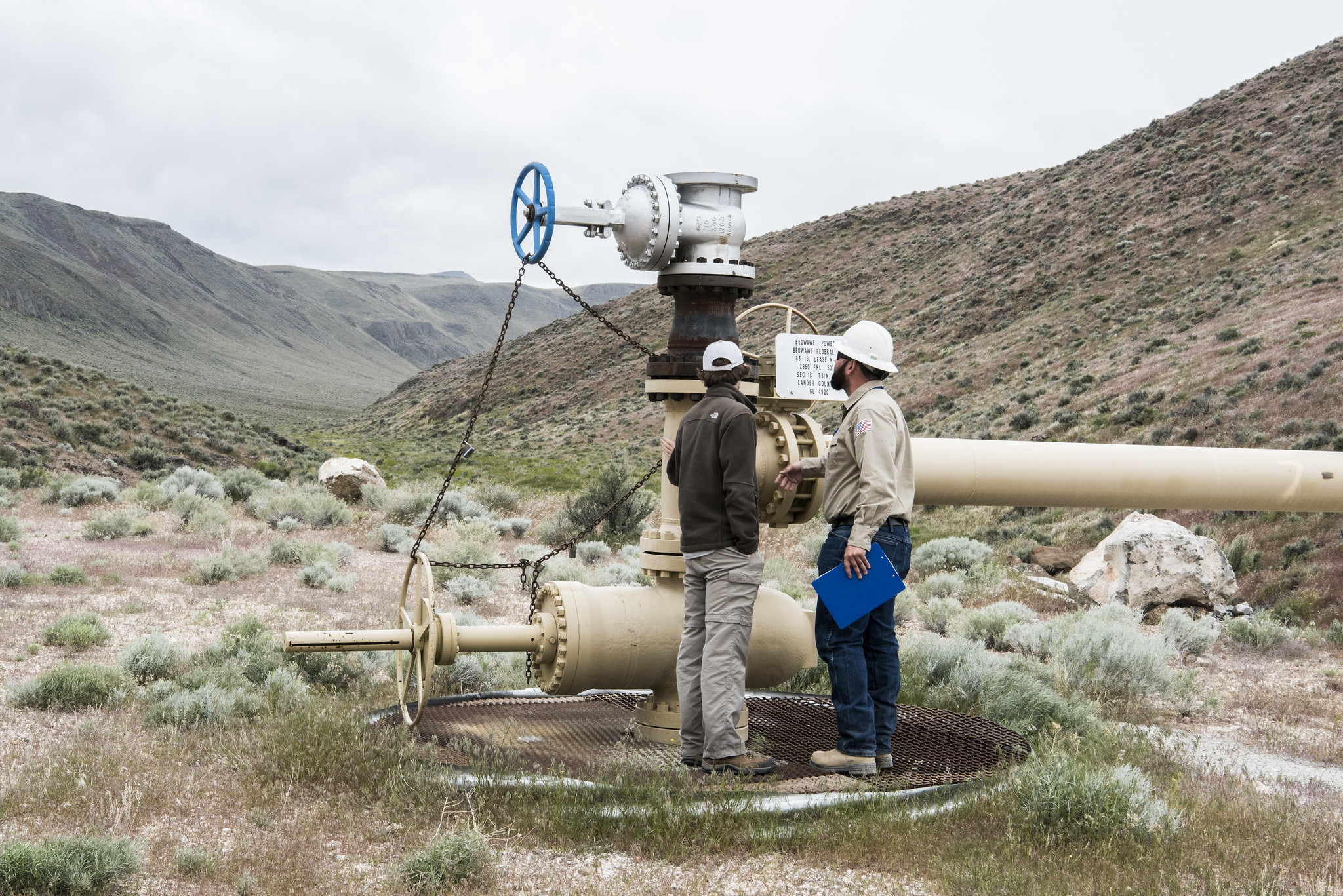
Next-generation (“next-gen”) geothermal development depends on access to high-quality subsurface temperature data to estimate project costs and viability. A national-scale temperature-at-depth assessment can be used for market supply analysis and can provide industry with a foundational resource for scoping geothermal prospects. Broad-scale resource uncertainty currently limits the inclusion of geothermal in energy system models, likely leading policymakers to underestimate its potential and reinforcing a cycle in which promising projects struggle to attract investment or policy support.
We are funding the Cascade Institute’s Canadian Thermal Model project. The initiative will use machine learning methods developed by 400C and incorporate geophysical data to produce a high-resolution, publicly available geothermal resource map to a depth of 10 km. By improving resource estimate accuracy, the project aims to improve understanding of the geothermal opportunity within Canada, which could mobilize government and industry support for next-generation technologies. The Cascade Institute further aims to integrate data from its model into national energy-economy models to improve policymakers’ ability to compare geothermal’s levelized cost of electricity with other energy sources. Ultimately, this project aims to help catalyze a next-gen geothermal industry. Supporting next-gen geothermal can help address climate change by supplying clean firm power and reducing emissions that would otherwise come from fossil fuel power plants.
While the Cascade Institute’s work in Canada falls outside of the domestic focus of our unleashing clean energy in the U.S. report, we view the Cascade Institute as an important player in expanding geothermal energy globally. We further think that working in Canada can build demand for next-gen geothermal. It helps support a case for markets outside the U.S., which can justify manufacturing scale-up and have spillover effects such as knowledge exchange and technology diffusion. This grant, therefore, supports the strategy of commercializing and deploying clean firm power.
Why Do We Think the Cascade Institute Will Use This Funding Well?
This modeling exercise fills a critical and largely unaddressed gap in Canada’s next-gen geothermal ecosystem, and the Cascade Institute is one of the few groups advancing next-gen geothermal in Canada. It has already found early success in next-gen geothermal, such as its advocacy for the Alberta Drilling Accelerator, which provides grant funding to companies testing drilling technologies in deep, hot, and varied rock conditions.
The Cascade Institute’s proposed geothermal modeling project aligns closely with our sub-strategy of supporting RD&D innovation. Its team aims to develop a public good that industry is not incentivized to produce on its own. Even if the model ultimately functions more as an advocacy and knowledge-building tool than a direct developer resource, we believe it still addresses a core data gap and strengthens the enabling environment for geothermal deployment.
Giving Green is co-funding this effort alongside the Trottier Family Foundation.
Giving Green believes that additional climate donations are likely to be most impactful when directed to our Top Climate Nonprofits. For several reasons, we may choose to recommend grants to other organizations for work that we believe is at least as impactful as grants to our top recommendations. We are highlighting this grant to offer transparency to donors to the Giving Green Fund, as well as to provide a resource for donors who are particularly interested in this impact strategy. This is a nonpartisan analysis (study or research) and is provided for educational purposes.
Explore More Climate Giving Research




.png)
.png)

.png)

.png)


.png)
.png)

.png)


.png)
.png)
.png)

.png)
.png)
.png)

.png)
.png)
%20logo.png)
.png)
.png)

.png)
.png)



.png)

.png)
.png)
.png)
.png)
.png)


.png)
.png)
.png)
.png)
.png)
.png)



.png)
.png)
.png)
.png)
Support Our Work
Giving Green Fund
One fund. Global impact. One hundred percent of your gift supports a portfolio of high-impact climate organizations, vetted by our research.
Best for:
Donors who want the simplest way to impact multiple climate solutions.
Top Climate Nonprofits
Meet the organizations on Giving Green’s list of high-impact nonprofits working to decarbonize our future, identified through our rigorous research.
Best for:
Donors who want to give directly and independently.
Support Our Work
We thoroughly research climate initiatives so you can give with confidence. For every $1 we receive, our work unlocks another $25.90 for effective climate solutions.
Best for:
Donors who want to amplify their impact through research.